Category: Lambeth Conference

  • Entering Creationtide: The Church and the Climate Emergency

    by Revd Ruth Newton, parish priest of St John’s Sharow, tutor at St Hild college, and member of General Synod and the Environmental Working Group. Ruth is undertaking a doctorate into the theological motivations of environmental activists

    There is no longer any question that anthropogenic climate change is happening, with an overwhelming scientific consensus that the climate is warming at an alarming rate due to human activity. In 2021, the UN Secretary-General suggested that the Intergovernmental Panel on Climate Change findings were nothing less than “a code red for humanity”, that “the alarm bells are deafening”, and that the evidence is irrefutable. The record-breaking temperatures experienced this summer have hammered home to those of us in this country a message that our brothers and sisters in the global South have been telling us for some time: that climate change is a present reality, not a future threat.

    Consensus for action has been growing within the Church too. Striving “to safeguard the integrity of creation and sustain and renew the life of the earth” has been recognised as a mark of Anglican Mission for over 30 years. It’s the aspiration of General Synod that the Church be “Carbon Net Zero” by 2030, and this has placed environmental actions firmly on the agenda of PCCs and Diocesan Synods.

    In a Church which is divided, not least on human sexuality, environmental mission has the potential to provide the common ground around which we can coalesce and where the Church could give unequivocal moral leadership. The recent “Lambeth Calls” on the environment and sustainable development attracted less publicity than the more controversial one on human dignity, precisely because, as one bishop reportedly said, they were a “no brainer”.

    Nevertheless, in a Church recovering from the impact of the Covid lockdowns and facing the immediate challenge of the cost-of-living crisis, I wonder if “the environment” is seen as just another issue to be ticked off an ever-growing to-do list. For too many, environmental mission is still seen as a distraction from the “core business” of being Church – the evangelism, youth and children’s work, pastoral care, social advocacy, and the myriad of other things we need to attend to.

    However, “the environment” is not one issue amongst many, or even the issue of our times. I would argue it is not “an issue” at all; it is bigger than that. It is not a distraction from “core business”, but rather the backdrop to it, the horizon against which all our theology, mission and ministry are undertaken. Our apologetics and evangelism will prove ineffective if we present a version of the Gospel which fails to address the pressing questions the ecological crisis is raising. Those engaged in pastoral care will find themselves faced with people who are, with some justification, suffering eco-anxiety. Those who advocate with and for the poor will discover, as so many relief and development agencies have done, that climate change and ecological degradation intersect with and amplify poverty to the extent that one cannot be dealt with without addressing the other. All our theology, mission and ministry will need to be recalibrated to meet the challenges of “the environment”.

    Doing this will not be easy, as even finding the appropriate language is a struggle. I wrestle with the idea of stewardship. I find little scriptural warrant for it, apart from a contested interpretation of Genesis 1:28, and, given our track record to date, I have little confidence in the abilities of humans to proactively manage the natural world. I wonder if we might do better to think in terms of human restraint in using natural resources.

    Thinking in terms of creation-care is preferable, but only if we recall that we too are created beings, dependent upon both God and the non-human creation. We need the rest of creation more than they need us. Since we have tended to think of ourselves as separate from the rest of creation, the language of creation-care does not always sufficiently emphasise the degree to which the ecological crisis is also a humanitarian one, affecting people, and affecting them right now.

    Climate change disproportionately affects the global poor, black and brown people, women, and children. Those who, historically, have been least culpable are also the ones who are bearing the most cost. Those who are already marginalised will be marginalised further. We have a responsibility to future generations who bear the consequences of our actions and inaction. So I prefer to think in terms of justice. Whilst I am unsure whether God has given Christians a mandate to “steward” creation, I am confident he has given us one to do justice and love mercy, and to love our neighbours as ourselves.

    This month, as we celebrate creation-tide, we may well rejoice in the beauty of the natural world and the splendour of all that God has made. We may even consider our culpability in the world’s problems and may commit to live differently. But let us not shy away from addressing the human cost of the ecological emergency, and our prophetic role in addressing that.

    A Christian response to “the environment” cannot be left to those environmental enthusiasts and nature lovers who have heroically advocated for decades. Nor can the theology be delegated to the specialism of eco-theologians. It will involve the whole Body of Christ, in all its diversity, uniting, as the Church takes up its calling to announce and signify the Kingdom of God. I am probably slightly too fond of saying “in the face of global heating, we cannot be lukewarm”. But really, as those who seek to follow Christ, we can’t afford to be anything other than “all in”.


  • The Global South Fellowship of Anglicans – Power and Numbers?

    Canon Dr Phil Groves is a parish priest and convenes the Anglican Peace and Justice Network. His PhD is on Anglican Missional Ecclesiology and he was the Facilitator for the Listening Process in the Anglican Communion and Director of Continuing Indaba. He is Canon of Mpwapwa Cathedral in Tanzania and fluent in Kiswahili. 

    Following the Lambeth Conference, bishops are returning to their dioceses with renewed energy, and an expanded vision as they realise the wonder of being part of a global communion of churches. While the external narrative might be about splits and an obsession with sex, they will tell a different story, barely recognising the conference they attended for the one reported on.

    At Canterbury, the conversations were around being followers of Jesus in a world in crisis. Seminars and private conversations often focused on a world defined by authoritarian and corrupt governments, and climate disaster. The pressures are more acute among the poor, and as our poor face hunger, the poor in the socio-economic global south are facing starvation. Our prophets of justice face ridicule: theirs face death.

    The ‘Lambeth Calls’ focused minds on potential action: especially for indigenous peoples, those still oppressed by the inheritance of slavery, young people facing an uncertain future, those living under threat of persecution for their faith and for standing for oppressed peoples. For a wonderful seminar presentation on justice from an African contributor – please click here.

    However, one group called the ‘Global South Fellowship of Anglicans’ (GSFA), has been driving a divisive message that has distorted the reality of the conference. They claim to speak for those who have historically been marginalised and silenced through the dominance of power in the socio-economic global north. They claim to speak for 75% of Anglicans – an overwhelming majority. These claims are impressive and make them very significant, especially to progressives who are aware of the dangers of racism and the value of democracy.

    But are these claims true? In order to fact check these claims we can look at the GSFA website, which lists 25 Provinces as belonging to, or associated with, the Fellowship. Belonging requires fully signing up to a constitution that relinquishes provincial autonomy in favour of a global ecclesial body. The site no longer says how many are ‘members’ and how many are ‘affiliates’.

    The constitution is clear that, despite its name, the GSFA no longer claims to be defined by ‘geography’: rather, it is increasingly defined by ‘orthodoxy’.[1]

    The Diocese of Sydney and the Anglican Church of North America (ACNA) are both listed among the 25 members and affiliates, showing that despite its name it is not exclusively a voice for the socio-economic global south. Also, all members of the secretariat are from the Diocese of Singapore and Singapore is classified as being in the socio-economic global north.

    This means that, rather than being a voice for the complex diversity of Anglicanism in the socio-economic global south, GSFA is claiming to be the voice of ‘orthodoxy’: an orthodoxy defined by a common view over a single key issue. This is reflected in almost every statement issued by the block for the last twenty years. The focus of these statements is on condemning the growing number of Anglican diocese and provinces where LGBTI+ people are included and their relationships celebrated, rather than issues that actually affect people in the socio-economic global south.

    The first thing to note is that only 22 of the members/affiliates are Anglican Communion provinces. In addition to Sydney Diocese (not a province), the ACNA and the Anglican Church in Brazil are breakaway churches. In the Anglican Communion, 31 provinces have all their dioceses in the socio-economic global south with another 4 (Aotearoa, New Zealand and Polynesia, Jerusalem and the Middle East, South East Asia, and The Episcopal Church) having dioceses in both global south and global north. For example, TEC’s biggest diocese by numbers is Haiti, the biggest francophone diocese in the Anglican Communion. This means that GSFA claims to speak for 22 of the 35 Anglican Communion provinces with dioceses in the socio-economic global south, not all provinces with dioceses in the global south.

    During the conference, the GSFA-EFAC Lambeth Resource group[2] distributed a letter to bishops asking for them to sign a document to reaffirm Lambeth I.10 and to indicate the number of Anglicans worshipping in their dioceses.

    The voting was monitored by a UK-based accountant and General Synod member, Debbie Buggs. She ‘checked all email reaffirmations to ensure the information was accurately transferred from email to the official record, and that each affirmation recorded has been validated by a relevant Bishop’s Lambeth Conference Pass’. It is not made clear if she ensured that bishops were not supervised as they voted – that is, that they voted without pressure being applied. It is not clear if she validated the numbers of Anglicans declared.

    While this was probably intended as a show of strength, an examination of the result from the press release issued at the conclusion of the process instead brings into question the claim to speak for the 22.

    The reaffirmation was signed by 125 bishops claiming to represent nearly 8 million Anglicans, but the result demonstrates that GSFA neither speaks for the Anglican provinces in the socio-economic global south, nor for a majority of Anglicans globally.

    In their press release, GSFA recognises this, and indicates that they expect bishops from the GAFCON provinces of Nigeria, Uganda, and Rwanda (who stayed away from the Lambeth Conference) to sign up in the future, which would swing the numbers in their direction. This may be the case, but it is not clear that these churches actually support the whole of Lambeth I.10, including the commitment to listening to LGBTI+ experience. The Church of Nigeria, in particular, has made it clear that listening to the experience of ‘homosexual persons’ is at odds with their position. They support the ongoing criminalisation of LGBTI+ people, which they assert is GAFCON policy.

    The Primate of South Sudan, as Chair of the GSFA council, was to the fore in pressing for the reaffirmation of Lambeth I.10, and 40.8% of the signatories were from South Sudan (51). The next biggest block comprised IAMA bishops (bishops from the new province of Southern African Lusophone countries).

    The third biggest block vote comprised bishops from TEC (8) – a province not listed as either a member or affiliate. On the other hand, no bishops from 5 provinces that GSFA claims to represent – Bangladesh, Pakistan, Papua New Guinea, South Africa, and West Africa – signed.

    The claim to representation is especially interesting when the Province of South Africa is considered. The pre-Lambeth documents from GSFA include a paper rejecting the ‘Indaba’ model embraced by the design group of the last two Lambeth Conferences. This model was championed by the Primate of Southern Africa, the chair of the design group. GSFA claims to represent Southern Africa in objecting to the Indaba model. Now that we know that it does not have the support of a single Southern African bishop, this appears a hollow claim.

    The number of signatories from Australia (4), Canada (4), England (3), and Ireland (3) was greater than signatories from Burundi (1), Central Africa (3), Kenya (2), and Tanzania (3), all provinces in the socio-economic global south with significant numbers of Anglicans. I had conversations with several bishops in these African provinces who were adamant that GSFA did not speak for them. They asked me who these people were, and said they had no authority to speak for them. I was given access to WhatsApp groups in Kiswahili formed with encouragement to ignore the representations received from GSFA.

    The GSFA does not appear to represent 25 provinces of the Anglican Communion. We can say that it represents one very big one – South Sudan – and some smaller provinces, but not 25. It is a minority group in the global south.

    The next question is whether it represents 75% of Anglicans globally.

    The claim to overwhelming numbers was intended to be reinforced by Bishops being asked to declare the number of Anglicans worshipping in their dioceses. There are two problems with this; firstly, this was not validated and secondly, it is rare for worshipping Anglicans all to support the opinions of their bishop. It is unlikely that all – or even a majority – of the 19,800 Anglicans in the dioceses of the three Church of England Bishops who signed the document agreed with it. While it may be an accurate number, it may not be a useful number.

    The numbers in Tanzania are probably accurate, but again illustrate weakness. The three bishops there claim to have 88,000 worshippers. However, the Diocese of Central Tanganyika on its own has between 700,000 and a million worshippers in just one diocese. The three signing bishops are bishops of very small dioceses.

    This goes to demonstrate just how unreliable numbers are as a way to judge anything: they are a terrible way to judge truth – Jesus would have failed completely! However, what GSFA has shown by its own documents is that it does not represent 75% of Anglicans.

    There are bishops in provinces in the socio-economic global south who support equal marriage. The Province of Brazil has revised its prayer book to welcome same-sex couples. There are dioceses where same-sex unions are blessed. However, they are a minority.

    The clear message of the support for the Archbishop of Canterbury’s carefully worded address was that, although most bishops in most provinces will continue to support Lambeth I.10 in their dioceses and provinces, they are willing to continue in mission with those dioceses and provinces that think differently.

    This is also backed up by what I observed. TEC bishops were planning mission initiatives with African bishops. The South Sudanese bishops were very excited by their invitation to the Diocese of Salisbury.

    And the role of the Bible in all this?

    Archbishop Makgoba has shown that it is the Indaba way that is biblical. He shows that Paul gave local churches such as the church in Corinth the responsibility for cultural integration and dispute transformation. Paul never suggested that conflicts in local churches be referred to the Jerusalem Council. Paul founded a communion of churches, not a single institution. It is a Communion-based global church that images the missiological ecclesiology of Paul.

    In contrast, the GSFA champions a non-biblical approach to conflict resolution based upon Western European understandings where definitive judgements are made by majority in council and imposed on the whole. This way is the way of division. The splintering of the GSFA demonstrated why it must be resisted.

    So where are we?

    No one actually agrees with the whole of Lambeth I.10. They may say they do, but it was a compromise between a desire for a harder line and the sop of the promise of listening. When churches have genuinely listened to LGBTI+ people they have questioned the advice not to bless same gender unions and ordain LGBTI+ people.

    In many countries where Anglicans seek to decriminalise LGBTI+ people, the Lambeth I.10 formula is actually useful to them, because the language of human dignity is better than that of ‘human rights’. The human rights agenda is played as the new colonialism – imposing the will of a powerful Western lobby on the cultural norms of independent nations. The Call to respect human dignity is being seen by some as a call to act for decriminalisation. We should pray for and hope for action here.

    And for the Churches considering the deeper inclusion and celebration of LGBTI+ people? The message should be that the Anglican Communion will not fall apart if they go ahead.


    [1] Communiqué from the 8th Global South Conference, 2021, Para 10:
    ‘Under this Covenantal Structure, the Global South Fellowship is transitioning from being a grouping based on geography to one based on orthodoxy while appropriately keeping our historical roots.’

    [2] GLOBAL SOUTH ANGLICAN LEADER SETS FOUR PRIORITIES FOR ‘ORTHODOX DELEGATES’ ATTENDING THE LAMBETH CONFERENCE – 7 July 2022 notes: ‘A Resource Group to support Orthodox archbishops/bishops attending the Conference has been set up by the GSFA, and the Evangelical Fellowship in the Anglican Communion (EFAC).  It comprises Bishop Henry Scriven (Hon. General Secretary EFAC), Bishop Rennis Ponniah (Hon Director, GSFA Executive Secretariat), Bishop Keith Sinclair (National Director, Church of England Evangelical Council), Canon Charles Raven (Director Relay200, The Relay Trust), Rev William Mok (Deputy Director, GSFA Executive Secretariat) and PR Consultant, Revd Paul Eddy.’ Rev William Mok is from Malaysia in the global south, but works in Singapore in the global north.

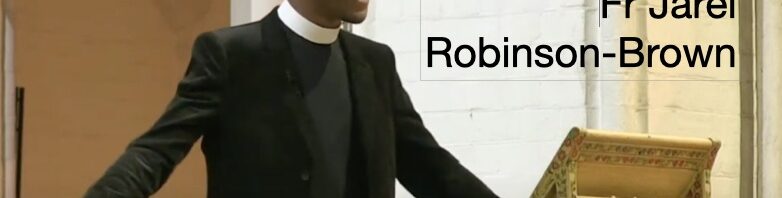
     

  • Embodying Lambeth: Homophobia, Hope and Honesty

    Embodying Lambeth: Homophobia, Hope and Honesty

    by Fr Jarel Robinson-Brown, Co-Chair of OneBody OneFaith and Visiting Scholar at Sarum College, Salisbury

    ‘To encounter oneself is to encounter the other: and this is love. If I know that my soul trembles, I know that yours does, too: and if I can respect this, both of us can live. Neither of us, truly, can live without the other…’

    – James Baldwin, The Devil Finds Work, 1975


    It would be fair to say that I have been wrestling recently, quite deeply, with what place hope should have in my life. Not just as a Christian, but as a priest – I’ve wondered whether hope is all it is made out to be, and whether hope (real hope) is even possible as someone who exists in a body whose skin invites violence and micro-aggression and whose sexuality endures inequality, oppression and injustice. For years, as someone Black, Gay and Christian I have wrestled with what part of me really ‘came first’ in that list of identity that I carry not by choice, but because the world is a place where labels, compartments, boxes exist. And they exist, on the whole, to make those who do not carry them – feel safe.

    One thing people often say in relation to my recent book is that a shorter title would have been better. But ‘Black, Gay, British, Christian, Queer’ defines those of us who live at the intersection of race, religion, sexuality and culture. As I wrote: ‘as Black Queer Christians  … we feel pressurized to choose at times between our Blackness and our Queerness, our Britishness and our African-ness, our religion and our desire, our life partner and our families, our bodies and our souls…To some we are no longer Black, to others we are no longer Christian. We live then faced with an impossible ultimatum between ‘life’ and life – to live as we are expected to live, to live in the freedom that is ours but will cost us nothing short of absolutely everything to inhabit’ (p.24).

    So to return to hope, I still remain uncertain as to what place hope should have in my life – and I went to the Lambeth Conference fairly hopeless but left with more hope than I imagined possible. Getting on the train to Canterbury, I was already apprehensive – the 15 year-old child sat in tears around the family dining table defending his right to exist was back…, “this is just who I am” in the face of “you can’t be Gay and Christian, the Bible says it’s wrong”. Standing in the truth of who I am does and has cost me much, not least my relationship with my father and other family members – but when the only options before you are staying in the closet and death (and both are the same thing I think) the choice was clear.

    By the time I arrived in Canterbury a statement had been released by the Global South Fellowship of Anglican Churches which stated that they would table their own call to re-affirm Lambeth resolution I.10 as the “Anglican Communion’s ‘official teaching’ on marriage and sexuality” and to impose sanctions on Provinces which ordain bishops in same-sex relationships and conduct same-sex weddings. Rather than receive communion alongside such bishops, they announced that they would stay seated, as one of “a number of ‘visual differentials’”.

    It was of course, like stepping into the lion’s den. Seeing those who had decided that receiving the sacrament of the Eucharist alongside people like me was impossible. My black body stood at an LGBT+ stall was clearly quite confusing to some of my brothers and sisters from other parts of the world. To embody an “issue” in the skin of those who are most vocal against it was an interesting experience.

    At the forefront of my mind was the reality that I am one among many whose ancestors did not leave Africa willingly, but who were taken from their homes to far off lands. Whilst I am a citizen of the UK and Jamaica, I am also an African Gay man, and a Christian. Sometimes I wonder what my life would look like if we were never taken – what language would I speak, what clothes would I wear, what God would I know. This sense of unknowing is powerfully articulated by Cole Arthur Riley in her work ‘This Here Flesh’:

    ‘I do not know from where my ancestors were abducted. I cannot tell you what the air smells like there. I don’t know what sound the waves and soil speak. These things were stolen from me as they were from them. I think it is one of the deepest evils to become a thief of place, to make someone a stranger to their home, and then mark their relationship to the land by bondage instead of love.’ (p.22)

    Although at times the space at the Lambeth Conference felt occasionally hostile rather than violent, I was surprised by the deep, warm and meaningful encounters I had with Bishops and those invited spouses who were willing to engage – even inviting me to their countries to engage in dialogue around LGBTQ+ lives. It would take more courage than I perhaps have to go to countries where homosexuality is still illegal, but then I already do so whenever I go to Jamaica.

    It seems to me that not enough attention has been paid to cultural aspects of this dialogue. There is, for example, a huge issue with seeing Africa as one homogenous anti-gay continent. Southern Africa is not Nigeria, Ghana is not Swaziland and Brazil, also part of the ‘Global South’, is extremely LGBT+ affirming. It is claimed that homophobia in Africa is pervasive, indigenous, deep rooted and normative, when in fact it functions on many levels: Political, Cultural, Theological.

    In his work ‘Out of Time: The Queer Politics of Postcoloniality’ Dr Rahul Rao notes:

    ‘As countless media reports purporting to analyse attitudes towards sexuality inform us, ‘homophobia is rife in Africa’. Contrasted with the queer freedoms of the West, such discursive constructions of Africa produce what Jasbir Puar has described as ‘homonationalism’ – an assemblage in which LGBT rights have come to be mobilised as new markers for an old divide between the civilised and the savage.’ (p.33)

    What this construction of Africa does is locate homophobia in Africa in such a way that removes agency from Africans to define their attitudes themselves rather than having them instrumentalised and manipulated by outside factors. Rahul Rao also names ‘homoromanticism’, a view which sees African people as blameless pawns caught up in a white, western culture war into which Africa has been dragged. Like ‘homoromanticism’, ‘homonationalism’ removes African agency to tell the story of indigenous queer identities and anti-queer attitudes from within the African cultural context.

    Rahul Rao also reminds us that postcolonial critique needs to go beyond simply reminding us of the enduring legacies of colonialism. Formerly colonised states have become colonial in their own right, and “the project of decoloniality might itself become a vehicle for the politicisation of ‘homophobia’”, as happened at the 1998 Lambeth Conference, when conservative evangelical American Anglicans capitalised on the demographic strength and financial weakness of the African Churches when weaponizing homophobia.

    For me, the very notion of a distinctly ‘African’ homophobia is essentially an orientalist narrative setting up Africa as the antithesis of Europe. The positions taken by many African clergy at the Lambeth Conference are driven by anxieties from the global south related to the preservation of culture, of customs, the notion of the family against the perceived and real threat of Global North hegemony. Nor is the UK the haven of equality and justice which the binary narrative claims – as my experience in this black queer body within and without the Church in Great Britain shows.

    What struck my black body most starkly whilst being present at the Lambeth Conference was that all, literally all, of our LGBTQ+ material and literature was in English. We understand ourselves as the centre of a universe which is so much more diverse than even we, who are wanting the Church to be more diverse, realise. Few know much about the cultures of Kenya or Sudan as well as other parts of the Global South, and so much of our queer theology and scholarship is shaped by our Eurocentric categories which neglect non-western epistemologies, conceptual and intellectual frameworks. When we commend LGBTQ+ justice and equality we do so not only across a theological divide but a cultural and linguistic divide. For a Bishop from along the Nile whose diocese is not even 10 years old, whose people suffer from floods and civil war, a conversation therapy booklet is baffling when his people have no access to good healthcare or the vaccine.

    So am I hopeful? I don’t know. What I do know is that there is no hope that things will change so long we fail to encounter difference. The Lambeth Conference hasn’t met for 14 years: many of the Bishops who are there now were not Bishops when it last met: the world, in just the past two years, has totally changed. We need to hold our English bishops to serious account for their cowardice, whilst paying careful attention to the dialogue around other parts of the Communion. There is, at the heart of this, just so much fear – perhaps what drives this fear is the reality that a Church which becomes more inclusive is fundamentally one which is more honest…more honest about the world God has made, and the people that make up that world – and maybe the illusion that God’s world is straightforwardly heterosexual is finally crumbling. But without encounter of the ‘other’, each of our worlds become smaller, less real, less true – whatever the future holds if it is a future shaped by God, and of course it is – it will be made up of all of God’s people. And a Church which is honest about the world is a Church which can attractively proclaim the Gospel of Jesus Christ whose love knows no bounds.

    ‘…There is no promised land without a multitude. You think you can get there alone, and maybe, by some rare chance you do. But what will become of the promise when it is collapsed by loneliness? Who is going to drink all that milk and honey with you? Look down in the cool, running stream. You cannot see yourself.’

    – Cole Arthur Riley, This Here Flesh, 2022


  • Lambeth: Colonialism, Power and Pawns

    by the Revd Dr Charlie Bell, Fellow at Girton College Cambridge, and Assistant Curate, St John the Divine, Kennington


    It’s fair to say that the Lambeth Conference hasn’t – I think – worked out quite the way the Archbishop wanted it to. For months – years, even – we were told that it would focus on the things we share in common, rather than digging the sexuality hole all over again. Much water has gone under the bridge since 1998, and the facts on the ground show that Lambeth I:10 is no longer a serious statement of how things are within the communion. That ship has sailed.

    Yet there it was – that pernicious and unhelpful 1998 resolution – back in view as the Archbishop released his Calls, for which one could vote yes, or ‘sort of yes’, but not ‘no’. And now the Lambeth Calls team – a seemingly impenetrable (and very male) group unable to answer simple questions like who finalised the calls, or did the Archbishop see them before publication – have had to strike the totally unnecessary and divisive ‘reaffirmation’ of Lambeth I:10 from the drafts. It didn’t have to be this way. Someone made the choice that it should be – and whoever that is (and we may never find out, given the disgraceful lack of transparency) should really take some basic lessons in crisis management and avoidance.

    Of course, we are where we are. We find ourselves in a place where the damage has mostly been done, yet only a naïve Anglican-watcher would believe that the story ends here. We await more manoeuvrings, more angry words and more kicking around of LGBTQI people as the political football they so conveniently and often are for the Church of England.

    Yet out of the ashes of this monumental bin-fire, some good has come. For once, LGBTQI people have heard bishops – yes, really – standing up for them. Strong, prophetic, pro-LGBTQI voices have come from across the pond, but also from provinces outside of the US and Canada. Even in our own Church of England, a number of bishops have also stood up and been counted. This is a most welcome sign, and one which I hope and believe will be reflected once again during the conclusion of LLF. Perhaps this is the turning point. That said, those bishops who chose silence – remember, silence is never a neutral position – have also cemented their place in the history books when this sorry saga is finally over. This was not a time for behind-the-scenes machinations – LGBTQI people, and their tears, need to be seen, acknowledged, loved. Not to even bother sympathising with the pain of LBGTQI people – whatever episcopal theological perspective is held – is inexplicable.

    Yet there have been two quite malign themes that have been flowing through the dialogue from those who oppose LBGTQI liberation. The first, which is quite simply not true, is that young people are drawn to churches with an oppressive view on LGBTQI people and marriage. There is absolutely zero evidence that this is the case, but – as usual – if you say it loudly, robustly and often enough, people start to believe it. The key thing, of course, is that even where these ‘conservative’ churches have more young people in them, that doesn’t account for the millions of kids and young people who don’t go to any church. Are we seriously arguing that they are more likely to attend a church which tells them that their queer friends – or they themselves – shouldn’t get married? That is likely to be about as welcome to them as sticking pins in their eyes. Only an inward-facing church would reserve its rejoicing for those who are already within the tent. Meanwhile, LGBTQI people (and increasingly their allies, friends, relatives) are failed and won’t come within a mile of a church, however good the music or lighting.

    But the second line that has been taken relates to colonialism. This one takes more unpacking but, once it is unpacked, the deeply unchristian and disingenuous ground beneath it begins to reveal itself.

    Noises have been made – and were made, during the recent discussions to nominate more people from around the communion to the CNC – that a western church favouring LBGTQI inclusion should not dictate to the rest of the communion. It has been for this reason – however well intentioned – that nobody (or at least, almost nobody) in the Church of England’s hierarchy appears to have felt able to say anything positive about LGBTQI people or their marriages. There is – and there should be – a real sensitivity to colonialist language and actions from those in the Church of England. Racism and colonialism remain deeply embedded in our church. The problem is that the recent solution at General Synod – strongly supported by the Archbishop of York – will do nothing whatsoever to address this.

    The reality is that the Anglican Communion – or rather, a Communion that claims ‘by right’ that the role of primus inter pares belongs to the Archbishop of Canterbury – is institutionally racist and colonialist. It doesn’t matter how many people you add to the Canterbury CNC (and please note, the point that the new members from the Communion won’t have a majority was trumpeted as good news, a deeply concerning example of white power not quite being given up): so long as the Archbishop of the Province of Canterbury inevitably remains the head (using that term with much caution) of the Communion, we are stuck. England rules the waves. The change was nothing more than deckchairs on the Titanic – not that you would have gathered that from the crowing in the aftermath of the General Synod debate.

    Both LGBTQI people and Anglicans from the Global South are being reduced to pawns in a nasty little English power struggle. The fact is that whilst the Archbishop has an inevitable Communion role, the Church of England has no leadership of its own. Yet what is also true is that whilst England holds the position it does in the Communion, there will always be the risk of colonialism. That’s not about LGBTQI people – it’s about the underlying structures and nature of the Communion itself. It suits those who oppose LBGTQI liberation to focus on the ‘Communion’ role of the Archbishop – but this is nothing whatsoever to do with the lives of ordinary Global South Anglicans – it is all about power. In this worst of both possible worlds, England is silent – and yet holds all the strings.

    TEC, Canada and the rest did indeed make a big stink about what happened with the Lambeth calls – as they should have. This was not because they were forcing their will on the assembly but because they were advocating for their queer disciples against a Call sprung upon them with no notice, and against which they could not vote. Bait and switch. Those who opposed them were welcome to disagree. The issue is that the President of the Lambeth Conference – the person who takes ultimate responsibility – is … the Archbishop of Canterbury. It’s Colonialism 101. It is surely time for that to change – yet so often the English people calling ‘colonialism’ to beat down LBGTQI people are the same as those calling for the Archbishop’s primus role to remain. It is all about power.

    It is now time to call an end to the pitting of LBGTQI Christians against the Global South. We need a root and branch review of how we operate, and to reimagine the Communion for the twenty-first century. We must lay down our claim to power and instead move to a communion built on true equality, solidarity, friendship and companionship. Yes, people may leave – from all directions. But at least it will be built on honesty, and not on the backs of the oppressed.

    Ends, not means, as Kant once said. If we can’t do that as a church, then we cease to be a church at all.


  • Hanging in Love and Faith

    Revd Canon Dr Judith Maltby is Chaplain, Fellow and Dean of Welfare of Corpus Christi College, Reader in Church History in the University of Oxford, and a member of the General Synod of the Church of England.

    At the beginning of May, Mark Chapman wrote a piece for this blog about how theological understandings of natural law have shaped the church’s view of sexuality far more than readings of biblical texts and provided valuable historical context as to why that is significant to our present debates. Like Mark, I served on the History Work Stream of Living in Love and Faith and agree with his assessment that, in the end, the discipline of history has largely been marginalized from the LLF final material. There is much that is good about LLF, but there remains an underlying assumption concerning the continuity of Christian belief about human sexuality until, well, this thing called Modernity happened and disrupted the common doctrinal framework. As Helen King, another colleague from that History Work Stream commented on the Shared Conversations process which preceded LLF, “it was clear that history only began in the 1960s”.

    The History Work Stream was a diverse group in terms of our views, but we all agreed historical contexts matter and set ourselves an initial task of writing short papers exploring case studies of when “the church changed its mind” about something “big”. As a historian of the English Long Reformation, I chose clerical marriage. What might surprise some readers is that, after the Reformation, church and state continued to maintain that celibacy was the “ideal” state for the clergy. Clerical marriage was not a positive good, but pragmatic because some clergy just couldn’t keep their cassocks on; it was better to let them marry in order to regulate their sexual urges. To many Tudors, clergy marriage, as it said now of same sex partnerships, fell short of the “ideal”.  (You can find my fuller argument on the LLF Hub.)

    Let’s take another case – surely one of greater moral consequence than marriage: is it moral for the state, after a judicial process, to take a life? We don’t know how this question would break down among current members of the General Synod, but anyone upholding “traditional Christian teaching” would, by that reasoning, favour its re-introduction in the UK. Christian thinkers as diverse as St Paul, Aquinas and Calvin can be enlisted in its defence. Article 37 of the 39 Articles of the Church of England (1563), to which all ordained ministers of the Established Church assent, states that “the Laws of the Realm may punish Christian men with death, for heinous and grievous offences”. Anglicans were not alone. In 1566 the Council of Trent of the Roman Catholic Church reaffirmed the morality of the death penalty: “the just use of this power [capital punishment], far from involving the crime of murder, is an act of paramount obedience to Commandment which prohibits murder”.  In the hothouse of sixteenth-century Europe, on this issue at least, there was consensus between the mega-churches, although even then there were voices of dissent amongst radical Protestants, which only united Roman Catholics and mainstream Protestants in persecuting them. Looking back, it is a pretty uncomfortable example of ecumenical convergence.

    In the twentieth century, a substantial sea change for Anglicans and other Christians occurred. In 1958, the General Convention of the American Episcopal Church passed a resolution urging its abolition – a moral question that is still dreadfully live for Episcopalians over sixty years later. Three decades later the Anglican Communion’s Lambeth Conference also voted for abolition; given the number of countries in the world which still retain capital punishment, a Lambeth Conference might want to revisit the question. In 1995, John Paul II hedged his bets and rather than declaring an absolute ban argued that execution should only be used “in cases of absolute necessity”, maintaining (optimistically) that because of the progress in penal systems, “such cases are very rare, if not practically non-existent”. However, in 2018, Pope Francis pronounced an absolute prohibition on capital punishment as a violation of the dignity of the human person in Catholic teaching, putting him at odds with countries such as the US, China, and Nigeria as well as with laity and clergy of his own church.

    In Britain, as with the abolition of the trade in human beings, non-conformist Christians led the charge against hanging. But even the bishops of the Established Church could be converted and play a part via their seats in the House of Lords. In 1948, only one bishop, George Bell of Chichester, clearly supported abolition in the Lords; in 1956 eight bishops voted for suspension and one against.  In the 1960s, nineteen bishops voted for abolition and only one against. How do we account for this episcopal “change of mind” on such a “big” moral question? In his essay “God and the Gallows” (2004), the distinguished historian Hugh McLeod suggested that the twentieth century saw a move away from a theology of salvation based on understanding the cross as punishment for sin to an incarnational emphasis on God becoming human in Christ. It strengthened the view that all human life was sacred, and by the 1960s this soteriology was reflected on the episcopal bench. In other words, punishment was no longer key to the narrative of human salvation. McLeod also argues that British Christians who considered all parts of the Bible ‘equally authoritative’ and took a literalist approach displayed the strongest support for the death penalty prior to its abolition in 1965.

    2025 will be only the sixtieth anniversary of the abolition of capital punishment in Britain – less than a lifetime ago.  It was a momentous moral achievement in which the leaders of the Church of England, by and large, followed from behind rather than led from the front.  Sound familiar?

  • Ghana, Synod & the “Othering” of LGBTQI People

    by the Revd Dr Charlie Bell,  Fellow at Girton College, Cambridge and Assistant Curate, St John the Divine, Kennington

    The events of the last week or so have not been good for the Anglican Communion, or for LBGTQI people.

    As readers will doubtless know, the Anglican Church in Ghana has lent its support to – indeed encouraged the passing of – the ‘anti-LGBTQI bill’ that will lead to the imprisonment of LBGTQI people and their supporters, the enforcement of “conversion therapy” and “corrective surgery” for intersex people. The Archbishop of Canterbury – after a rather significant delay – initially released a statement that ‘reminded’ the Ghanaian church of their commitment to oppose the criminalisation of ‘same-sex attracted’ people [sic], whilst not missing an opportunity to mention Lambeth Resolution 1:10, which opposes same-sex relationships and is entirely unbinding on any member church of the communion. Whilst that statement wasn’t much, it was something.

    Yet only a few weeks later, a second statement was released that issued an apology to the Ghanaian church for speaking out about the potential incarceration of LBGTQI people before the Archbishop had spoken to them directly. In that statement, the Archbishop stated that ‘cultural, social and historical contexts must also be considered and understood’. As I have written elsewhere, it is somewhat difficult to imagine which “context” would justify the imprisonment, mutilation and psychological torture of LBGTQI people. It is noticeable that the swathes of bishops who appeared to suddenly become aware of the situation in Ghana the second the first statement was released – and immediately re-Tweeted it – did not do so on this occasion.

    But the saga was not over. At General Synod this week, the announcement was made that “while not condoning same-sex marriage, the Anglican Church in Ghana does not condone the criminalisation of the LGBTQ+ community”. Leaving aside the absence of any need whatsoever to mention same-sex marriage – indeed, we are talking about people being thrown in prison and subjected to medical maltreatment, and not holy matrimony – it is the latter statement that is both fundamental, and fundamentally questionable. There is no evidence, beyond vague reassurances from an English Archbishop, that the Anglican Church of Ghana has changed its position. If it continues to support the ‘anti-LGBTQI bill’, then it continues to call for the imprisonment of LBGTQI people.

    Yet beyond this, what wasn’t said also spoke volumes. Whilst criminalisation was mentioned in the speech, not a word was said about conversion therapy or the enforced surgery spoken of in the bill for intersex people. By mentioning marriage, and ignoring these genuine issues, by the endless references to Lambeth 1:10 and ‘same-sex attraction’, by the utterly baseless conflation of the issue of basic LGBTQI rights and ecclesial relations with ‘those who suffer from the ongoing effects of colonialism’, and in the whole way this has been presented – without evidence, without urgency – it has once again become clear that LGBTQI people are acceptable collateral damage in the diplomacy of the Anglican Communion. At what stage will enough be enough?

    Nobody is calling for the Archbishop of Canterbury to patronisingly tell off the Anglican Church of Ghana, or to swan in as a colonial authority. Yet it is equally patronising – and ultimately colonialist – to talk about culture, history and context when deciding whether to argue strongly against the criminalisation of LGBTQI people. The Archbishop may be an ‘Instrument of Communion’ and a ‘focus of unity’, but this will mean little to Ghanaian LBGTQI people if they are thrown in prison or disfigured. It is entirely possible to make an argument about basic human dignity without adopting the mode of colonial overlord.

    The problem is that, ultimately, we don’t matter.

    For years, I have tried to argue myself out of this position – listening to the voices that say ‘wait’, or ‘patience’, or ‘warm hearts and cool heads’. But it is true – we simply don’t matter. What matters is the propping up of a colonial era structure that is the Anglican Church’s version of the Emperor’s New Clothes. The Communion is broken – it is simply not possible in a post-colonial world to have an Englishman who is both Primate of All England and the ‘focus of unity’ worldwide. It is startlingly obvious, and yet we lack the vision and faith to reimagine the communion for the twenty-first century. And the price we pay is the cheapening of LGBTQI lives.

    The most recent session of General Synod simply emphasised this.  In response to a question, we were told by the Bishop of London that LBGTQI ordinands and clergy don’t have to assent to the document Issues in Human Sexuality, only to ‘live within its guidelines’ – guidelines which forbid any sexual relationships for LBGTQI people. We were told to wait for the outcome of Living in Love and Faith, with a benign smile of ‘I know it’s a difficult time’, belying the blithe attitude that characterises so much of the central church’s engagement with ‘issues’ that are grappled with daily in the lives of LBGTQI Christians. ‘All candidates’, we were told, must agree to live within the guidelines – yes, indeed, ‘all candidates’, yet the guidelines aren’t forbidding ‘all candidates’ from forming any sexual relationship whatsoever. The LGBTQI experience is one again ignored and minimised – there are overtones of ‘all lives matter’. LBGTQI people are put in a position where we are not expected to ‘assent’ to a document but are expected to live within its guidelines which are explicitly based on the reasoning found within it! It’s sophistry of the very worst order. The situation would be farcical were it not so tragic.

    LBGTQI people remain ‘other’.

    They are told to ‘just trust’, as if that trust has ever been justified in any actions from the centre of the church. They are told to ‘calm down’. They are told to ‘wait’. They are told ‘the time is not quite right’. All the while, the straight people in charge continue to discard LBGTQI voices, loves and hopes as peripheral to the concerns of the church. We can talk about services of blessing – which are certainly part of the solution – but until we tackle the underlying culture, nothing will change.

    At some point someone is going to have to take some responsibility. It is a known fact that some bishops are privately in favour of change. The time to speak is now.

    LBGTQI people are either collateral, or they are beloved children of God. Enough with the excuses, enough with the politics. We are not called to be politicians – indeed we are not ultimately called to be a focus of unity, if that damages God’s children. We are called to be heralds of the Kingdom of God. It’s time to get on with it.

  • On Bishop Michael Nazir-Ali’s Move to Rome…

    1. by Revd Trevor Wyatt, Vicar of Christ Church,  Bexleyheath and Co-Chair of MOSAIC 

    As has been widely reported in the media, Rt Revd Michael Nazir-Ali, former Bishop of Rochester, was recently received into the full communion of the Catholic Church by Monsignor Keith Newton on the Feast of St Michael and All Angels, and with the permission of the Holy See will be ordained to the Catholic priesthood for the Ordinariate at some point in the future. It was my privilege to be Ordained Deacon and then Priest by Bishop Michael in Rochester Cathedral at Michaelmas in 2000/2001.  It is a sadness to me that the Bishop who Ordained me has left the Church of England.  Bishop Michael has held many senior positions, has a fine theological mind and his leaving will be considered by many to be a deficit to the Church of England.

    It seems that a key reason for Bishop Michael leaving, as reported in an interview with the Telegraph is “a lack of teaching authority in Anglicanism, a lack of a sense of belonging to a worldwide church where everyone has to do things in step, rather than everyone doing whatever they want to do”.  In its governance structures the Church of England and the worldwide fellowship of Anglican churches (the Anglican Communion) has never had a centralised authority like the Papacy in the Roman Catholic Church that can amongst other things, provide a “clear teaching authority” that all are compelled to follow.  The founding fathers of the Church of England relied on a doctrine of provincial autonomy – the church was beholden to nobody but the King, and least of all to a Bishop in a foreign land.  The Anglican tradition has tended to eschew centralisation and see benefits where authority is mediated though a number of separate entities thus avoiding the dangers of tyranny and unchecked power.  Anglicanism has historically been committed to an approach to authority where its sources are dispersed through a number of different channels with the objective that they are mutually restricting and illuminating.  The timeless words of Lord Acton warn us that ‘Power tends to corrupt and absolute power corrupts absolutely’.

    Because the Anglican tradition has not had a “centralised authority” it has become the kind of church where people can more freely express their opinion about things.  The intellectual freedom to question the establishment, speak truth to power, challenge accepted norms and the status quo without being excommunicated is something that many Anglicans treasure.  Admittedly this doesn’t look too good in our media age of “sound bites” however the richness of working with different perspectives is arguably something to be celebrated rather than disparaged.  The history of the Church of England especially over the last two hundred years has been one of living with increasing diversity over a wide range of theological issues.

    During the nineteenth century the various ‘parties’ within the Church of England – the catholics, evangelicals and the so-called liberals became more visible.  The Catholic tradition was re-energised and led by the so called ‘Oxford movement’ including John Henry Newman, who of course went to Rome like Bishop Michael.   In the Church of England one could now be ‘Catholic’ or ‘Evangelical’.   However, differences don’t stop here.  Anglicans have always had different opinions about most ethical issues that one might care to mention.  When it comes to whether we can “go to war” and kill the enemy, there are ‘pacifists’ who believe that war is always wrong, and then there are those who support the ‘just war’ theory – that in certain proscribed circumstances it is ok.  Over the question of contraception, although it was overwhelmingly supported by the Lambeth Conference in 1930 a large minority of Bishops present disagreed with the majority.  When the Abortion Act was passed in October 1967 it is on record that Bishops of the Church of England voted both ‘for’ and ‘against’.  Although General Synod agreed to the Ordination of women as Priests back in 1992, and women as Bishops in 2014, many issues remain and we need to find better ways of living together with our differences over this so that both sides on this issue can flourish.  On marriage after divorce, the church allows clergy the right of conscience not to remarry divorced people.  The most recent example of difference has been the spectacle of two recent Archbishops, Carey and Williams,  taking opposing views on assisted dying.  When we come to the issue of the day – human sexuality – there are passionately held view on all sides and the church finds itself divided pretty much down the middle, if the most recent General Synod elections are anything to go by.

    If anything summarises Anglicanism in its classical form and in its history, it is living with diversity and difference – whether Catholic or Protestant, or over the many complex ethical issues about which we take different views.  In the future it is unlikely that there will be a ‘knock down argument’ or an ‘overwhelming consensus’ on many of these issues.

    It is perhaps ironic that just at the moment when Bishop Michael has moved to Rome, Pope Francis has formally launched a two-year global consultation process in the Roman Catholic Church, saying “. It seems highly likely that many of the questions about which Anglicans disagree will at the very least be debated in this consultation process e.g. women priests and human sexuality.

    In response to this diversity that is the sheer reality of things in the Anglican tradition, my deepest prayer and urgings are to encourage everyone on all sides to hold on to our shared identity in Christ above everything else, and to find ways of walking towards each other rather than walking away.  That we enter into the areas of tension and find ways of inhabiting uncomfortable places, disagreeing with each other in the kindest way possible and holding on to each other with bonds of love and affection.  I recognise immediately that staying and remaining requires sacrifice and has been at a huge personal cost to many, and that I speak as a white straight male whose lived experience is not directly affected as it is for so many others.  Not everyone will feel that they can keep with us, but I profoundly hope that most will.  Over the years the Anglican tradition has been wonderfully creative and resourceful in finding ways to hold different kinds of acknowledged, public disagreement within a framework of common life as one church, and one communion of churches.

    I for one hope we can find similarly creative ways through the current issues that threaten our common life.


  • Ghana: “Grandma, What Big Teeth You Have….!”

    by the Ven Peter Leonard, Archdeacon of the Isle of Wight and Chair of OneBodyOneFaith

    On social media this last week I saw a light-hearted post which questioned how Little Red Riding Hood fails to recognise that a wolf has replaced her grandma in the famous fairy tale. It is a good question but not seeing or responding to the danger in front of you is not sadly restricted to fairy tales.

    The parliament of Ghana is about to discuss the “Promotion of Proper Human Sexual Rights and Ghanaian Family Values Bill” which proposes that anyone who identifies as gay or transgender face imprisonment for up to five years and anyone who promotes or supports non-straight sexual identities be sent to prison for up to 10 years. It also requires Ghanaian citizens to report so called ‘suspects’. This is potentially the toughest anti-gay legislation in the world and the House of Bishops of the Anglican Church in Ghana has issued a statement in full support of the bill stating that to be LGBTQI+ “is unbiblical and ungodly”. They further state that they will “open their counselling and support centres for the needed transformation services required by these persons” – also known as conversion therapy. You can read the full statement here.

    Despite the media coverage of this statement neither of our English archbishops nor any bishop in the Church of England has said anything about the Ghanaian bishops’ actions. It is as if they have their red hoods pulled down and are still choosing to see grandma rather than a wolf. Although it is interesting how quick they are to respond when an Anglican province makes a more progressive statement about the LGBTQI+ community isn’t it?!

    I am particularly impacted by this statement because I serve in the Diocese of Portsmouth, which as part of the Inter Diocesan West Africa Link scheme is partnered with the Anglican Church in Ghana. Portsmouth has a long history of supporting the church in Ghana financially, in prayer and through mutual visits. The diocese is due to be hosting the Ghanaian bishops and their wives in the run up to the Lambeth conference next year. I have been aware of their anti-LGBTQI+ stance for some time and that has been problematic for me as a civil partnered gay man and for others.

    But this new step presents me, and many other ordained and lay members of Portsmouth Diocese with a challenge. I am already being contacted by people asking what they can do. I know of churches who are withdrawing their financial support immediately and asking for action in terms of a statement from the Diocese of Portsmouth and more direct steps when the Ghanaian bishops visit. What form that action could take is uncertain – is it more effective to refuse to host them or to challenge them and protest when they are here?

    One of the joys of being within the Diocese of Portsmouth is that it has felt a relatively “safe” place to be an openly gay member of the clergy and there are many churches which are fully inclusive of LGBTQI+ Christians. To invite the Ghanaian bishops into that safe place makes it considerably less safe, not only for those of us who work for the diocese but also for those members of the church, clinging on by their fingertips, who will see welcoming them here as a statement of support for what they have said.

    For anyone outside of the church who sees the diocese welcoming the Ghanaian bishops also places us squarely in support of them. The only way to address this is a clear and unequivocal statement condemning the bill and their support of it.

    To be clear, this is not about whether you support equal marriage, this is not about whether or not you think LGBTQI+ people can be part of the church. This is about that fact that LGBTQI+ people, or even those who are suspected of being LGBTQI+ will be locked up. If I were in Ghana I would be in prison as would my partner and many other people I know, or we would be being subjected to the tortures of so-called “conversion therapy” which even the UN has now condemned. Members of my family and friends would also be locked up for supporting me. Worse still it will result in people being hunted down in Ghana, beaten, and potentially killed. This is not an issue of culture or of different biblical interpretations – this is a matter of life and death for some. This is not the fabled “Good Disagreement” that is so often spoken of, but little seen, this is not a matter for “Pastoral Principles” however good they may be on paper.

    This is homophobia. This is oppression. This is injustice and it is the absolute opposite of how Christ lived and what he taught.

    I have said before, and it is a great sadness that it remains true within the Church of England, an apology with no action to change the behaviour is meaningless. The Archbishops and the House of Bishops can make as many apologies for the way the Church of England has treated the LGBTQI+ community, they can set up as many shared conversations and LLF type programmes as it likes but until something changes these are meaningless. Their silence in the face of such blatant homophobia and abuse of human rights puts them on the side of the oppressor.

    It is time to call out the wolf and stop pretending we are still looking at grandma.


  • What Will Happen to the Church of England and Anglicans in 2020?

    by Jayne Ozanne, Editor of Via Media and Director of the Ozanne Foundation

    Jayne Ozanne (3)

    In a word or two – not very much!

    For the vast majority of Anglicans both here in England and further abroad, the year ahead is likely to be one that is focused on the daily challenges of witnessing Christ to a world that needs to hear the Good News of Jesus more than ever before.  It’s a task with which we Christians have been grappling with for many years, and this year is likely to be no different to any other.

    Unlike the Revd David Baker in his article that responds to this precise question in Christian Today (Jan 2nd 2020), I do not believe 2020 will be shaped by answers to questions relating to Church discussions on sexuality.  Instead, I believe it will be shaped by whether we, the Church – in all our various denominational forms – can become known for the love that we profess to preach.

    Interestingly, I doubt that very few churchgoers across the Anglican Communion have actually ever heard of the Church of England’s Evangelical Council or indeed of GAFCON.  They will, however, have heard of the challenges their vicar faces in meeting the needs of the poor in their area and the growing inequality that exists between those who “have” and “have not” in their neighbourhood.

    If they are in England, they will most likely know that their church has much in common with the other public services in their area that have been starved of investment and are struggling to cope with increased demand.  Many will be concerned at the aging nature of their congregations and their diminishing ability to pay their parish share.  Some will feel they have been raising this problem for many years with a central structure that they feel is not listening to their predicament, or who are ignoring their difficulties because they do not want to face the reality that the “system is broken”.  Others will be excited about the calling that God has placed on their hearts but will be struggling to see how they can follow it with all the other demands that are being placed on them.

    What I believe will unite the majority is a deep frustration with church politics that seems to “get in the way” of their mission.  Many have no idea why the Church of England doesn’t practice what it preaches and allow its doors to be open wide enough for everyone to feel welcomed and celebrated.

    If there is one thing that I do foresee happening in 2020, it is a major show down between the hither-to-silent laity and their leaders, particularly in conservative churches.  Personally, I think many clergy are likely to be in for quite a shock – particularly in terms of the reactions from their younger members – when they finally come clean about where they stand on certain issues.

    (As an aside, do you know where your own vicar stands on the issues that matter to you most?  Why not resolve to ask them directly this year if you haven’t already done so?)

    So, what will happen to the Church of England in 2020?

    It will continue much as it has always done to live in the grey world of compromise, otherwise known as trying to hold in tension as broad a set of views on any particular topic as possible.  Some may feel they have to leave as they cannot accept that others hold differing views to them with just as much sincerity and depth of belief.  They will not be the first to leave nor the last, for this is a trait that has been going on for centuries.  However, the vast majority will continue “like a mighty tortoise” (as the parody of Onward Christian Soldiers states) “…treading where we’ve often trod”.

    Tortoise or no tortoise, the direction of travel on various issues is clear.

    We will continue to speak out for the poor and the marginalised, challenging those “who have” to open their hearts and their wallets to those “who have not”.  We will continue to be the hands, ears and feet that seek to serve and support those around us who need practical help, or someone to talk to.  We will continue to use our considerable investment power to influence large multinationals and hold them to account over their climate change commitments.  We will continue to try and hold those in power to account, including in our own internal church structures.

    Most of all, we will continue to love without question – without caveats or exception clauses.  And we will move to ensure that no one is ever excluded from celebrating the love that they have found and wish to commit to with regards to their significant other.

    And what of the Anglican Communion in 2020?

    God quite literally knows.

    Institutions by their very nature are man-made, and the Anglican Communion is no exception.  It is out of most of our hands as to what happens.

    But whatever does happen two things are certain – the God of Love will continue to be worshipped and the Good News of Jesus will continue to be shared.

    Happy New Year!


  • An Anglican Communion at a Crossroads?

    by the Very Revd Dr David Ison, Dean of St Paul’s and Vice-Chair of the Ozanne Foundation

    David ison 2

    On holiday recently I read a book I was sent last year. It’s called The Anglican Communion at a Crossroads – The Crises of a Global Church, by Christopher Craig Brittain and Andrew McKinnon (Pennsylvania State University Press, 2018). It doesn’t look exciting (no pictures, even on the cover!), but is very helpful in understanding what’s going on in the Anglican Communion as it approaches the Lambeth Conference 2020 – and maybe too how we can re think ways we handle social and political conflict more generally.

    Drawing on over a hundred interviews, the authors look at the last twenty years of conflict in the Anglican Communion, quoting senior church figures worldwide (mostly bishops), and looking in detail at the schism that occurred in the Diocese of Pittsburgh in 2008 which led to the establishment of the Anglican Church in North America.

    There’s lots of interesting stuff here. It emphasises how complex is what’s going on – it’s not just ‘biblically faithful conservatives’ versus ‘enlightened liberals’. The conflicts within churches are being shaped by globalisation and communications technology, which make the tensions between the global and the local ever harder to manage, right across every aspect of our world from immigration to the environment, as well as about our understandings of sexuality.

    Two examples to consider. Brittain and McKinnon found some truth in the argument that support for gay Christians in some Anglican churches of the Global North may lead to persecution of Christians by Muslims in Africa and elsewhere, but that political and economic divisions were seen by Anglican leaders as rather more powerful in fuelling Christian-Muslim conflict. More than that, being outspokenly anti-gay was seen as a necessary response to competition from independent Pentecostalist churches which were winning converts by portraying Anglicanism as a compromised church. And the authors also quoted an African bishop who hosted two delegations of visiting Anglicans to his diocese, groups of other Christians who were rejected by some of his churches because they either ordained women or ordained homosexuals; one Anglican delegation was from east Africa and one from South Africa – neither was from the Global North.

    The reality is complex.

    The Anglican Church is divided on many issues and at many levels, from local parishes to the worldwide Communion. Geographical boundaries have broken down, as cheap travel and communications have made it possible for bishops from South America or elsewhere in the Global South to give support to disaffected groups in the Global North.

    And conflict has focused on sexuality as opposed to doctrine or the ordination of women, because new technology has made it possible: there was no internet in 1992 when the Church of England voted to ordain women as priests. Would the Pittsburgh schism have happened without the support of the internet? And how long will it be before ‘affirming churches’ in the Global North (or South) create a GAFCON-style network of their own?

    Internal division within churches is perhaps more open in the Global North (hence the Church of England’s Learning in Love and Faith initiative), but none of us are good at handling it. Brittain and McKinnon’s study of Pittsburgh’s schism, and their musings on the Diocese of Sydney’s (lack of) relationship with most of the Australian Anglican Church, underline the need for reflection on the issue. They offer some analyses of why three current strategies to bring unity in the Communion aren’t working.

    • The GAFCON strategy of being ‘biblically faithful’ depends on claims by a few to have the authoritative view (‘what the Bible says’), while suppressing internal divisions and disagreements by focusing on one issue (sexuality), in order to avoid classic Anglican disagreements between catholics and evangelicals (e.g. about lay people presiding at eucharistic services).
    • The sentimental view of ‘the Anglican family’ with its historic ‘bonds of affection’ (and Brittain and KcKinnon quote a bishop’s image of ‘a bowl of spaghetti’ to describe the entangled links between Anglicans). These links struggle to survive when faced with groups who seek to disentangle tangled strands into straight lines, using the bible (GAFCON) or a conciliar synodical process (American Episcopalian Anglicans) as alternative sources for their authority, reacting against neo-colonial links with Canterbury.
    • Attempts to find a mid-way between full communion and federalism by setting up managerial structures (e.g. the Anglican Consultative Council or the Primates’ Meeting), or proposing an Anglican ‘covenant’, have also been less than successful.

    So, where are we going, in a binary-thinking digital and post-Brexit world?

    GAFCON draws its power from opposing the acceptance of same-sex relationships, and defines the ‘other’ as unfaithful to the Christian gospel, in good sectarian fashion. But, just as history teaches us that a common enemy unites different groups, so it tells us that without that enemy then underlying tensions and divisions will re-emerge. So if part of the Anglican Church splits away, it will then itself split, because Anglican conservative catholics and evangelicals disagree about so much – it’s what they’re against that brings them together into a common alliance. Hence the importance for them of having sexuality as their powerful uniting issue, and why they will not accept compromise by seeing it as anything less than a first-order issue of true faith.

    Let’s take a view that’s wider still: what can Anglicans learn from the Church universal in how it handles local diversity and common faith?

    As the New Testament shows, from Acts chapter 6 onwards the church universal has faced divisions. Sectarian splits over the centuries have gone along with the use of an external enemy (e.g. Anglicans versus Roman Catholics) to hold internal dissidents in check. But over the last century or more, the Church universal has made messy, halting and yet real progress towards greater ‘communion’, in two ways.

    One is by working together in mission across denominational boundaries, in common commitment to Jesus Christ. The other is by building local, national and international relationships to bring people closer together, which has included dialogue to help understand and ameliorate issues which have caused division, as well as setting up some structures (e.g. the World Council of Churches) which have provided a focus for meeting and for growing a common sense of purpose.

    The most successful results of this have not been major projects for structural unity, or new ecumenical councils, but work towards greater ‘communion’ while recognising the integrity of local and national churches (and Christians of all sorts) in their particular callings.

    This is a much healthier recipe for building up the Church universal, and its mission to a diverse and broken world, than trying to seize on a common enemy as a strategy for repressing dissent. It’s a good recipe for building up the Anglican Communion too. It also chimes with the views of both Jesus and Paul: ‘Do not judge, so that you may not be judged. For with the judgement you make you will be judged, and the measure you give will be the measure you get’ (Mathew 7.1-2); ‘Who are you to pass judgement on servants of another? It is before their own lord that they stand or fall. And they will be upheld, for the Lord is able to make them stand’ (Romans 14.4).

    Brittain and McKinnon’s book title puts the Anglican Communion at a ‘Crossroads’. Which other road might we follow, whether or not we’re Anglicans, and how might we refute the binary thinking of our modern globalised age?

    Well, we might with our fellow-Christians begin with our shared desire to follow Jesus Christ and be centred on him, and not sit in judgement on those with whom we disagree. We could base our unity, not on a written founding document or declaration, but on our relationship with the incarnate God who loves us equally. And we might just learn to define ourselves by what we’re for, not what we’re against, and refuse to think of people as ‘the other’ – not only in relation to matters of faith, but to all our fellow-humans, standing up against the exclusion and nastiness of our current age, so that together we live out the gospel of the love of God in Jesus Christ.

    Brittain and McKinnon’s book concludes with a question to leaders of the Anglican Communion, which we could broaden into a question for each and all of us. Will the voices calling us to ‘walk apart’ and end the experiment we’re making to live with difference (whether it’s in the Anglican Communion, the Christian Church, our political divisions or in the human race itself) continue to strengthen? Or can we redefine the crises we face into the challenge to follow the shared purpose and end to which God is calling us (mission, love, mutual service) and so transform the world in the image of Christ?