Tag: Gospel

  • Celibacy and Conscience

    by Professor Morwenna Ludlow, a historian, theologian and priest, specialising in historical theology. She is Professor of Christian Theology at the University of Exeter and Canon Theologian at Exeter Cathedral

    The question of how Christians understand celibacy has not gone away. Recent debates over Living and Love and Faith (LLF) in the July 2024 sessions of the General Synod of the Church of England show that. But this time, the issue of celibacy seemed to me to be tied to the question of the protection of conscience. It’s this connection I want to unpick here.

    In our General Synod debates, I continue to be moved by the testimonies of those who speak about their conviction that they are called to a life of celibacy. (These have, so far as I recall, all been speakers who have also stated they are sexually attracted to those of the same sex.[1] I would love also to hear testimony about the vocation of celibacy from heterosexual Christians!) I do not think that I am in position to question their sense of vocation. In good conscience, that is not my call to make. As a heterosexual woman in a long, happy and fulfilling marriage, which began with a ceremony in my parish church, there is especially an imperative on me not to be too quick in my judgment.

    Where I baulk, however, is when I hear some claim that their conscience should determine not just their own, but other people’s behaviour. There are two related ideas here. First, there is the idea that a conscientious restraint on one person’s part should be universalised to a demand for restraint by all who find themselves in a similar position – in this case, the idea that all lesbian and gay Christians should commit to celibacy. But, as I argued in an earlier blog, the church’s consistent, scriptural and traditional teaching (i.e. doctrine) of celibacy is that it should be a freely willed response to God’s call, not a demand placed on all. Second, there is the idea – put forward notably by the Church of England Evangelical Council (CEEC) – that the consciences of those who hold the conservative position should be protected by the provision of “a permanent structural rearrangement resulting in visible differentiation” from the rest of the Church of England.[2]

    But this second idea seems to me to involve the unexamined movement between several related positions:

    (a) In good conscience, person x believes that they can neither have an active sexual relationship outside heterosexual marriage, nor take positive steps which would condone or welcome such relationships (e.g. like offering the Prayers of Love and Faith for same-sex couples);

    (b) The conscience of x is troubled by those in their church who do have an active sexual relationship outside heterosexual marriage, or who take positive steps which would condone or welcome such relationships;

    (c) Person x has the right for their conscience to be protected from being troubled in this way.

    Points (a) and (b) are statements of fact; point (c) makes an ethical demand. In brief, I certainly think that the church and its members should acknowledge (a) by ensuring that no-one has to act against their conscience with respect either to their own intimate relationships or in offering prayers of blessing for others (and the current proposals are emphatic on this point). I also think that it would be wise for those like me to recognise the depth of feeling surrounding point (b): I may disagree with the conservative position, but I need to acknowledge the way these questions are bound up with profound aspects of faith like the interpretation of Scripture and understandings of holiness. I can acknowledge the depth of hurt, while considering its cause to rest on a misunderstanding of the gospel. Nevertheless, it is possible to recognise point (b), without conceding the demand in (c). The question is: precisely what purchase should troubled consciences have on the rest of the church? 

    It might be helpful here to reflect briefly on the role of conscience in theological ethics.[3] Broadly speaking, the Reformed tradition has been cautious about the role of conscience seen as a natural faculty because conscience, like other faculties, has been impaired by the fall. My conscience is subject to distortion by pride, selfishness and lack of attention to the other, especially those others who are vulnerable. At best my conscience can skew my moral judgment; far worse, it can become an instrument of ‘godless self-justification’ as I put my ‘personal innocence’ above my responsibility for my neighbour.[4] For this reason, theologians in the Reformed tradition see conscience not so much as a natural faculty but as that point of encounter between God and myself in the time and place I find myself in, in the world. Conscience then becomes the recognition, through grace, of God’s demand on me – or, to put it another way, the discernment of God’s call to be who God wants me to be right here and right now. This call might be addressed to me as an individual or to a community – the church.

    But what if we disagree? This question is sharp because the possession of a troubled conscience is not unique to those holding the conservative position on LLF. My conscience is deeply troubled by the fact that I am not just part of, but I am a priest in a church which I believe not to be including LGBTQIA+ people as I believe it ought. My conscience is troubled by the church’s treatment of people who are very dear to me. My conscience is troubled by the fact that, as a married heterosexual priest, I am part of a system which treats me better than it treats many LGBTQIA+ priests.

    So where might we look to resolve our disagreement on conscience? Reference is sometimes made by conservative evangelicals to Romans 14:14-15 and 1 Corinthians 8, where Paul insists that the conscience of ‘weaker’ believers to be protected. I am not sure that reference to this passage is helpful for our current disagreements. The issue in Romans and 1 Corinthians concerns beliefs circulating about the effects of eating certain kinds of food: some believers thought that eating food sacrificed to idols (or food which might be thought to have been sacrificed to idols) would imperil their salvation. But Paul is clear that he thinks that these ‘weaker brethren’ are wrong in their belief: ‘Hence, as to the eating of food offered to idols, we know that “no idol in the world really exists” and that “there is no God but one.” …. “It is not everyone, however, who has this knowledge. Since some have become so accustomed to idols until now, they still think of the food they eat as food offered to an idol, and their conscience, being weak, is defiled’ (1 Cor. 8:4-7). So any use of these passages to urge the protection of one’s position as a weaker sibling is implicitly acknowledging that one might be wrong, whilst also placing a demand on oneself to protect the conscience of those whom one believes to be wrong. Secondly, these passages are about what kinds of food are permissible, which is very different from questions of how to treat our LGBTQIA+ sisters and brothers. Thirdly, Paul begins Romans 14 with an absolutely explicit call for mutual compassion: ‘Some believe in eating anything, while the weak eat only vegetables. Those who eat must not despise those who abstain, and those who abstain must not pass judgment on those who eat, for God has welcomed them.’ Fourthly, Paul seems to be addressing issues in local communities, not making pronouncements for the whole church. In essence, the current proposals from the House of Bishops already allow for our ‘weaker’ siblings, in that they clearly allow priests and communities who do not wish to use the Prayers of Love and Faith not to use them.

    Where else might we look to learn about conscience? Because the term ‘conscience’ (suneid?sis) does not appear in the gospels we are perhaps in danger of leaving Jesus out of our accounts. If conscience is understood in God’s call to me, perhaps I should reflect on the way in which Jesus’ words frequently jolt his hearers’ out of their comfortable assumptions about their own virtue (the rich young man, those bringing the woman accused of adultery) or highlight the ever-present danger of hypocrisy and pride (the Sermon on the Mount). (I deliberately use ‘I’ here, for the danger of self-righteousness lies on both ‘sides’ of the debate.) Such encounters explain why theologians in the Reformed tradition write of conscience not as a natural faculty, but as the discernment of God’s demand on us. Conscience in this sense does not come ready-packaged; rather ‘individual moral judgement requires moulding by the believing community and its educative, pastoral, sacramental, disciplinary and therapeutic practices’.[5] This includes our reading and reflection on Scripture and a prayerful deepening of our understanding of the world. On this understanding, conscience cannot be something to be protected; rather, we are called to expose our consciences – to the gospel, to Jesus’ uncomfortable call on us, and to the messy realities of our complicated world.

    By contrast, I am hearing calls from conservative evangelicals for their consciences to be protected. These calls amount in some cases to the demand to be protected from being in full communion with those who are using PLF or who are in same-sex marriages – as if being in full communion places too great a strain on their conscience. This seems to me to be in danger of treating conscience the wrong way. Far from being the place of encounter with the call of Jesus Christ on my life, this view of conscience seems to treat it as a thing of holiness to be polished and protected. This could be understood in two ways (and I suspect that both are in play). First, conscience is understood as a pure thing to be saved from taint. Underlying this are ideas of impurity, which so often creep into Christian discussions of sex – especially when it’s women or LGBTQIA+ people whose sexual activity we are discussing. Does the idea of protecting one’s conscience (‘keeping one’s conscience clean’) presume that in fact all sexual activity, and especially sexual pleasure, is dirty – which is why it must be contained in (heterosexual) marriage and, if at all possible, redeemed by the birth of children? Second, conscience is understood as a fortress to be defended from attack, ‘that inmost citadel of the personality, where the self is… king of its own castle, uncorrupted by the compromises and pressures of the crowd’.[6] On this understanding, the exposure of the self to the ‘crowd’ imperils its very identity.

    Both understandings of why the conscience needs to be protected – a holy thing to be preserved from taint, a fortress to be protected from attack – help explain why feelings are so raw. But neither seem to me to reflect a good theological understanding of conscience as that point of encounter between God and myself. If attention to conscience means responding to Christ’s call on us, I don’t think that God wants us to focus on preserving our holiness – at least, not holiness understood in this narrow sense of protection from taint. God’s holiness does not withdraw from the reality of the world but is immersed in it. Neither do I believe that we need to preserve our identity from attack, for our identity has a sure foundation in our baptism in Jesus Christ.

    God’s call to holiness, it seems to me, calls on us to step into that crowd outside the castle walls, that place where Jesus walked and talked and prayed and ate. Sometimes that means we have to eat with people who disagree with us on issues so painful that our hearts are raw. But if my conscience is found in my encounter with Christ, it is formed precisely in my encounter with all those whom he came to love.


    Notes

    [1] I am trying to echo the language they themselves have used in recognition that, while many are happy to identify as LGBTQIA+, for others this is difficult.

    [2] See https://ceec.info/keepingfaith/: “What does the CEEC suggest as a way forward? CEEC remains committed to the highest degree of unity possible within the truth and doctrine of the Church of England. However, we believe that the current proposals will prevent us from walking together and promote disunity, even schism. It is clear that the strength of feeling amongst parties with differing convictions indicates that we have to find a better way forward. CEEC will continue to advocate a settlement, without theological compromise, based on a permanent structural rearrangement resulting in visible differentiation.”

    [3] I approach this topic from the perspective of the Reformed tradition, because that is where the most vocal defenders of the conservative position seem to be speaking from. The issue is treated somewhat differently by ethicists in other traditions. The authors I cite on the topic of conscience should not be assumed to agree with my position on sexual ethics.

    [4] Dietrich Bonhoeffer, Ethics (Minneapolis, MN: Fortress Press, 2009), 278, 276.

    [5] John Webster, ‘God and Conscience’, in The Doctrine of God and Theological Ethics, ed. Alan J. Torrance and Michael Banner (London: Bloomsbury T & T Clark, 2006), 152.

    [6] Henry Chadwick, Some Reflections on Conscience: Greek, Jewish and Christian (London: Council of Christians and Jews, 1968), p. 5, quoted by Webster, 152.

  • ‘That Which He Has Not Assumed Is Not Redeemed’: Jesus, Sexuality and GS2328

    by John Seymour, a priest in the Diocese of London who recently completed doctoral studies in practical theology and education at IOE, UCL’s Faculty of Education and Society

    Jesus of Nazareth: fully human, fully God?

    I want to start with what, for many of us, may be an uncomfortable question. It’s one which we gloss over in our affirmations of the full humanity of Jesus. Did he have something which we would today call a sexuality? It may feel awkward or irreligious to imagine the God-man Jesus getting a spontaneous erection, masturbating for pleasure or relief, or indulging a sexual fantasy, but it is difficult to make sense of some of his encounters without Jesus being a human being with a sexuality.

    Many women had a strong affection for him, such that they provided for his material needs (Luke 8.1-3). He was able to understand the power dynamics at work in the life of the woman caught in adultery (John 8.2-11). Taken in context, it is interesting to ponder what kind of metaphor might be at work in the Samaritan woman’s retort, “Sir, you have no bucket, and the well is deep” (John 4.11). It is difficult for me at least not to suppose a sexual dimension to the intimacy of the beloved disciple reclining on Jesus’ breast (John 13.23) and the only disciple for whom Jesus cried was Lazarus: “see how he loved him!” (John 11.35).

    If human sexuality is to be redeemed then, on a Patristic understanding, Christ must have had a human sexuality. The quotation which starts this blog is taken from a letter from Gregory of Nazianzus to Cledonius, a priest he had oversight of. Gregory is addressing the Apollinarian controversy, and the suggestion that rather than having his own intellect, Jesus’ mind was replaced by the Godhead or Logos. Gregory’s humour is incisive:

    “If anyone has put his trust in him as a man without a human mind, he is really bereft of mind, and quite unworthy of salvation. For that which he has not assumed he has not healed, but that which is united to his Godhead is also saved.” (Epistle 101)

    That which is united to the Godhead is saved. In the sacrament of baptism, the believer is joined to Christ (Galatians 3.27; Romans 6.3-6), body, mind, soul (to use Gregory’s term), and with these, his / her / their sexuality, whatever that sexuality may be (and it seems to me that the spectrum represented by asexuality is included here). Sexuality is, then, a salvation issue. If our sexuality is not assumed it is not healed; and if we are not joined with Christ in every part of our humanity, we are not saved.

    The red lines of GS2328

    What does this say to our current debates? In the press conference of 20 January 2023 ahead of February’s synod, the Archbishop of York said, “We’re saying this is a good place to be where we can live together with our disagreements and fully acknowledge and welcome into our church LGBTQI+ people.” The implication was that the salvation issue had been addressed for LGBTQIA+ people: with the Prayers of Love and Faith (PLF), the Church of England had created a sufficiently generous theological space in which we could enjoy the fulness of life as Christians that comes with integration of body, mind, soul and sexuality within the church’s understanding of what it means to be human.

    However, with the release of GS2328 and the events that led to that paper, the Church of England now really is not in a “good place” in relation to the inclusion of LGBTQIA+ people. In its theology and the practical inferences drawn from it, the House of Bishops is communicating the same homophobic bias which led to the defeat of GS2055 in February 2017. It is painful to see that the investment made by many in the LLF process over six years, one that was costly, sacrificial, and often altruistically motivated, has borne so little fruit: the Church of England has moved backward in its inclusion of LGBTQIA+ people.

    Let me explain. I didn’t believe that the draft Prayers of Love and Faith presented in February 2023 provided for the welcome of LGB people, as the prayers did not affirm same-sex relationships through offering a blessing of a marriage or civil partnership, or indeed, of the substance of a relationship for a same sex couple.

    The ‘goods’ GS2328 claims it wishes to affirm arise from a motivation which derives at least in part from sexual attraction. Rather than accept and affirm this, GS2328 attempts to dissect sexual attraction from an innate, abstract sexuality by separating same-sex sex from the goods of same-sex relationships. There is continuity here with the tendency to affirm Jesus’ humanity whilst glossing over his sexuality as something real: GS2328 wants to recognise the goods of this category of relationship while erasing the actual part that human sexuality plays in producing them. In doing so, GS2328 simply betrays a homophobic theology. Any prayer which takes as its starting point separation of being human from being sexual communicates a commitment that is at odds with belief in the revelation of God in the person of Jesus Christ and is consequently hostile to LGB identity and to LGBTQIA+ people.

    That theological ‘red line’ drawn between being human and having a sexuality has now changed and moved. Arguably, in the February 2023 proposals, the red line was brought to synod intentionally blurred, with the prospect of that blurred line being affirmed at the November 2023 synod. Examples of this blurring include synod in February choosing (contra Higton 1987) not to assert that sexual intimacy could only take place in marriage, and not to assert that relationships outside of marriage could not be blessed (both of these were the subject of amendments that failed). Despite this, what has returned to synod in November with GS2328 is a well-defined red line. Whatever else that line might be, it is a dividing line between being human and being sexual. The prospect now is of that line becoming fixed in 2025. The line makes a false division between what is assumed by Christ and what is not.

    The Canon B2 route and a choice between homophobic theologies

    In the press release relating to the papers for synod, bishop Sarah is quoted as saying, “a majority of people would like to see a change in the Church of England’s approach to same-sex relationships. Based on what the Church has told us, no change is not an option.” Yet the last-minute adoption of a Canon B2 process for approval of PLF as a stand-alone service has proven to be enabling of a minority position. As a result of the intervention in the House of Bishops’ process, there are two outcomes that are possible in 2025:

    • The least negative for LGBTQIA+ people is that the Canon B2 process, with reference to the dioceses and then a vote in Synod requiring a two-thirds majority in each house, affirms the proposed PLF and underlying rationale. With this, a homophobic theology (articulated in the Pastoral Guidance and reflected in PLF) would be formally adopted by the CofE as the basis for ‘affirming’ the relationships of LGB people.
    • The other possibility that opens up – and this seems quite likely as an outcome with the current composition of synod – is that, whatever the dioceses say, PLF are felt to have significant doctrinal implications which synod is not minded to affirm. With this, not only the stand-alone PLF but also the PLF prayers due to be commended for use in existing services would fall, as being incompatible with Church of England doctrine.

    Whilst inadequate, the proposals of February 2023 offered a route to an incarnational faith which is saving for LGBTQIA+ people. In contrast, GS2328 offers options between theologies for LGBTQIA+ people, both of which deny the gospel of God incarnate in the person of Jesus Christ.

    It seems to me that GS2328 therefore heralds something of a pastoral crisis, as it tells me and my LGBTQIA+ siblings that the Church of England is not a safe place for us and that we are not welcome. It is also the occasion of a crisis in what the church is willing to transmit by way of salvation. With the decision to pursue a Canon B2 route, synod is set to determine whether or not LGBTQIA+ identities and lives may be joined with Christ’s and with this, to make a judgement on whether or not we may be saved. With the current politics of the Church of England, it looks like we are going to be damned to hell.

    Perhaps as they gaze over that precipice, the bishops might reconsider how closely they are willing to draw the line around who is saved and who is not. Synod has said that the bishops are not constrained by a doctrinal issue. In light of that, they need our prayers as they weigh their decision, as their own souls may be at risk in their judgment.

  • A Plentiful Harvest: Growth in Inclusive Churches

    by Revd Dr Augustine Tanner-Ihm, Team Curate at St James & Emmanuel, Didsbury, Manchester and winner of the 2020 Theology Slam

    Just over 19 years ago, my life took a profound turn when I pledged myself to the teachings and person of Jesus Christ. This powerful, transformative experience occurred during a Pentecostal service in a small village located approximately 90 minutes outside of St. Louis. At the time, I was a 14-year-old adolescent grappling with depression and the harsh realities of homelessness, as my family and I were living in a shelter near Chicago. As narrated in the parable of the Prodigal Son (Luke 15:11-32), I was lost, and then found, embraced by a divine love that forever altered the path of my life.

    In subsequent years, I discerned a profound call to ministry, resonating deeply with the Great Commission as found in Matthew 28:19-20: “Therefore, go and make disciples of all the nations, baptizing them in the name of the Father and the Son and the Holy Spirit.” This call from our Lord Jesus Christ provided me with a sense of purpose and value, igniting a fervour in me to spread the gospel in a way that was contextual and geared towards spiritual transformation.

    Today, nearly two decades later, my mission and focus remain steadfast. I value church growth not out of ambition for worldly success, but from a deep-seated desire for more individuals to come into a saving faith in Jesus Christ. As Paul writes in Romans 1:16, the gospel is the power of God for the salvation of everyone who believes. This conviction transcends denominational lines and theological differences within the Christian community. Despite these disparities, my spirit rejoices when individuals come to know Christ, and my zeal for evangelism remains unabated.

    Upon answering the call to priesthood, I was initially apprehensive that my primary role would shift to being a chaplain to a congregation, rather than an evangelist. Further, my theology, which affirms the inclusion of marginalized groups, seemed to conflict with the prevalent notions of church growth I observed in the United Kingdom, where I have resided for the past decade.

    Often, churches that baptized and discipled many individuals either remained silent on inclusion matters or made very clear statements affirming traditional views on human sexuality. However, my experience serving under Revd Dr. Nick Bundock, Rector of St. James and Emmanuel Church, Didsbury, deviated from this pattern. Under his leadership, our church has adopted an inclusive theology while simultaneously producing ordained and lay leaders, establishing a Church of England Primary School, an Anglican School trust, and playing an active role in the community.

    Last August, we held a confirmation service where over 95 people from our parish were confirmed. It was a deeply moving experience. A few weeks later, we baptized an entire family who had converted to Christianity from Islam. Earlier in the year, a man who found our church through our online presence started attending our church. All of these individuals came to our church because of our bold and inclusive message of the gospel.

    Initially, I feared that advocating for inclusion might lead to the closure of our church. However, what we have experienced has been a profound affirmation of God’s love for all people. We have seen faith manifest itself in a myriad of ways within our community. We have seen belonging leading to believing, and believers becoming disciples. We serve a God who, as expressed in Acts 10:34-35, shows no favouritism but accepts all who fear Him and do what is right.

    We do not believe in inclusion because it is trendy, but because we are convinced it is a faithful interpretation of Scripture and the work of the Holy Spirit. We are praying and sowing the seeds of the gospel as described in Matthew 13, the Parable of the Sower. As we look to the future, we pray for a revival of faith among more inclusive evangelical churches. We believe we are witnessing a new harvest, one that affirms the beautiful diversity of God’s creation.

    Our congregation, under the guidance of Revd Dr. Nick Bundock, has cultivated a vibrant community that seeks not just to declare God’s message but to live it in practical ways. We have participated in various missions in Salford, Uganda, India, and beyond, demonstrating the global scope of our gospel mission. We emulate the apostles in the Book of Acts, particularly in Acts 1:8, where Jesus proclaims: “But you will receive power when the Holy Spirit comes on you; and you will be my witnesses in Jerusalem, and in all Judea and Samaria, and to the ends of the earth.”

    In a notable instance of domestic outreach, a man who was seeking understanding of autism in relation to Christianity stumbled upon our church’s inclusive website. He happened to live in the parish, and has since become an active participant in our spiritual community. This striking experience exemplifies the far-reaching power of the internet as a tool for ministry in the digital age, drawing parallels with the apostle Paul’s innovative communication techniques in his time.

    Another powerful instance occurred during a marriage course, designed by my fellow curate Revd Lex Russell and her partner Johanna Russell. This course allowed couples to explore the intersection of the gospel and relationships, facilitating spiritual growth in a unique context. In one case, the bride of a couple I was preparing for marriage expressed her desire to be baptised and begin a personal relationship with Jesus Christ. This serves as an exemplary instance of how relational ministry can lead individuals closer to God, echoing the teachings found in Ephesians 5:22-33, where the relationship between partners ikened to that between Christ and the church.

    Reflecting on these and numerous other experiences, I am struck by how our explicit message of gospel inclusion has fostered such rich and diverse spiritual growth within our community in Manchester. Every person, every story, is a testament to God’s love and grace extending to all people, mirroring the teachings of Galatians 3:28: “There is neither Jew nor Gentile, neither slave nor free, nor is there male and female, for you are all one in Christ Jesus.”

    In conclusion, we do not view inclusion as a fleeting trend, but rather as a central tenet of our faith derived from a thoughtful understanding of Scripture and underlined by the Spirit’s conviction. This belief in the inclusivity of all God’s people guides us as we pray, sow seeds of faith, and wait in hope for a plentiful harvest.

  • Embodying Lambeth: Homophobia, Hope and Honesty

    Embodying Lambeth: Homophobia, Hope and Honesty

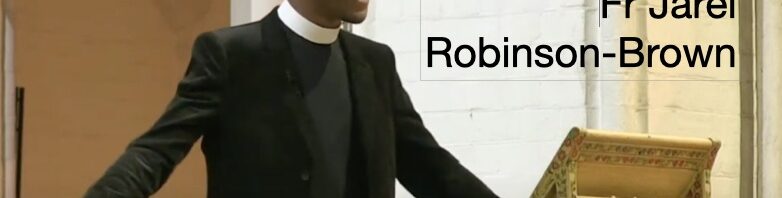
    by Fr Jarel Robinson-Brown, Co-Chair of OneBody OneFaith and Visiting Scholar at Sarum College, Salisbury

    ‘To encounter oneself is to encounter the other: and this is love. If I know that my soul trembles, I know that yours does, too: and if I can respect this, both of us can live. Neither of us, truly, can live without the other…’

    – James Baldwin, The Devil Finds Work, 1975


    It would be fair to say that I have been wrestling recently, quite deeply, with what place hope should have in my life. Not just as a Christian, but as a priest – I’ve wondered whether hope is all it is made out to be, and whether hope (real hope) is even possible as someone who exists in a body whose skin invites violence and micro-aggression and whose sexuality endures inequality, oppression and injustice. For years, as someone Black, Gay and Christian I have wrestled with what part of me really ‘came first’ in that list of identity that I carry not by choice, but because the world is a place where labels, compartments, boxes exist. And they exist, on the whole, to make those who do not carry them – feel safe.

    One thing people often say in relation to my recent book is that a shorter title would have been better. But ‘Black, Gay, British, Christian, Queer’ defines those of us who live at the intersection of race, religion, sexuality and culture. As I wrote: ‘as Black Queer Christians  … we feel pressurized to choose at times between our Blackness and our Queerness, our Britishness and our African-ness, our religion and our desire, our life partner and our families, our bodies and our souls…To some we are no longer Black, to others we are no longer Christian. We live then faced with an impossible ultimatum between ‘life’ and life – to live as we are expected to live, to live in the freedom that is ours but will cost us nothing short of absolutely everything to inhabit’ (p.24).

    So to return to hope, I still remain uncertain as to what place hope should have in my life – and I went to the Lambeth Conference fairly hopeless but left with more hope than I imagined possible. Getting on the train to Canterbury, I was already apprehensive – the 15 year-old child sat in tears around the family dining table defending his right to exist was back…, “this is just who I am” in the face of “you can’t be Gay and Christian, the Bible says it’s wrong”. Standing in the truth of who I am does and has cost me much, not least my relationship with my father and other family members – but when the only options before you are staying in the closet and death (and both are the same thing I think) the choice was clear.

    By the time I arrived in Canterbury a statement had been released by the Global South Fellowship of Anglican Churches which stated that they would table their own call to re-affirm Lambeth resolution I.10 as the “Anglican Communion’s ‘official teaching’ on marriage and sexuality” and to impose sanctions on Provinces which ordain bishops in same-sex relationships and conduct same-sex weddings. Rather than receive communion alongside such bishops, they announced that they would stay seated, as one of “a number of ‘visual differentials’”.

    It was of course, like stepping into the lion’s den. Seeing those who had decided that receiving the sacrament of the Eucharist alongside people like me was impossible. My black body stood at an LGBT+ stall was clearly quite confusing to some of my brothers and sisters from other parts of the world. To embody an “issue” in the skin of those who are most vocal against it was an interesting experience.

    At the forefront of my mind was the reality that I am one among many whose ancestors did not leave Africa willingly, but who were taken from their homes to far off lands. Whilst I am a citizen of the UK and Jamaica, I am also an African Gay man, and a Christian. Sometimes I wonder what my life would look like if we were never taken – what language would I speak, what clothes would I wear, what God would I know. This sense of unknowing is powerfully articulated by Cole Arthur Riley in her work ‘This Here Flesh’:

    ‘I do not know from where my ancestors were abducted. I cannot tell you what the air smells like there. I don’t know what sound the waves and soil speak. These things were stolen from me as they were from them. I think it is one of the deepest evils to become a thief of place, to make someone a stranger to their home, and then mark their relationship to the land by bondage instead of love.’ (p.22)

    Although at times the space at the Lambeth Conference felt occasionally hostile rather than violent, I was surprised by the deep, warm and meaningful encounters I had with Bishops and those invited spouses who were willing to engage – even inviting me to their countries to engage in dialogue around LGBTQ+ lives. It would take more courage than I perhaps have to go to countries where homosexuality is still illegal, but then I already do so whenever I go to Jamaica.

    It seems to me that not enough attention has been paid to cultural aspects of this dialogue. There is, for example, a huge issue with seeing Africa as one homogenous anti-gay continent. Southern Africa is not Nigeria, Ghana is not Swaziland and Brazil, also part of the ‘Global South’, is extremely LGBT+ affirming. It is claimed that homophobia in Africa is pervasive, indigenous, deep rooted and normative, when in fact it functions on many levels: Political, Cultural, Theological.

    In his work ‘Out of Time: The Queer Politics of Postcoloniality’ Dr Rahul Rao notes:

    ‘As countless media reports purporting to analyse attitudes towards sexuality inform us, ‘homophobia is rife in Africa’. Contrasted with the queer freedoms of the West, such discursive constructions of Africa produce what Jasbir Puar has described as ‘homonationalism’ – an assemblage in which LGBT rights have come to be mobilised as new markers for an old divide between the civilised and the savage.’ (p.33)

    What this construction of Africa does is locate homophobia in Africa in such a way that removes agency from Africans to define their attitudes themselves rather than having them instrumentalised and manipulated by outside factors. Rahul Rao also names ‘homoromanticism’, a view which sees African people as blameless pawns caught up in a white, western culture war into which Africa has been dragged. Like ‘homoromanticism’, ‘homonationalism’ removes African agency to tell the story of indigenous queer identities and anti-queer attitudes from within the African cultural context.

    Rahul Rao also reminds us that postcolonial critique needs to go beyond simply reminding us of the enduring legacies of colonialism. Formerly colonised states have become colonial in their own right, and “the project of decoloniality might itself become a vehicle for the politicisation of ‘homophobia’”, as happened at the 1998 Lambeth Conference, when conservative evangelical American Anglicans capitalised on the demographic strength and financial weakness of the African Churches when weaponizing homophobia.

    For me, the very notion of a distinctly ‘African’ homophobia is essentially an orientalist narrative setting up Africa as the antithesis of Europe. The positions taken by many African clergy at the Lambeth Conference are driven by anxieties from the global south related to the preservation of culture, of customs, the notion of the family against the perceived and real threat of Global North hegemony. Nor is the UK the haven of equality and justice which the binary narrative claims – as my experience in this black queer body within and without the Church in Great Britain shows.

    What struck my black body most starkly whilst being present at the Lambeth Conference was that all, literally all, of our LGBTQ+ material and literature was in English. We understand ourselves as the centre of a universe which is so much more diverse than even we, who are wanting the Church to be more diverse, realise. Few know much about the cultures of Kenya or Sudan as well as other parts of the Global South, and so much of our queer theology and scholarship is shaped by our Eurocentric categories which neglect non-western epistemologies, conceptual and intellectual frameworks. When we commend LGBTQ+ justice and equality we do so not only across a theological divide but a cultural and linguistic divide. For a Bishop from along the Nile whose diocese is not even 10 years old, whose people suffer from floods and civil war, a conversation therapy booklet is baffling when his people have no access to good healthcare or the vaccine.

    So am I hopeful? I don’t know. What I do know is that there is no hope that things will change so long we fail to encounter difference. The Lambeth Conference hasn’t met for 14 years: many of the Bishops who are there now were not Bishops when it last met: the world, in just the past two years, has totally changed. We need to hold our English bishops to serious account for their cowardice, whilst paying careful attention to the dialogue around other parts of the Communion. There is, at the heart of this, just so much fear – perhaps what drives this fear is the reality that a Church which becomes more inclusive is fundamentally one which is more honest…more honest about the world God has made, and the people that make up that world – and maybe the illusion that God’s world is straightforwardly heterosexual is finally crumbling. But without encounter of the ‘other’, each of our worlds become smaller, less real, less true – whatever the future holds if it is a future shaped by God, and of course it is – it will be made up of all of God’s people. And a Church which is honest about the world is a Church which can attractively proclaim the Gospel of Jesus Christ whose love knows no bounds.

    ‘…There is no promised land without a multitude. You think you can get there alone, and maybe, by some rare chance you do. But what will become of the promise when it is collapsed by loneliness? Who is going to drink all that milk and honey with you? Look down in the cool, running stream. You cannot see yourself.’

    – Cole Arthur Riley, This Here Flesh, 2022