Tag: homosexuality

  • What is Anglican Sex Anyway?

    by Revd Canon Neil Patterson, Vice-Dean of Bristol Cathedral and Chair of Together for the Church of England

    Everyone knows that the Church of England likes arguing about sex, but in all our recent debates we have been curiously reluctant to define what it actually is. This matters, because there are different answers, and what the Church is telling individual couples is quite different depending on the answer to this question. To make some progress, we need to go back a few decades…

    The ‘Higton Motion’

    The 1987 debate on sexuality has become somewhat mythologised in the history of the subject, though there are people still around, indeed on Synod, who were there. By comparison, I am relying on the Proceedings and contemporary reports, and recognise the limitations of that. However, it is significant that the motion Synod passed was not that originally proposed by the Revd Tony Higton, which had received a record number of 168 signatures in the time between the July and November groups of sessions. As submitted, his motion read:

    ‘This Synod reaffirms the biblical standard, given for the well-being of society:

    • that sexual intercourse should take place only between a man and a woman who are married to each other;
    • that fornication, adultery and homosexual acts are sinful in all circumstances;
    • that Christian leaders are called to be exemplary in all spheres of morality, including sexual morality, as a condition of being appointed to or remaining in office;

    and calls upon the Church to show Christ-like compassion to those who have fallen into sexual sin, encouraging them to repent and receive absolution, and offering the ministry of healing to all who suffer physically or emotionally as a result of such sin.

    Although not the only element of the motion, the speeches of Higton and his supporters, combined with his document Sexuality and the Church which had been distributed, as if a Synod paper, to all members, make it clear that his major aim was to push the bishops to purge the church of gay clergy.

    It seems that the Bishops were prepared for this. The House of Bishops minutes for the 1980s are now public at Lambeth Palace Library, but mostly do not reveal much, being a bare record of decisions taken. However, in October 1987 they had noted the impending Higton debate, and recorded the proposal of their own Standing Committee that the House should propose as an amendment the following, much milder, text:

    ‘This Synod affirms the Christian tradition that sexual intercourse is only appropriate within marriage; requests the House of Bishops, in the light of the advice it receives from the BSR [Board of Social Responsibility] Working Party, to report to the Synod in due course on issues to do with homosexuality; and calls on all Christians to be exemplary in all spheres of morality including sexual morality.’

    In the event, perhaps following discussion with multiple parties, what actually appeared, following a long speech from Archbishop Robert Runcie which reads as fence-sitting even by his standards, was a detailed amendment by the Bishop of Chester, replacing Higton’s text with the following:

    ‘This Synod affirms that the biblical and traditional teaching on chastity and fidelity in personal relationships is a response to, and expression of, God’s love for each one of us, and in particular affirms:

    • that sexual intercourse is an act of total commitment which belongs properly within a permanent married relationship,
    • that fornication and adultery are sins against this ideal, and are to be met with a call to repentance and the exercise of compassion,
    • that homosexual genital acts also fall short of this ideal,
    • that all Christians are called to be exemplary in all spheres of morality, including sexual morality, and that holiness of life is particularly required of Christian leaders.’

    As well as the generally milder language, it is important to note that this amendment, presumably agreed by the bishops ahead of the debate, drew a distinction between ‘sexual intercourse’ proper to marriage and ‘homosexual genital acts’ as a different category. Traditionally the former refers to the entry of a penis into a vagina, the necessary act for the consummation of a marriage or the act of adultery (and the reason President Bill Clinton famously felt able to deny doing it with ‘that woman, Miss Lewinsky’). I will return to this distinction, though I will abbreviate the latter unlovely expression to ‘HGAs.’

    That was not the end of the matter – an amendment to the amendment was offered by the Revd Dr P.R. Forster, as he then was (subsequently himself the Bishop of Chester) to add to the bishops’ clause three, ‘and are likewise to be met by a call to repentance and the exercise of compassion’, supported by a speech emphasising the pastoral angle of the whole debate. There was almost no debate, +Chester being neutral and Higton supportive in single sentences, and the amendment to the amendment was made, seemingly without much fuss. And it was this text, proposed by the Bishop of Chester and amended by Forster, which the Synod went on to pass by an overwhelming majority, with lasting effect. The Forster amendment is important, because it eliminated the subtlety of the original bishops’ text (which could be read as seeing gay sex as a lesser, but tolerable, thing than married ‘sexual intercourse’) in favour of a moral equivalence to ‘adultery and fornication.’ (The latter term, incidentally, appeared to be taken as read without any debate about what exactly it might include). Other amendments were also debated but rejected.

    Contemporary reports of the Higton debate, however, do not record it as a great moral victory for the conservative cause, but rather a successful defusing by the bishops of a divisive motion. In subsequent Synods, Higton and allies like David Holloway can be found persistently asking official Questions about the application of the resolution to clergy and especially ordinands, making it clear they believed the bishops were still insufficiently vigorous in excluding gay candidates. And whilst they may have been disappointed in the bishops’ rigour, it seems to me that the text of the motion passed influenced the subsequent Issues in Human Sexuality, where the freedom of conscience afforded to lay same-sex couples was not extended to the clergy. Issues also chose not to refer to HGAs, instead adopting “active homophile relationship,” a terminology almost as baffling as it is contentious.

    The distinction between sexual intercourse and HGAs remains significant, however. My sense is that in LGBTQ+ culture, it is accepted that ‘sex’ actually embraces a range of different things, all of which are probably HGAs, but which are different for different couples, with no simple equivalent of the normative status of ‘sexual intercourse’ (and, obviously, for each particular couple, none of anybody else’s business). I am sure lots of straight people will want to point out how varied and interesting their sex lives are too! But it is difficult to ignore the place of intercourse as the legally significant act for centuries, not least as the only sexual act which can lead to the conception of children, and so undoubtedly of primary moral significance.

    Why does this matter now? Well, as I explored in my last blog here, the 1995 debate on Something to Celebrate led to the 1999 Marriage: A Teaching Document which affirms among other things that “Sexual intercourse, as an expression of faithful intimacy, properly belongs within marriage exclusively.” It was this text in turn which was included (albeit only as a quotation, not a direction) in the 2012 Guidelines for the Professional Conduct of the Clergy. If, like surely every strong conservative in the Church of England, we accept the importance of the 1987 motion passed by such a strong majority, making a clear distinction between sexual intercourse and HGAs, then it is clear that the Guidelines are entirely silent on the latter. This will obviously be of significance to all ordinands and clergy in same-sex relationships, since the Guidelines have recently replaced Issues in the discernment process, by uncharacteristically efficient action of the House of Bishops since the overwhelming passage of a Private Member’s Motion sponsored by Mae Christie at General Synod in July 2025. It is just possible that one or two of those who voted for it did not appreciate the full significance of the change.

    This remains important, because the Guidelines are in the process of revision, and a draft has now been published for discussion at the meeting of the Convocations immediately preceding General Synod, on Monday 9th February. The draft text introduces reference to civil partnerships, and wisely maintains silence on HGAs, quoting once again from Marriage: A Teaching Document.

    But those who have drafted the revision still seem to be trying to influence the ongoing debate on sexuality. Otiose references to Canon B.30 (at §7.8) and to the necessity of obeying law (at §8.3) will be read as unbalanced attempts to strengthen the hand of those who wish to act against clergy who have entered same-sex marriages. More seriously, §7.9 enshrines the 2014 House of Bishops statement on same-sex marriage into the Guidelines, but this is necessarily due for replacement on account of its reliance on Issues. No doubt the clergy in Convocation will be able to make their voices heard on these matters, and it seems unlikely that with the present balance of the House of Clergy the draft Guidelines will be endorsed unamended. The existing Guidelines were drafted by a wise and wide committee led by Prebendary David Houlding; from all I hear, such breadth was not sought on this occasion, and the consequences are evident.


  • Exorcism, Conversion Therapy and Safeguarding: the Barnado’s Independent Investigation

    by Anon. 

    This morning, the BBC ran this story after the Diocese of Sheffield released two documents highly relevant to examining Church of England safeguarding practice, along with a statement from the Diocese, the Yorkshire Baptist Association and the trustees of Network Church Sheffield. The report relates to St Thomas Philadelphia Church, part of St Thomas Crookes, and so a descendant of the Nine O’Clock Service (NOS). St Thomas Philadelphia has subsequently operated as Network Church. There are similarities in that churches which appear to be ‘successful’ in terms of attracting young people and funding have been able to slip under the radar in worrying ways. The leader of NOS, Chris Brain, is also under investigation.

    The diocesan statement on St Thomas Philadelphia is available here.

    Part 1 – dated 30th November 2023 –  is the redacted Independent Investigation of St Thomas Philadelphia Church in respect of a complaint by MD.

    Part 2 – dated 26th February 2024 – is the redacted Independent Review of Safeguarding Arrangements in St Thomas Philadelphia Church.

    We understand that Part 1 investigates the circumstances around a complaint made by “MD” in 2019, alleging “MD was given an ultimatum to stop discussing his theological position on LGBTQ+ matters or he would be required to step down from the student leadership team”, that he “experienced prayer ministry, which he experienced as an exorcism, which attempted to change his sexual orientation from gay to straight”, that “he was forced to step down from volunteering on the student leadership team at the church after stating he was considering dating as a gay man”, and that he “was not welcomed at the church after his removal from the student leadership team.” The investigation found that each aspect of the complaint was Substantiated, and was therefore, Upheld.

    The report goes into detail around each element of the complaint, and also discusses the wider definition of a vulnerable adult, the responsibilities of trustees of charitable organisations, and the culture of this church as understood by the investigation team. The writers draw their conclusions from accessing documents, emails and records and from holding interviews with individuals connected to the church. The report provides an insight into the experiences of some LGBTQ+ people attempting to access church.

    A particularly pertinent line states: “…although individuals may have exchanged pleasantries with MD at times, the Church did not make MD feel welcome after he left the student team, resulting in him leaving the Church completely in 2016.”

    Part 2 includes 22 recommendations of ways in which the Church can strengthen their safeguarding. The learning from this review may form a helpful standard against which other churches’ and organisations’ safeguarding can be assessed and measured. The report reminds us: “Safe and healthy cultures do not, however, happen by accident, they are purposely developed and carefully nurtured, influenced to a significant extent by the actions and attitudes of senior leaders.”

    The Diocese of Sheffield released these reports with this apology: “We apologise unreservedly to the survivor for the distress this has caused and to anyone else similarly affected by such practices in the past.”

    Matthew Drapper, who has chosen to keep his initials within the report and to name himself as the survivor, had this to say: “In a letter to me, in 2019, the trustees of the Church denied there was any evidence these events occurred. In 2022, the organisation told the press, the church ‘does not engage in conversion therapy.’ We now know the Church did engage in conversion therapy, lied to cover it up and failed to investigate themselves. At every stage, I have had to fight for an independent review, against delay, coverup and a so-called safeguarding culture which resists external oversight. I’m grateful to every person who gave input to this investigation, at great personal cost. I have been deeply traumatised by the length of time it took to reach this outcome. I feel deeply for anyone who has experienced unsanctioned and unsafe exorcism practices. I am pleased to hear the apology and am especially glad it was addressed to the countless unnamed others who have been affected by these practices, over the years in Network Church Sheffield, and within wider Anglican and Baptist networks. I am hopeful this learning can be widely shared and that change is coming.”

    Chrissy Meleady MBE CEO, of Equalities and Human Rights U.K., who was Matthew’s Advocate through the challenge, said: “The investigation and its findings have vindicated Matthew, who was put through an exorcism for being a Gay man. He then had the reality of this experience vehemently denied as never happening. Matthew’s and others’ experiences of exorcism/conversion practices are recognised at last and an apology has been issued to him and the numerous others who were subjected to this form of Spiritual Abuse. It has been a  five year struggle to secure this justice for Matthew and others like him. It has not been without its cost.

    “We welcome the expressed commitment of the St Thomas Philadelphia Church and NCS, the Sheffield Diocese of the Church of England and the Yorkshire Baptist Church, to learn from this lessons. to ensure that nobody else is put through what Matthew was put through .

    “We welcome too the Diocese of Sheffield’s,  along with the wider Church of England’s expressed assertion that conversion therapy is unethical, potentially harmful and has no place in the modern world.

    “The UN Human Rights Committee has categorically told the U.K. to prohibit conversion practices. Its independent expert on sexual orientation and gender identity, Victor Madrigal-Borloz  has made it explicit that conversion practices are inherently discriminatory, that they are cruel, inhuman and degrading treatment, and that depending on the severity or physical or mental pain and suffering inflicted to the victim, they may amount to torture.”

    Philadelphia was a supposedly successful church. It’s part of St Thomas Crookes, and so a descendant of the Nine O’Clock Service.

  • Queering the Church: The Theological and Ecclesial Potential of Failure

    by Dr Penelope Doe, University of Exeter

    July General Synod approaches and the interminable conversations on LLF and PLF continue. It’s over 10 years since The Pilling Report was published, launching Diocesan Shared Conversations amongst other conversations at Synod and elsewhere. I read Pilling when it was first published, was a little surprised by how superficial I found it, and was intrigued by the tension on display between provisionality and certainty. Its hermeneutics, like those of the CoE as an institution embodying authority power, privilege, and the unalloyed goods of progress, became the subject of my PhD and now my recently published book, Queering the Church: the Theological and Ecclesial Potential of Failure.

    This is, I think, the first time that the hermeneutics of an institution have been interrogated using queer theory and disruptive readings of the Church’s neoliberal models of growth and success, alhough Charlie Bell makes a similar challenge to ecclesial models of hegemonic normativity presented as gospel truth in his recent book, Queering Redemption (Darton, Longman and Todd, 2024). Queering the Church uses Pilling as a paradigm of the ways in which churches construct authority, success and progressiveness, and embody power and privilege. Far from eschewing the liberal secular societies of the Global North, the Church has readily embraced their neoliberal identities and practices.

    What do I mean by queer/queering as a methodology? Queer is better figured, perhaps, as a verb rather than as a noun; a doing rather than a being. Since queer theory is disruptive, transgressive, and troubling, it can have no definitive logic, discourse, or end. David Halperin apprehends queer’s slipperiness in his statement that the concept owns no stable reality:

    Queer is by definition whatever is at odds with the normal, the legitimate the dominant. There is nothing in particular to which it necessarily refers. It is an identity without an essence. ‘Queer’, then, demarcates not a positivity but a positionality vis-à-vis the normative – a positionality that is not restricted to lesbians and gay men but is in fact available to anyone who is or who feels marginalized because of her or his sexual practices; it could include some married couples with children… (Saint Foucault, OUP, 1997)

    I often find queer theory richer and more disruptive than queer theology. My two main conversation partners in the book are Jack Halberstam, whose Queer Art of Failure provided a methodology for queering the church, and  Karen Bray whose work on a Theology for the Unredeemed (Grave Attending, Fordham University Press, 2019) suggested Holy Saturday as a site of queer temporality in which the church could learn to experience the abnegation and alterity of that liminal day, as queer people have often been coerced into the acceptance of liminality in a heteronormative church. As for that motif of failure as a ‘queer art’, it derives from Halberstam’s book which posits failure as a kind of ‘victory’ for those who fall outside the cisheteronormative models enforced by neoliberal patterns of success and progress.

    First, what can Halberstam’s work offer us? By adopting the potential of failure as a means of que(e)rying the hegemonic assumptions of church reports and report writers, the Church of England might be able to embrace those whom Halberstam calls ‘the incoherent, the lonely, the defeated and the melancholic’. The Pilling Report and its ‘afterlife’ showcase mostly those voices whose authority derives from the hegemonic norms of neoliberal ideas of progress and success. Such norms are represented as Christian, often as traditional or orthodox Christianity. These prevailing ways of knowing disregard the possibilities suggested by the failure of progress, success, knowing, agreeing, and predominating.

    The institutional life of church reports and debates, which is predicated on the belief in the unassailability of church polity, could, perhaps, seek for ways of knowing outside this dominant framework. Rather than ‘success’ and ‘progress’, failure’s art embraces the queer hope of unbecoming, undoing, unknowing; the ways of negativity, passivity and immaturity. Halberstam focuses on what Foucault calls ‘subjugated knowledge’ – cultural understandings that have been regarded as childish and foolish notions of possibility. It is, perhaps, ironic that a religion that enjoins its followers to be childlike has such a problem with the radical and anarchic potentialities of childishness. Failure and negativity can be redemptive.

    The academic or quasi-academic language of church reports and debates acts as a gatekeeper for this discourse, making access difficult for those who do not ‘speak’ the scholarly or ecclesial vernacular. Halberstam’s appeal to the silliness and childishness of some subcultures and popular culture reminds us that meaning is made outside ‘proper’ knowledge in failure, forgetfulness, wandering and improvisation. But if we dwell in the ‘queer temporality’ of Holy Saturday, the prospect of resolution is tenuous and uncertain. Failure and the almost fugue state of Holy Saturday are the suggestive ‘solutions’ I offer to the peculiarly intractable ‘issues’ that sexuality, or rather homosexuality, poses for the church.

    As for Bray, her political theology borrows from the Holy Saturday theologies of remaining explored in Shelly Rambo’s Spirit and Trauma: A Theology of Remaining (Westminster John Knox Press, 2010), using the mystical theology of Hans Urs von Balthasar and Adrienne von Speyr exploring the meaning of the wordless and abandoned ‘middle’ between the cross and the resurrection. Speyr’s mystical revelations began in the Holy Week of 1941 and continued until her death in 1967. Christ’s descent into Hell was presented not as a triumphant rescue of lost souls, but as an experience of experiencing utter abandonment by the Father.

    Balthasar and Speyr both saw Holy Saturday as timeless, a space where redemption is begun in a tiny drop of love, originating in Christ’s wound that will blossom and fruit: ‘This residue of love is not powerful but weary and impotent. Its movement suggests that death does not fully govern it’.

    Holy Saturday is (also) a Wordless space since the Word made Flesh is, according to Balthasar and Speyr’s mystical theology, now dead. Forsaken by His Father, the Son enters into a condition of suffering and separation, of passivity and failure: ‘the Father and the Son are from the furthest reaches of each other in Hell’. In this vision of Holy Saturday, not only does the Son take on our suffering on the Cross, but also He descends into Hell where He endures alongside the dead and damned; there is nowhere now that God has not entered and no condition, however perilous, that God has not inhabited.

    This concept of Holy Saturday as a Wordless space – a site of absence and failure – could be a model for the Church of England’s engagement with the troubled waters of sexuality and gender. Non-normative sexualities and genders are not in themselves ‘troubles’ to be solved, but the number of reports and debates on homosexuality are evidence that they ‘trouble’ the Church. The Church of England’s response to what it views as aberrant ways of being human can itself be ‘troubled’ (or queered) in the queer temporality of Holy Saturday rupturing the cisheteronormative utopias that the Church creates and that deny – or attempt to elide – their queer beginnings.

    Holy Saturday, this ‘middle’ day, is a Wordless site in which the Church of England can remain without anticipating the certainties and realisations of Easter day. Even in its paschal liturgies, the Church seems too eager to rush from the agony and failure of the crucifixion to the joy of the resurrection without pausing to experience both the abandonment and the exiguous hope of Holy Saturday. Following the death of a naked and tortured Messiah and bereft, therefore, of hope, the Church must encounter and admit failure, so that even if rescue comes, the experience of failure will always form a part of salvation. But the Church of England baulks at the prospect, or even at the possibility of failure.

    If those who produce church reports could only enter the queer temporality of this ‘middle’ day, they could face the rupture of all their certainties, encountering a provisionality that does not expect the traditional answers. They might see negativity, not as a negation of the orthodox, but as an empty space that follows the rupture of the normative. Abiding in the desolation of Holy Saturday requires, in Bray’s terms, a ‘grave attending’ to different ‘becomings’; to how ‘transformation’ and ‘living obedience’ might work out for the unredeemed. In Grave Attending (p.31) Bray writes:

    Current discourses on queer temporality seek to examine the ways in which heteronormativity and white supremacy fortify the neoliberal political economy. Many queer theorists uncover the resonance between the demand to be a productive member of society and the manipulated desire to be a reproductive member of the heteronormative family. Such demands nurture in us an optimistic belief that the straighter and whiter we become, the happier we will be. This cruelly optimistic promise (to borrow from Berlant) impedes alternate desires of community, family and self.

    I want to use the uncertainty, provisionality and, indeed, failure of Holy Saturday as a site for queering the hermeneutic and teleological assumptions of church discourses produced by a stable, influential, neoliberal institution – the Church of England – that reflects the values of resilience, productivity and growth promoted by the market. For Bray (p.27), grave attending is

    a style of life that does not wait for resurrection as much as it tries to remain with a difference on the day after damage and death. It does not and cannot rush toward redemption out of the gravity of such damage, because it is attendant to the damage of those who, in the wake of our resurrective impulses, we have let drown.

    It is not those crucified by neoliberalist ethics – which Bray describes as ‘heteropatriarchal, ableist and white supremacist’ – who need to inhabit the queer temporality of Holy Saturday, even though it is a site in which queer folk are often required to suffer simply because their bodies are figured by some churches and by some Christians as unredeemed. It is the Church, as an institution, which needs to be gravely attentive and to experience its queer temporality, rather than those who may already have suffered ecclesial trauma. Being able freely to inhabit a site of suffering and failure requires a level of privilege not always afforded to those whose lives are marked as unproductive or liminal. As I write in the conclusion:

    I want to end with the hope that, by troubling the waters of ecclesial discourse on (homo)sexuality, I have indicated a site – a place of desertion – where the Church of England might reflect on the art of unknowing, undoing, unbecoming; on the ‘queer art of failure’.


  • Keeping Students Safe: the Oxford LGBT Students Safe Churches Project

    by Chrissie Chevasutt, ‘Outreach and Development Worker with Transgender, Intersex and Non-binary People’, for St Columba’s Oxford. They have lived and worked in the city for 33 years, across a wide spectrum of churches, and in varied roles, thus having a unique perspective on church history and practices over that period.

    As part of my work in the city of Oxford, working with the transgender, Intersex, and non-binary community, I work alongside and with many LGBTQIA+ students. The stories I hear from them are constant, consistent, and repeated many times over. They experience spiritual abuse and religious trauma in some of the city’s churches. They are traumatised, and often suffer many secondary conditions; deep emotional, mental, social, relational, and spiritual wounding, some of which can work itself out in psychosomatic physical illness, chronic anxiety, and struggles with mental health.

    These same churches – who would describe themselves as ‘conservative’ – then add to the students’ pain by teaching that all their struggles are because they are gay, bi, trans, or queer. These churches and leaders refuse to accept that the judgement, condemnation, exclusion, and separation, sometimes even damnation, that flows from their lips, hearts and pulpits might be the cause. The consequence of their theology, preaching and teaching is to inflict guilt and shame upon many vulnerable young lives. From this, withdrawal and isolation are a common experience for students who are driven away from church and God.

    Self-loathing, self-hatred, despair, and shame can cause self-destructive behaviours and compulsions, almost impossible to control or contain, from eating disorders and self-harm, to suicidal ideation, suicide attempts and sadly, suicides.

    All this poison flows from the systematic homophobic theology that emerged from post-WWII USA. It’s a theology undergirded by the threat of hell.

    This theology is grounded in the claim that those who enjoy same-sex relationships are indulging sexual immorality, drawing on a Christian fundamentalist and biblical literalism that leads from 1 Corinthians 6 v9, through Ephesians 4 v17-19, 5 v3-5, to the eternal damnation of Revelation 21 v7-8.

    I was recently approached by a student who felt forced to leave a church where this theology was being preached. Even after 18 months in the church, they had no idea this was the theology of that church. They are in a same-sex relationship, their partner already badly wounded by a conservative evangelical church. They were told this church they’d started to attend was ‘youth friendly, progressive and liberal, welcoming everybody’.

    Confirming this, another three students have told me separately how they had shared within their student fellowship group meetings that they are gay, and in same-sex relationships. None of this appeared to trouble the group, or the student pastors, some of whom are paid church staff. On the contrary, they felt loved and affirmed by everyone present.

    (Most of the older members of the Christian LGBTQIA+ community in Oxford, however, know this church to have a long history of campaigning against LGBTQIA+ people’s dignity, equality, rights and freedom.)

    This pastoral policy of conservative evangelical churches marketing themselves as ‘Everybody Welcome’, in order to draw in as many students as possible, may make them ‘successful churches’ but only by hiding their homophobic theology and pastoral policy, a practice which is deceitful, disingenuous and dangerous, and potentially fatal to vulnerable young lives. We know that the incidence of self-harm, suicidal ideation and suicide attempts are far higher amongst LGBTQIA+ youth, and this increases again amongst LGBTQIA+ youth from Christian fundamentalist homes, families, churches, and faith backgrounds.

    It appears certain city churches now hold a policy of strict silence over their staff, of not saying anything about gender or sexuality that might go public. They realise that, if they are known to hold homophobic theology and pastoral policies, they will lose many of the students who flock through their doors.

    In September 2022, Bishop Steven published his proposal, outlining his theology for equal marriage: Together in Love and Faith. I read it and was impressed and blessed, until I got to page 46. The LGBTQIA+ Christian community has absolutely no doubts about the courage and compassion of Bishop Steven, in becoming the first bishop to put forward a proposal for same-sex marriage. We feel both indebted to him and want to protect him from the storm he faces from those clergy in his diocese who disagree.

    Many of us, however, have grave doubts about his commitment to protecting us, especially in the matter of our Safeguarding within his churches. There are doubts over his own history and proximity to colossal Safeguarding failures that have had tragic out-workings.

    On page 46, Bishop Steven repeatedly expresses extreme reluctance to place responsibility for the spiritual abuse of LGBTQIA+ people upon individual clergy or churches. This is a red flag waving right here, threatening effective Safeguarding of LGBTQIA+ people in his own Diocese.

    After being approached by the student who had felt forced to leave the ‘welcoming’ church that had been their spiritual home for the previous year and a half, on account of the attack upon their same-sex relationship, I began to research further. I discovered an audio recording of a 45-minute Sunday sermon on homosexuality.

    It is without a doubt the worst homophobic teaching I have heard in 43 years of church life. It is an appalling distortion and manipulation of history, theology, and psychology, used by a priest, to deliberately stigmatise, pathologize and demonise LGBTQIA+ people.

    This sermon was applauded by the church.

    This is exactly why the students’ Oxford Safe Churches Project had to happen. We have a Bishop who supposedly stands for us, but won’t stand with us and protect us; so, who will?

    Students who are driven away from church have nowhere to go. They know they will not get a fair hearing from the church’s Safeguarding Officers, many of whom will hold similar beliefs to the church’s leadership, and they have zero confidence in many of the denominational or Oxford Diocesan Safeguarding structures and current practices. The evil of Pilavachi in Soul Survivor, and the Church of England’s total failure in safeguarding young people there, has destroyed what little faith they may have had in any safeguarding process with which they might have otherwise engaged. They know they will most likely suffer further abuse and retraumatising in any internal safeguarding process they enter.

    In March 2022, I met with one of the university transgender reps, who represents both their college and the LGBT Student Society. They happened to be profoundly Christian, in faith and character. One of the subjects we wrestled with was the knowledge we both shared, of students getting badly damaged, and spiritually abused, in some of the city’s conservative churches. We both felt we could not call out the damaging churches, and that whoever dared to do so might be subjected to character assassination for attempting such a daunting task.

    When we met again at the beginning of this year, our hearts and minds had totally changed. Both of us had seen, in just that one year, too many students being wounded by homophobic, transphobic theology and pastoral practises. The suffering and pain in those lives, and even in our own, led us to conclude we could longer tolerate this happening on ‘our watch’.

    Together we wrote up a proposal for the Oxford University Student LGBT Society (of which, as a mature student in the city, I’m a member), to begin a project to signpost safe churches and flag up churches we knew where students were being broken.

    This was unanimously passed at the end of Easter term, and plans developed for the project.

    A team of students has laboured right through Summer term and the summer holidays, sending out questionnaires to 30 of the main city churches, collecting testimonies, researching churches’ history in archives online. From this they are collating all their information into a simple traffic-light-coded review, to assess which churches might be safe, and which are potentially damaging for queer students.

    Their passion, desire, and objective is to stop freshers getting sucked into churches who promise welcome, but inflict spiritual abuse. Most of them have been through this themselves, or seen friends whose student life in Oxford has suffered irreparable damage. They know this is a war over students’ lives and souls. They have paid a heavy price doing this research, which for most of them is triggering, traumatising and affects their mental, emotional, spiritual, and physical health. They are watched over by professionals in the university, clergy from various denominations and non-ordained pastoral workers like myself.

    The project has gone live in time for Freshers Fayre. Its bottom line is to save young lives; literally. They know their time in Oxford is short, but they are determined to leave a lasting legacy, that might see more churches becoming fully affirming at best, and at the least, force conservative churches to become honest, transparent and open about their core theology, pastoral policies and practises for their LGBTQIA+ potential members.

    They believe the Oxford Safe Churches Project has the power to achieve both those aims.


  • Let’s Disagree to Agree: Rwanda and Homosexuality

    by David Bagnall, Associate Rector of St John’s Episcopal Church, Edinburgh. Formerly chaplain of Emmanuel College, Cambridge, his PhD thesis examined the role played by language and discourse in generating new concepts of homosexuality in the Anglican Church of Rwanda

    One of the perishingly few points of general agreement within the sexuality controversies currently wracking the Anglican Communion is that everyone disagrees. Disagreement, as we all know, is at the heart of the issue – indeed, that’s the whole point. Put crudely, liberals, generally in the Global North, think that homosexuality is a God-given identity to be cherished and nurtured along with everything else that is sacred and holy; conservatives on the other hand, generally in the Global South, think that homosexuality is sinful and is a way of life chosen by fallen humans in defiance of God’s law and purpose. So far so simple: we disagree. Or so we might think…

    My research focuses on sexuality debates within the Anglican Church of Rwanda (ACR), and in particular on the role the Rwandan church has played within global sexuality controversies. Research in this area is continually fascinating, of course, but among the most startling of my findings has been the fact that, contrary to popular opinion (my own included), disputes regarding sexuality across the communion aren’t so much characterised by disagreement but rather by misunderstanding, or even miscommunication. My research focuses on debates between the ACR and the Church of England, and therefore involves interviewing many priests from both provinces about their experiences in discussions and dialogues, and time and again – to my surprise – interviewees report not so much disagreeing with their interprovincial colleagues but actually failing to understand them. Many priests I interviewed described such conversations as being deeply frustrating, with one CofE priest telling me that almost every conversation had been ‘a non-starter’, and a Rwandan Bishop noting that ‘there is no listening’ within the debates. Moreover, when asked about the nature of this frustration, members of both churches described it consistently in terms of a failure, not to agree, but even to understand one another. One CofE priest, for instance, told me of a conversation with a Rwandan friend regarding homosexuality in which his friend ‘couldn’t understand’ what it was that he was trying to describe, and that there was ‘a massive…difference’ in what they were each attempting to communicate. One CofE Bishop, too, told me that he felt that there was ‘a very big gap’ in understanding during conversations he’d had with Rwandans, and former Archbishop of Canterbury Rowan Williams noted that such conversations seemed to him to be ‘a dialogue of the deaf’. One Rwandan priest, finally, commented that for this reason sexuality is ‘difficult to talk about’, and Bishop Nathan Amooti of Kigali, reflecting on such difficulties, concluded sombrely that ‘there’s no proper dialogue’.

    The reasons for these misunderstandings are multiple and complex, and are too lengthy to detail in a single blog post, but at their centre is the fact that there are wildly diverse meanings conveyed within the English word ‘homosexuality’ when used by different actors across the Anglican Communion. For British Anglicans – regardless of their opinions on the subject – my research reveals that the meanings and resonances conveyed in the word reflect its deep and entangled history of usage within the British Isles. It has roots in psychopathology, but contains insights from theology, politics, socio-cultural discourses, and even legal practice. It has resonances of everything from the Wolfenden Report to Virginia Woolf; from Stonewall to David Beckham’s sarong. In other words, the word ‘homosexuality’ has a particular and culturally contingent history within the UK, all of which is contained within and expressed by it when used by British people.

    By contrast, the word ‘homosexuality’ has a startlingly short history within Rwanda. In Anglican circles it first appears within interprovincial documents in the late 1970s, but is barely mentioned until it suddenly explodes into life during the mid-2000s, during which time the ACR established deep bilateral partnership with disaffected conservative American Anglicans. It was by means of this partnership that an astonishing wave of anti-homosexual literature entered the Rwandan Church and. once there. came to redefine and renegotiate native and organic understandings of what we would call homosexual behaviour. For, just as homosexuality has a rich and complex history of development within the UK, so does what we would call homosexuality have a correspondingly deep history of development within Rwanda, though of a different kind. Prior to the mid-2000s, the word used by most Rwandans to describe homosexual contact was mutinganyi which, as my research revealed, conveyed a very different meaning to the British word ‘homosexual’. The word ‘mutinganyi’ is rich in depth and meaning, but at its heart is the idea of the use of intimate same-sex sexual friendship and activity as a means to self-knowledge and mutual development. Crucially, too, the word has no sense of the pejorative about it and isn’t tied to any ideas of identity exclusive to heterosexual norms. To be a mutinganyi, then, was to be a person who had intimate relationships – both sexual and otherwise – with people of the same sex, but in a fashion that wasn’t at all prohibitive of heterosexual relationships. It’s difficult for us to conceive of how this could be the case, of course, but that’s because I’m describing the phenomenon in English and using words which, as we have seen, convey different meanings. The point at stake, then, is that sexuality itself has an utterly different history of development within Rwanda no less rich than our own, and which our own words are simply incapable of describing, at least in discrete terms.

    The problem is, however, that the word mutinganyi is hardly ever used in Rwandan Anglican circles in the present day, and has come to be replaced almost entirely by ‘homosexual’. The reasons for this are chiefly down to the extraordinarily pugnacious and virulent anti-homosexual discourse introduced into Rwanda by American conservatives in the mid-2000s, which itself has evolved and developed within Rwanda to become the ubiquitous language within which sexuality debates are currently couched. It is for this reason that homosexuality is perceived without exception within Rwanda to be both a novel and foreign phenomenon. Paying close attention to language-use and development reveals that, in a strict sense, it is. The meanings and resonances conveyed by the word ‘homosexual’ – forged in conservative circles within American Anglicanism – are indeed both novel and foreign to the organic understandings of sexuality detailed above, and the near-ubiquitous use of the word ‘homosexual’ within Rwanda has therefore come to obscure or even redefine such native understandings.

    The reason why all this matters, then, is that people like me – who care deeply about the dignity and welfare of gay people, and who long for the day when people of all sexualities can participate fully as equally members of the Body of Christ – need to watch our language. For in using words like ‘homosexual’ in interprovincial dialogues, progressives are constantly in danger of unwittingly colluding with conservatives by falling into conservative narratives of a so-called ‘Western agenda’. If we want to see a church that celebrates the rich diversity of sexualities and sexual orientations that God has created, then we must resist the temptation to see our own sexual categories as ubiquitous, and focus instead on celebrating and fostering organic and culturally contingent sexual epistemologies throughout the Anglican Communion. Doing this, of course, will require patience and a constant awareness of the particularity of our own discourse and the discursive traditions of others. It will require serious thought, too, and the wisdom to discern when the limits of our language precludes real mutual understanding. True agreement may be far off, of course, but at least we might start with true disagreement.


  • All About Power: General Synod and the LLF Debate

    by the Revd Dr Charlie Bell, Fellow at Girton College Cambridge, and Assistant Curate, St John the Divine, Kennington

    The General Synod of the Church of England is a strange beast, and this week was no exception. Most of us don’t pay an enormous amount of attention to it most of the time, but this week felt different. This week, our lives and loves were up for debate – once again. And whilst the outcome was – to my mind – a positive, albeit small, step for LGBTQIA+ people in the life of the church, the debate gave us an insight into far more than that.

    In 2017, the bishops were asked to bring something back to Synod that might prove acceptable to the majority, and that might model a better approach to same sex relationships. In many ways, they have done precisely what they were asked to do – their offering ‘passed’. Yet one thing that they – corporately, although there are individual shining examples – cannot be accused of is being courageous. It is absolutely true that the numbers from this synod – a body that is entirely unrepresentative of the wider church, most particularly given the ludicrous method of electing lay representatives – suggest that equal marriage would not have secured the required 2/3 majority in all three houses, a stipulation that Parliament must surely look to change in the coming years. Yet a refusal to even debate it, whatever the result of the vote on the prayers – a refusal backed by the House of Bishops – is frankly pathetic.

    For at the heart of the debate in the chamber, and the endless faux outrage outside, was the outworking of power, and a refusal to dare to let go of it. For years, a relatively small, yet vocal and uncompromising minority have spent their time holding us all to ransom. The motion in front of Synod was one that offered a compromise, that enabled people to hold different views and follow their consciences. It is fascinating – in that light – that the majority wasn’t any larger. The reality is that many people who oppose same sex marriage don’t just oppose it – they oppose anyone being permitted to disagree with their point of view, their theological or Biblical interpretation. This is all about power.

    We saw this in the scandalous employment of endless delay tactics at Synod, whether by appeals to process or the crass disingenuity of some of the amendments tabled. Up popped the same group of people, time and again, to try to bring down any possibility of change and to try to kick this into yet longer grass. Synod, on the whole, saw through this, but it cast a shadow on proceedings in quite a significant way. ‘Let your word be ‘Yes, Yes’ or ‘No, No’; anything more than this comes from the evil one,’ as we hear in St Matthew’s Gospel. There is no moral get-out on truthfulness – we cannot simply ignore the need to be honest in the small things in order to serve The Truth™. That is not how Christianity works, and I hope those who stood up in an attempt to subvert Synod might reflect a little on how that looked from the outside. The intervention by the Second Estates Commissioner, Andrew Selous MP, was also somewhat unusual – shall we say – in suggesting that the real victims were the conservative MPs who felt unable to speak out in public. This argument is tired and false victimisation is not a good look. Finding it difficult to express a view is not the hard bit; having your entire lives discussed by other people as a matter of abstract debate just might be. Giving up power, too, is hard.

    Many have said that the Church of England is obsessed with sex. I might modify that a little bit – from the outside, the Church of England’s General Synod seems to be obsessed with other people’s sex lives. It was embarrassing to watch, and at times quite infuriating, most particularly when hearing the spurious nonsense that suggested gay people having sex would ruin opposite sex marriages. Sorry, folks, but you’ve ruined marriage quite enough by yourselves – it ain’t us who have increased the divorce rate – and are your relationships really that fragile?! Someone even stood up to say their entire engagement would be rendered a waste of time if gay people were allowed to have sex. Give me strength.

    Of course, this was all because the bishops were remaining silent on sex outside of marriage, and several speakers told Synod that this was an outrage. Well, might I remind those members of Synod who appeared terribly upset about that, that they are the very people who have stopped us even having the conversation about Equal Marriage. You cannot complain that the bishops have to find some kind of pastoral accommodation outside of marriage when you won’t allow the conversation on marriage. But then, they know this already. As I say, it’s all about power.

    There were some key takeaways from the debate. The first was that this Synod, to a large degree, found good in same-sex relationships – for the first time. At last we can face down the usual claptrap about how same-sex relationships, with or without ‘sexual activity’ (whatever that is), are bad in the ‘settled mind’ of the church. They aren’t. It’s over. Issues is gone (or at least soon will be).

    Secondly, the amendment that passed was a total waste of everyone’s time and effort. In effect, it did absolutely nothing – it endorsed the decision of the bishops not to bring same-sex marriage to the chamber on this occasion (unsurprising, albeit absurd), and endorsed their intention (a strange turn of phrase) that the prayers shouldn’t be ‘contrary to or indicative of a departure from the doctrine of the Church of England’. Given that the bishops made that explicit in their accompanying paperwork and given that this is required anyway under canon law, this amendment is totally pointless. Neither did it restate the current position on marriage (and amendments seeking to do this comprehensively failed), nor does it bind any later synod. I suppose the phrase commonly used is ‘virtue signalling’.

    Thirdly, those who oppose same-sex relationships should be careful what they try to amend for. Whilst it might have been a great play at delaying tactics – winsome even – it rather takes the wind out the sails when Synod votes down the wrecking amendments. The final amendment, seeking once more to police the bedroom, was particularly nasty, and there was a delicious pleasure in watching it sink beneath the waves. Synod did not agree with the proposer that the prayers ‘should not be used so as to indicate or imply affirmation of sexually active relationships outside of Holy Matrimony or to invoke God’s blessing on such relationships’. That’s rather unfortunate for those seeking to make the new Pastoral Guidance another prurient, sex obsessed, holes-ridden, tool of oppression.

    So here we are. We can finally, as a church, catch up with God in blessing same-sex relationships. We can finally recognise the role of conscience in debates in which different perspectives have been reached with integrity and with due attention to scripture. And we can finally see the light coming through the ever-so-slightly open door to Equal Marriage.

    This is the beginning and not the end. This Synod, as divisive and tiresome as some of the debate was, has done what no Synod previously has ever been able or willing to do.

    The next step is Equal Marriage, because try as you might, you cannot hold back the justice of God.

  • Embodying Lambeth: Homophobia, Hope and Honesty

    Embodying Lambeth: Homophobia, Hope and Honesty

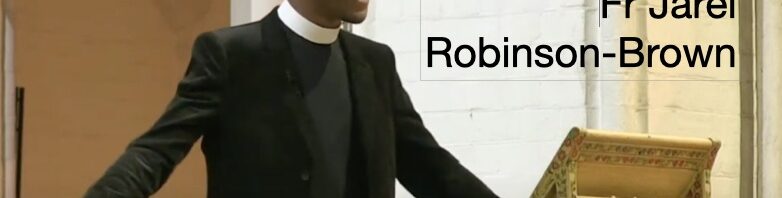
    by Fr Jarel Robinson-Brown, Co-Chair of OneBody OneFaith and Visiting Scholar at Sarum College, Salisbury

    ‘To encounter oneself is to encounter the other: and this is love. If I know that my soul trembles, I know that yours does, too: and if I can respect this, both of us can live. Neither of us, truly, can live without the other…’

    – James Baldwin, The Devil Finds Work, 1975


    It would be fair to say that I have been wrestling recently, quite deeply, with what place hope should have in my life. Not just as a Christian, but as a priest – I’ve wondered whether hope is all it is made out to be, and whether hope (real hope) is even possible as someone who exists in a body whose skin invites violence and micro-aggression and whose sexuality endures inequality, oppression and injustice. For years, as someone Black, Gay and Christian I have wrestled with what part of me really ‘came first’ in that list of identity that I carry not by choice, but because the world is a place where labels, compartments, boxes exist. And they exist, on the whole, to make those who do not carry them – feel safe.

    One thing people often say in relation to my recent book is that a shorter title would have been better. But ‘Black, Gay, British, Christian, Queer’ defines those of us who live at the intersection of race, religion, sexuality and culture. As I wrote: ‘as Black Queer Christians  … we feel pressurized to choose at times between our Blackness and our Queerness, our Britishness and our African-ness, our religion and our desire, our life partner and our families, our bodies and our souls…To some we are no longer Black, to others we are no longer Christian. We live then faced with an impossible ultimatum between ‘life’ and life – to live as we are expected to live, to live in the freedom that is ours but will cost us nothing short of absolutely everything to inhabit’ (p.24).

    So to return to hope, I still remain uncertain as to what place hope should have in my life – and I went to the Lambeth Conference fairly hopeless but left with more hope than I imagined possible. Getting on the train to Canterbury, I was already apprehensive – the 15 year-old child sat in tears around the family dining table defending his right to exist was back…, “this is just who I am” in the face of “you can’t be Gay and Christian, the Bible says it’s wrong”. Standing in the truth of who I am does and has cost me much, not least my relationship with my father and other family members – but when the only options before you are staying in the closet and death (and both are the same thing I think) the choice was clear.

    By the time I arrived in Canterbury a statement had been released by the Global South Fellowship of Anglican Churches which stated that they would table their own call to re-affirm Lambeth resolution I.10 as the “Anglican Communion’s ‘official teaching’ on marriage and sexuality” and to impose sanctions on Provinces which ordain bishops in same-sex relationships and conduct same-sex weddings. Rather than receive communion alongside such bishops, they announced that they would stay seated, as one of “a number of ‘visual differentials’”.

    It was of course, like stepping into the lion’s den. Seeing those who had decided that receiving the sacrament of the Eucharist alongside people like me was impossible. My black body stood at an LGBT+ stall was clearly quite confusing to some of my brothers and sisters from other parts of the world. To embody an “issue” in the skin of those who are most vocal against it was an interesting experience.

    At the forefront of my mind was the reality that I am one among many whose ancestors did not leave Africa willingly, but who were taken from their homes to far off lands. Whilst I am a citizen of the UK and Jamaica, I am also an African Gay man, and a Christian. Sometimes I wonder what my life would look like if we were never taken – what language would I speak, what clothes would I wear, what God would I know. This sense of unknowing is powerfully articulated by Cole Arthur Riley in her work ‘This Here Flesh’:

    ‘I do not know from where my ancestors were abducted. I cannot tell you what the air smells like there. I don’t know what sound the waves and soil speak. These things were stolen from me as they were from them. I think it is one of the deepest evils to become a thief of place, to make someone a stranger to their home, and then mark their relationship to the land by bondage instead of love.’ (p.22)

    Although at times the space at the Lambeth Conference felt occasionally hostile rather than violent, I was surprised by the deep, warm and meaningful encounters I had with Bishops and those invited spouses who were willing to engage – even inviting me to their countries to engage in dialogue around LGBTQ+ lives. It would take more courage than I perhaps have to go to countries where homosexuality is still illegal, but then I already do so whenever I go to Jamaica.

    It seems to me that not enough attention has been paid to cultural aspects of this dialogue. There is, for example, a huge issue with seeing Africa as one homogenous anti-gay continent. Southern Africa is not Nigeria, Ghana is not Swaziland and Brazil, also part of the ‘Global South’, is extremely LGBT+ affirming. It is claimed that homophobia in Africa is pervasive, indigenous, deep rooted and normative, when in fact it functions on many levels: Political, Cultural, Theological.

    In his work ‘Out of Time: The Queer Politics of Postcoloniality’ Dr Rahul Rao notes:

    ‘As countless media reports purporting to analyse attitudes towards sexuality inform us, ‘homophobia is rife in Africa’. Contrasted with the queer freedoms of the West, such discursive constructions of Africa produce what Jasbir Puar has described as ‘homonationalism’ – an assemblage in which LGBT rights have come to be mobilised as new markers for an old divide between the civilised and the savage.’ (p.33)

    What this construction of Africa does is locate homophobia in Africa in such a way that removes agency from Africans to define their attitudes themselves rather than having them instrumentalised and manipulated by outside factors. Rahul Rao also names ‘homoromanticism’, a view which sees African people as blameless pawns caught up in a white, western culture war into which Africa has been dragged. Like ‘homoromanticism’, ‘homonationalism’ removes African agency to tell the story of indigenous queer identities and anti-queer attitudes from within the African cultural context.

    Rahul Rao also reminds us that postcolonial critique needs to go beyond simply reminding us of the enduring legacies of colonialism. Formerly colonised states have become colonial in their own right, and “the project of decoloniality might itself become a vehicle for the politicisation of ‘homophobia’”, as happened at the 1998 Lambeth Conference, when conservative evangelical American Anglicans capitalised on the demographic strength and financial weakness of the African Churches when weaponizing homophobia.

    For me, the very notion of a distinctly ‘African’ homophobia is essentially an orientalist narrative setting up Africa as the antithesis of Europe. The positions taken by many African clergy at the Lambeth Conference are driven by anxieties from the global south related to the preservation of culture, of customs, the notion of the family against the perceived and real threat of Global North hegemony. Nor is the UK the haven of equality and justice which the binary narrative claims – as my experience in this black queer body within and without the Church in Great Britain shows.

    What struck my black body most starkly whilst being present at the Lambeth Conference was that all, literally all, of our LGBTQ+ material and literature was in English. We understand ourselves as the centre of a universe which is so much more diverse than even we, who are wanting the Church to be more diverse, realise. Few know much about the cultures of Kenya or Sudan as well as other parts of the Global South, and so much of our queer theology and scholarship is shaped by our Eurocentric categories which neglect non-western epistemologies, conceptual and intellectual frameworks. When we commend LGBTQ+ justice and equality we do so not only across a theological divide but a cultural and linguistic divide. For a Bishop from along the Nile whose diocese is not even 10 years old, whose people suffer from floods and civil war, a conversation therapy booklet is baffling when his people have no access to good healthcare or the vaccine.

    So am I hopeful? I don’t know. What I do know is that there is no hope that things will change so long we fail to encounter difference. The Lambeth Conference hasn’t met for 14 years: many of the Bishops who are there now were not Bishops when it last met: the world, in just the past two years, has totally changed. We need to hold our English bishops to serious account for their cowardice, whilst paying careful attention to the dialogue around other parts of the Communion. There is, at the heart of this, just so much fear – perhaps what drives this fear is the reality that a Church which becomes more inclusive is fundamentally one which is more honest…more honest about the world God has made, and the people that make up that world – and maybe the illusion that God’s world is straightforwardly heterosexual is finally crumbling. But without encounter of the ‘other’, each of our worlds become smaller, less real, less true – whatever the future holds if it is a future shaped by God, and of course it is – it will be made up of all of God’s people. And a Church which is honest about the world is a Church which can attractively proclaim the Gospel of Jesus Christ whose love knows no bounds.

    ‘…There is no promised land without a multitude. You think you can get there alone, and maybe, by some rare chance you do. But what will become of the promise when it is collapsed by loneliness? Who is going to drink all that milk and honey with you? Look down in the cool, running stream. You cannot see yourself.’

    – Cole Arthur Riley, This Here Flesh, 2022


  • It’s Not Just About the Bible

    by Mark Chapman, Professor of the History of Modern Theology at the University of Oxford and Vice-Principal of Ripon College, Cuddesdon. Mark is currently writing a book on the history of the Church of England and homosexuality.

    When the LLF process was announced, four ‘working groups’ were set up, looking at the Bible, theology, history and the social and biological sciences. Looking at the LLF book now, though, it’s striking just how little history it contains. We worked hard during the long drawn-out process to produce some solid resources, but these were scarcely used. At the first or second meeting our convening bishop – not himself a historian and now retired – asked us if we would like to disclose our views about same-sex marriage. We politely refused. Most historians, perhaps rather naively, still like to believe in something like objective truth. We all got on very well and left others to have their fights.

    And it was the biblical group that seemed to be most inclined towards belligerence. Of course, good Anglicans will want to see the Bible as containing all things necessary to salvation through faith in Jesus Christ but that says nothing about how to use the Bible in ethical debate. As a historian, I was rather keen to point out to people who were wound up about the few passages of scripture apparently outlawing male sexual activity that, aside from a few general principles about love, the Bible was hardly ever used by Anglicans in discussions about sexual morality until the 1970s.

    Before then, sexual ethics was all about natural law. The arguments were very simple: the natural order of the universe was for there to be men and women. Their sexual organs fitted together and every other form of sexual activity was therefore disordered. Furthermore, the point of sex was to procreate, which required the institution of marriage, which for most of history was a set of financial transactions between families rather than anything particularly Christian.

    The problem with natural law, however, is that it changes as the understanding of nature changes. As soon as there is a recognition that some people are naturally attracted to people of the same sex, what the early sexologists called ‘inversion’, then the whole natural law defence comes tumbling down. And by the 1940s a substantial number of people accepted this – even in the church. As a young ordinand wrote in a letter to the journal Theology in 1952:

    Is homosexual concubinage to be treated purely and simply as an unio illicita like fornication and those who practise it to be judged as ‘living in sin’ and to be deprived of the sacraments of the Church? If so, what are we to say to those who profess to be congenitally homosexual?

    This letter led directly to the commissioning of work from the Church’s Moral Welfare Council on the ‘problem of homosexuality’. The report clearly identifies homosexuality as a natural condition, meaning that it was wrong to punish people for ‘doing what comes naturally’. Homosexuality could not be cured like some sort of physical disease.

    This work led to the Church of England being the principal agent behind the momentum that led to the Wolfenden Report and the subsequent decriminalization. Writing in 1970, one commentator observed:

    there would be truth – especially political truth – in the claim that the established Church is the putative father of ‘the permissive society’.

    Similarly, Peter Wildeblood, the Daily Mail journalist jailed in 1954 for committing acts of indecency could write:

    I had always thought of the Church as the last stronghold of prejudice and had never found an occasion for praising it for its courage in controversial matters; yet here, from Church House, came an attack on the law which was as broad-minded, clear-headed and brilliantly argued as one could wish.

    That said, in the 1950s the Church expressed no desire to adapt its own teachings: ‘Homosexual acts are sins against God, whether or not they are crimes against the State’. The argument was again based on the ‘unnatural use of non-complementary organs within a relationship which is not that of a man and woman’. Christian ‘inverts’ should consequently seek to ‘accept their condition, and by seeking to sublimate their sexual lives in socially useful ways achieve personal fulfilment’. That, of course, is no surprise for the early 1950s, but celibacy and sublimation for all now seem both ludicrous and potentially dangerous.

    And that’s presumably why, from the 1970s, people started replacing a discredited natural law theory with the even flimsier method of resorting to proof texting Scriptural passages ripped out of context. It is clear that the Church was way ahead of much of the wider society in the 1950s and 60s. But it then stalled and forgot what Kenneth Ingram, one of its more forward-thinking authors wrote in 1940, as he envisaged Sex Morality Tomorrow. His words even seem remarkably biblical:

    the love-motive is the only legitimate basis on which a positive sexual morality is likely to be built. Wherever there is love, wherever the desire is genuinely mutual, there can be no immorality in sex. … Love is the test of sexual morality. Sex divorced from love, whether it occurs in a union which is officially designated as lawful marriage or not, belongs to an altogether lower level.