Category: Human Sexuality

  • Two Things Which Really Matter

    by the Very Revd Dr David Ison, former member of General Synod, who next month retires as Dean of St Paul’s 

    This is my last blog as Dean of St Paul’s. After 43 years of stipendiary ordained ministry, it’s time to let go of doing in order to do more being. I’m glad to make space for a younger generation of Christians to have the opportunity and responsibility to lead Christ’s church into the future. And I’m hopeful for them, and even for the Church of England, because there are many wonderful lay and ordained Christians committed to following Jesus, and that’s what Christian churches need in order to face the many challenges and crises coming to a head for this country and for humanity across the globe as capitalism and imperialism reap what they’ve sown.

    Over the last four decades there are two key things which I’ve learned which I think are at the heart of what Christian faith, mission and ministry are about.

    The first is how to do church and mission in an increasingly pluralist and contested public space, where the narrative of ‘scientism’ (that the universe, however amazing, is meaningless) undermines spiritual as well as mental health and reasonable faith, leading to superstition and extremism. The Church has lost plausibility, made worse by its failures of safeguarding and its moral divergence from what many people regard as reasonable. The Church’s temptation is either to take refuge in dogma and draw hard boundaries around itself as ‘counter-cultural’, or to become just one interest group alongside others competing in the market-place for people and resources. The ‘Save the Parish’ movement is a belated response to a crisis which was known to be coming long before I trained for ministry in the 1970s, as the inability of many parishes to maintain numbers of laity and clergy and financial viability in the face of heritage building costs and other challenges has been predicted for over 50 years.

    My experience of what works in mission is fairly simple. It is to pray – to love God; to love our neighbours by serving them inside and especially outside the church; to love one another as a diverse group of disciples; and to do these things together, building a shared vision for a loving and serving church. Being people of spiritual integrity, living in the truth, welcoming other people without judgement (see Matthew chapter 7), meeting them in their personal and community needs – that’s what attracts people to the Christian gospel. In an incarnational faith, it’s Christian lives, not doctrines or techniques, that build the kingdom of God.

    I’ve never understood the emphasis in the Church of England’s ordination services on ‘proclaiming’ the gospel, as if it were passed on by megaphone. The third-century Christian writer Tertullian pointed out that the Christian community attracted people, even though it could mean persecution and death, because they could see the love which Christians had for one another and for others, and they wanted to be part of it. Proclaiming isn’t of value in itself: it’s drawing people into following Jesus (‘making disciples’) that matters, and love in action, not words, is at the heart of it. And thanks be to God that many churches and Christians do it!

    Jesus says to his would-be disciples, ‘you will know the truth and the truth will make you free’ (John 8.32). It’s that living in integrity that people respond to; and the heart of the Church’s problem is that it hasn’t been living in love and integrity. The inability of heterosexual men to cope with their own sexualities has led to the projection of those inner conflicts on to others including in the Church, impacting women and children in safeguarding cases, sexual and domestic violence, and ongoing legal and cultural discrimination against women and LGBTQ+ people. The Church’s ‘don’t ask, don’t tell’ culture of official disapproval but covert acceptance of sexuality has had a huge impact on the lives and mental health of LGBTQ ordained and lay ministers, and has perpetuated a culture of dishonesty and lack of accountability which has allowed other abuses to occur, as seen for example in the surfacing of safeguarding cases over the last decade and the recent news around fraud in the Diocese of London. Whatever the outcome of the Living in Love and Faith process and debates in General Synod, the Church must end up with real love, truth and honesty at its heart, lest it continue to be seen by the rest of the world as hypocritically less moral than the majority of our society.

    The second main thing I’ve learned in ministry is that it’s about following Jesus. That sounds obvious! But it relates to the question of integrity. Years ago I wrote an article entitled ‘The Pharisees will always get you in the end’, making the point that the Pharisees are there in the gospels to show us what we as religious people can be like when our religion becomes more important than God and people. In his encounters with the Pharisees, Jesus subverts the dogmas of his day: healing on the sabbath, being unconcerned with purity laws, forgiving sinners without due process – he is focused on the person and their motivation and relationship with God, rather than on the expectations of others. Jesus is still challenging, but he gets to the heart while the Pharisees look at the outside; Jesus is concerned with holiness rather than purity, while Pharisees then and now confuse the two.

    The Diocese of London has for a number of years had as a unifying statement the concept of ‘Generous Orthodoxy’. It’s akin to ‘don’t ask, don’t tell’ in that it allows Christians with very different views to agree on a slogan while not engaging with their real differences, with people putting differing emphases on the level of generosity and the content of what orthodoxy is. My experience of church politics in London and on General Synod has been of increasing power games over the last several years, based on churchmanship and dogma rather than on the reality of people’s lived Christian experience, with less powerful groups (including LGBTQ, Global Majority Heritage, disabled, women) being pushed to the margins, and a lack of integrity between what’s said and what is actually done in practice.
    There’s a tendency in the Church, following after the world’s culture, for extremism and division which does not reflect the love of God, and which is unbecoming to followers of Jesus and unattractive to Christians and non-Christians alike.

    My hope in Christ is that everyone matters equally in the Church, and that’s what the LLF process has been trying to pursue. I pray for the outcome to be love and to be really truthful, centred on people not dogma. The irony about so many of the arguments in church circles is that much of the language about judgement in the New Testament is about our actions and their outcomes, not concerned with our beliefs and doctrines: ‘by their fruits you shall know them’. I do wonder whether some who describe themselves as ‘biblical’ have really taken on board St Paul’s words on love in 1 Corinthians 13…

    When finally, in the words of a key fob my children gave me, I ‘get called to head office’, I don’t expect to be examined on my understanding of penal substitution, but on whether I truly loved God, and my neighbours as myself. That’s what really matters.

  • The Church and the Body: Becoming a Safe Space to Talk about Dating and Sex

    by Andrew Godsall, who was ordained in 1988 and has held various posts in London and Exeter Dioceses. From 2010 to 2017 he was a member of General Synod. He spent the early part of his career with BBC Radio, including as a Producer of Religious Programmes, and it was there that he encountered Monica Furlong. 


    The late Monica Furlong – writer and astute observer of all things religious, but especially the Church of England – wrote a wonderful little paperback in 1975 called Christian Uncertainties. Writing about sex she notes: ‘That sex can be healing and joyful (sometimes outside marriage as well as in it), that it can lead to personal growth, that it is a way of knowing God, above all that it is Good, still takes a certain nerve to say in Christian circles’. Has much changed since 1975?

    Whilst it has been possible for many years to meet a potential mate through the personal columns of various newspapers, online dating apps have proliferated that possibility of coupling. Local churches have long been a way for single Christians to meet others and so naturally even Christian dating sites have become a thing. Why do people ‘date’? I want to explore four reasons, though I’m sure there are others that make up the fullness of our desires to ‘couple’.

    Firstly, as a means of intimate companionship. By that I mean a companionship that is different from work colleagues, or friends, or members of a club of some sort. Intimacy is not simply about sex but rather about making a deeply personal connection with another person. It’s a remedy for loneliness, although that can make it sound rather sad. The second chapter of Genesis expresses it like this: ‘It is not good that the man should be alone. I will make him a partner as his helper.’ Whilst Genesis goes on to describe the particulars of the first man’s partner, the general and more inclusive principle is located in the need not to be alone. We seem to have an innate need to couple up.

    Secondly then, in daring to date another and so overcome that sense of being alone, we discover who we really are ourselves. We might find our worth in work. We might find our ability to be part of a team at the club. But we find our intimate selves with a partner as our helper. Too often that phrase from Genesis has been taken to imply that the ‘helper’ is somehow an assistant; the secondary to the primary who is the man. Yet our understanding by the practice of companionship is that help is a truly mutual process. The helper is more truly a partner. Both those who prefer a partner of the same sex, and those who prefer one of the opposite sex, will find that this partner becomes a co-equal helper. The fact that Eve is described as the first helper doesn’t detract from the principle. The blueprint is for partnership, and not subordination. With a partner, as part of a couple, we discover who we truly can be.

    Thirdly we have a need to be desired. In the animal kingdom, birds will often display extreme beauty as a way of attracting a mate. Think of the peacock. It is natural to need to be desired. Even those of us who are shy and reticent about our attractive qualities will want the affirmation that goes along with being desired. Jessica Martin’s wonderful book Holiness and Desire: What makes us who we are? explores some of the theology of desire. She notes that ‘behind all the desires for connection is the desire to be fully known’. That of course echoes the transcendent beauty of St Paul’s assurance to the Corinthians that even though we know only in part, a time will come when ‘I will know fully, even as I have been fully known’. To be desired by someone, especially when we are stripped naked and are particularly vulnerable, gives us some fleeting assurance that our journey of courtship, our coupling, is an echo of a movement towards God. In being more fully known by a partner, we sense what it could be like to be fully known by God. We don’t call sex ‘making love’ for reasons of politeness. In making love we have the potential for transcending the ordinary. As Jessica Martin puts it, ‘desire is our bridge out of the rule of time’. When someone desires us, we glimpse something of the eternal.

    Fourthly, in dating we find the need to express the intimacy of partnership in physical contact. ‘Bone of my bone and flesh of my flesh’ is ultimately expressed when bones and flesh are coupled in mutual sexual expression. I don’t know about all the ‘rules’ that Christian dating sites might want to enforce, or at least recommend, about online dating, but I am certain that some would insist that sexual expression is not permitted outside of marriage. Indeed, the C of E officially continues to take that line.

    Monica Furlong was prophetic. ‘That sex can be healing and joyful (sometimes outside marriage as well as in it), that it can lead to personal growth, that it is a way of knowing God, above all that it is Good, still takes a certain nerve to say in Christian circles.’ I am not persuaded that the Bible proscribes a sexual relationship in dating prior to marriage. Marriage was in any case a very different relationship, arranged by families rather than by the couple, and dating in our sense did not exist. I am aware that custom and tradition would make it risky and could cause a couple to be ostracised. That was still true relatively recently, until reliable contraception made sexual intercourse the ultimate intimate expression free from the outcome of childbirth. I am also fully aware that while dating, many people find creative ways other intercourse to satisfy each other sexually, ways which have always been available to the unmarried as well as to the married.

    Custom and tradition have so changed in the last two generations that a guide to intimacy in dating needs to be reclaimed by Christians. I don’t believe that can, or should, be done by forbidding sexual intimacy. I believe it should be done by having the courage to be honest about the healing, and joy, and personal growth and goodness that sexual expression, including before marriage, can lead towards. It can lead towards God. This means that the Church needs to own the myriad of sexual expressions that are viable agents of help for the individual and the couple who are daring to date. It is not good for people to be alone. Especially perhaps because, when it comes to sex, people start alone.

    The Church needs to be a place where people can find the key to not being alone, even if it isn’t necessarily the place where people will find a date. So the Church needs to be a safe space to talk about sex. This is far better in Church than in the playground or online. Just as many parents conclude that they would prefer their children to be having sex safely under their roof rather than in more degrading circumstances, so the Church could offer hospitality for more honest and open conversations about sex and sexuality if it isn’t to face further rejection. Dating and sex are too good and too important to leave to secular society alone.

  • The Global South Fellowship of Anglicans – Power and Numbers?

    Canon Dr Phil Groves is a parish priest and convenes the Anglican Peace and Justice Network. His PhD is on Anglican Missional Ecclesiology and he was the Facilitator for the Listening Process in the Anglican Communion and Director of Continuing Indaba. He is Canon of Mpwapwa Cathedral in Tanzania and fluent in Kiswahili. 

    Following the Lambeth Conference, bishops are returning to their dioceses with renewed energy, and an expanded vision as they realise the wonder of being part of a global communion of churches. While the external narrative might be about splits and an obsession with sex, they will tell a different story, barely recognising the conference they attended for the one reported on.

    At Canterbury, the conversations were around being followers of Jesus in a world in crisis. Seminars and private conversations often focused on a world defined by authoritarian and corrupt governments, and climate disaster. The pressures are more acute among the poor, and as our poor face hunger, the poor in the socio-economic global south are facing starvation. Our prophets of justice face ridicule: theirs face death.

    The ‘Lambeth Calls’ focused minds on potential action: especially for indigenous peoples, those still oppressed by the inheritance of slavery, young people facing an uncertain future, those living under threat of persecution for their faith and for standing for oppressed peoples. For a wonderful seminar presentation on justice from an African contributor – please click here.

    However, one group called the ‘Global South Fellowship of Anglicans’ (GSFA), has been driving a divisive message that has distorted the reality of the conference. They claim to speak for those who have historically been marginalised and silenced through the dominance of power in the socio-economic global north. They claim to speak for 75% of Anglicans – an overwhelming majority. These claims are impressive and make them very significant, especially to progressives who are aware of the dangers of racism and the value of democracy.

    But are these claims true? In order to fact check these claims we can look at the GSFA website, which lists 25 Provinces as belonging to, or associated with, the Fellowship. Belonging requires fully signing up to a constitution that relinquishes provincial autonomy in favour of a global ecclesial body. The site no longer says how many are ‘members’ and how many are ‘affiliates’.

    The constitution is clear that, despite its name, the GSFA no longer claims to be defined by ‘geography’: rather, it is increasingly defined by ‘orthodoxy’.[1]

    The Diocese of Sydney and the Anglican Church of North America (ACNA) are both listed among the 25 members and affiliates, showing that despite its name it is not exclusively a voice for the socio-economic global south. Also, all members of the secretariat are from the Diocese of Singapore and Singapore is classified as being in the socio-economic global north.

    This means that, rather than being a voice for the complex diversity of Anglicanism in the socio-economic global south, GSFA is claiming to be the voice of ‘orthodoxy’: an orthodoxy defined by a common view over a single key issue. This is reflected in almost every statement issued by the block for the last twenty years. The focus of these statements is on condemning the growing number of Anglican diocese and provinces where LGBTI+ people are included and their relationships celebrated, rather than issues that actually affect people in the socio-economic global south.

    The first thing to note is that only 22 of the members/affiliates are Anglican Communion provinces. In addition to Sydney Diocese (not a province), the ACNA and the Anglican Church in Brazil are breakaway churches. In the Anglican Communion, 31 provinces have all their dioceses in the socio-economic global south with another 4 (Aotearoa, New Zealand and Polynesia, Jerusalem and the Middle East, South East Asia, and The Episcopal Church) having dioceses in both global south and global north. For example, TEC’s biggest diocese by numbers is Haiti, the biggest francophone diocese in the Anglican Communion. This means that GSFA claims to speak for 22 of the 35 Anglican Communion provinces with dioceses in the socio-economic global south, not all provinces with dioceses in the global south.

    During the conference, the GSFA-EFAC Lambeth Resource group[2] distributed a letter to bishops asking for them to sign a document to reaffirm Lambeth I.10 and to indicate the number of Anglicans worshipping in their dioceses.

    The voting was monitored by a UK-based accountant and General Synod member, Debbie Buggs. She ‘checked all email reaffirmations to ensure the information was accurately transferred from email to the official record, and that each affirmation recorded has been validated by a relevant Bishop’s Lambeth Conference Pass’. It is not made clear if she ensured that bishops were not supervised as they voted – that is, that they voted without pressure being applied. It is not clear if she validated the numbers of Anglicans declared.

    While this was probably intended as a show of strength, an examination of the result from the press release issued at the conclusion of the process instead brings into question the claim to speak for the 22.

    The reaffirmation was signed by 125 bishops claiming to represent nearly 8 million Anglicans, but the result demonstrates that GSFA neither speaks for the Anglican provinces in the socio-economic global south, nor for a majority of Anglicans globally.

    In their press release, GSFA recognises this, and indicates that they expect bishops from the GAFCON provinces of Nigeria, Uganda, and Rwanda (who stayed away from the Lambeth Conference) to sign up in the future, which would swing the numbers in their direction. This may be the case, but it is not clear that these churches actually support the whole of Lambeth I.10, including the commitment to listening to LGBTI+ experience. The Church of Nigeria, in particular, has made it clear that listening to the experience of ‘homosexual persons’ is at odds with their position. They support the ongoing criminalisation of LGBTI+ people, which they assert is GAFCON policy.

    The Primate of South Sudan, as Chair of the GSFA council, was to the fore in pressing for the reaffirmation of Lambeth I.10, and 40.8% of the signatories were from South Sudan (51). The next biggest block comprised IAMA bishops (bishops from the new province of Southern African Lusophone countries).

    The third biggest block vote comprised bishops from TEC (8) – a province not listed as either a member or affiliate. On the other hand, no bishops from 5 provinces that GSFA claims to represent – Bangladesh, Pakistan, Papua New Guinea, South Africa, and West Africa – signed.

    The claim to representation is especially interesting when the Province of South Africa is considered. The pre-Lambeth documents from GSFA include a paper rejecting the ‘Indaba’ model embraced by the design group of the last two Lambeth Conferences. This model was championed by the Primate of Southern Africa, the chair of the design group. GSFA claims to represent Southern Africa in objecting to the Indaba model. Now that we know that it does not have the support of a single Southern African bishop, this appears a hollow claim.

    The number of signatories from Australia (4), Canada (4), England (3), and Ireland (3) was greater than signatories from Burundi (1), Central Africa (3), Kenya (2), and Tanzania (3), all provinces in the socio-economic global south with significant numbers of Anglicans. I had conversations with several bishops in these African provinces who were adamant that GSFA did not speak for them. They asked me who these people were, and said they had no authority to speak for them. I was given access to WhatsApp groups in Kiswahili formed with encouragement to ignore the representations received from GSFA.

    The GSFA does not appear to represent 25 provinces of the Anglican Communion. We can say that it represents one very big one – South Sudan – and some smaller provinces, but not 25. It is a minority group in the global south.

    The next question is whether it represents 75% of Anglicans globally.

    The claim to overwhelming numbers was intended to be reinforced by Bishops being asked to declare the number of Anglicans worshipping in their dioceses. There are two problems with this; firstly, this was not validated and secondly, it is rare for worshipping Anglicans all to support the opinions of their bishop. It is unlikely that all – or even a majority – of the 19,800 Anglicans in the dioceses of the three Church of England Bishops who signed the document agreed with it. While it may be an accurate number, it may not be a useful number.

    The numbers in Tanzania are probably accurate, but again illustrate weakness. The three bishops there claim to have 88,000 worshippers. However, the Diocese of Central Tanganyika on its own has between 700,000 and a million worshippers in just one diocese. The three signing bishops are bishops of very small dioceses.

    This goes to demonstrate just how unreliable numbers are as a way to judge anything: they are a terrible way to judge truth – Jesus would have failed completely! However, what GSFA has shown by its own documents is that it does not represent 75% of Anglicans.

    There are bishops in provinces in the socio-economic global south who support equal marriage. The Province of Brazil has revised its prayer book to welcome same-sex couples. There are dioceses where same-sex unions are blessed. However, they are a minority.

    The clear message of the support for the Archbishop of Canterbury’s carefully worded address was that, although most bishops in most provinces will continue to support Lambeth I.10 in their dioceses and provinces, they are willing to continue in mission with those dioceses and provinces that think differently.

    This is also backed up by what I observed. TEC bishops were planning mission initiatives with African bishops. The South Sudanese bishops were very excited by their invitation to the Diocese of Salisbury.

    And the role of the Bible in all this?

    Archbishop Makgoba has shown that it is the Indaba way that is biblical. He shows that Paul gave local churches such as the church in Corinth the responsibility for cultural integration and dispute transformation. Paul never suggested that conflicts in local churches be referred to the Jerusalem Council. Paul founded a communion of churches, not a single institution. It is a Communion-based global church that images the missiological ecclesiology of Paul.

    In contrast, the GSFA champions a non-biblical approach to conflict resolution based upon Western European understandings where definitive judgements are made by majority in council and imposed on the whole. This way is the way of division. The splintering of the GSFA demonstrated why it must be resisted.

    So where are we?

    No one actually agrees with the whole of Lambeth I.10. They may say they do, but it was a compromise between a desire for a harder line and the sop of the promise of listening. When churches have genuinely listened to LGBTI+ people they have questioned the advice not to bless same gender unions and ordain LGBTI+ people.

    In many countries where Anglicans seek to decriminalise LGBTI+ people, the Lambeth I.10 formula is actually useful to them, because the language of human dignity is better than that of ‘human rights’. The human rights agenda is played as the new colonialism – imposing the will of a powerful Western lobby on the cultural norms of independent nations. The Call to respect human dignity is being seen by some as a call to act for decriminalisation. We should pray for and hope for action here.

    And for the Churches considering the deeper inclusion and celebration of LGBTI+ people? The message should be that the Anglican Communion will not fall apart if they go ahead.


    [1] Communiqué from the 8th Global South Conference, 2021, Para 10:
    ‘Under this Covenantal Structure, the Global South Fellowship is transitioning from being a grouping based on geography to one based on orthodoxy while appropriately keeping our historical roots.’

    [2] GLOBAL SOUTH ANGLICAN LEADER SETS FOUR PRIORITIES FOR ‘ORTHODOX DELEGATES’ ATTENDING THE LAMBETH CONFERENCE – 7 July 2022 notes: ‘A Resource Group to support Orthodox archbishops/bishops attending the Conference has been set up by the GSFA, and the Evangelical Fellowship in the Anglican Communion (EFAC).  It comprises Bishop Henry Scriven (Hon. General Secretary EFAC), Bishop Rennis Ponniah (Hon Director, GSFA Executive Secretariat), Bishop Keith Sinclair (National Director, Church of England Evangelical Council), Canon Charles Raven (Director Relay200, The Relay Trust), Rev William Mok (Deputy Director, GSFA Executive Secretariat) and PR Consultant, Revd Paul Eddy.’ Rev William Mok is from Malaysia in the global south, but works in Singapore in the global north.


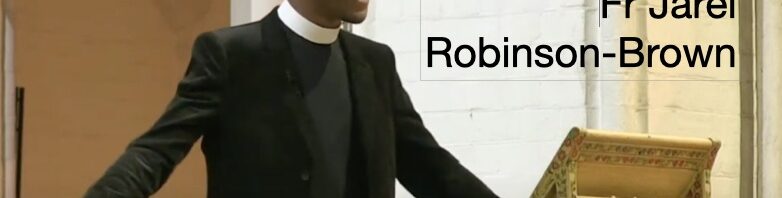
  • Embodying Lambeth: Homophobia, Hope and Honesty

    Embodying Lambeth: Homophobia, Hope and Honesty

    by Fr Jarel Robinson-Brown, Co-Chair of OneBody OneFaith and Visiting Scholar at Sarum College, Salisbury

    ‘To encounter oneself is to encounter the other: and this is love. If I know that my soul trembles, I know that yours does, too: and if I can respect this, both of us can live. Neither of us, truly, can live without the other…’

    – James Baldwin, The Devil Finds Work, 1975


    It would be fair to say that I have been wrestling recently, quite deeply, with what place hope should have in my life. Not just as a Christian, but as a priest – I’ve wondered whether hope is all it is made out to be, and whether hope (real hope) is even possible as someone who exists in a body whose skin invites violence and micro-aggression and whose sexuality endures inequality, oppression and injustice. For years, as someone Black, Gay and Christian I have wrestled with what part of me really ‘came first’ in that list of identity that I carry not by choice, but because the world is a place where labels, compartments, boxes exist. And they exist, on the whole, to make those who do not carry them – feel safe.

    One thing people often say in relation to my recent book is that a shorter title would have been better. But ‘Black, Gay, British, Christian, Queer’ defines those of us who live at the intersection of race, religion, sexuality and culture. As I wrote: ‘as Black Queer Christians  … we feel pressurized to choose at times between our Blackness and our Queerness, our Britishness and our African-ness, our religion and our desire, our life partner and our families, our bodies and our souls…To some we are no longer Black, to others we are no longer Christian. We live then faced with an impossible ultimatum between ‘life’ and life – to live as we are expected to live, to live in the freedom that is ours but will cost us nothing short of absolutely everything to inhabit’ (p.24).

    So to return to hope, I still remain uncertain as to what place hope should have in my life – and I went to the Lambeth Conference fairly hopeless but left with more hope than I imagined possible. Getting on the train to Canterbury, I was already apprehensive – the 15 year-old child sat in tears around the family dining table defending his right to exist was back…, “this is just who I am” in the face of “you can’t be Gay and Christian, the Bible says it’s wrong”. Standing in the truth of who I am does and has cost me much, not least my relationship with my father and other family members – but when the only options before you are staying in the closet and death (and both are the same thing I think) the choice was clear.

    By the time I arrived in Canterbury a statement had been released by the Global South Fellowship of Anglican Churches which stated that they would table their own call to re-affirm Lambeth resolution I.10 as the “Anglican Communion’s ‘official teaching’ on marriage and sexuality” and to impose sanctions on Provinces which ordain bishops in same-sex relationships and conduct same-sex weddings. Rather than receive communion alongside such bishops, they announced that they would stay seated, as one of “a number of ‘visual differentials’”.

    It was of course, like stepping into the lion’s den. Seeing those who had decided that receiving the sacrament of the Eucharist alongside people like me was impossible. My black body stood at an LGBT+ stall was clearly quite confusing to some of my brothers and sisters from other parts of the world. To embody an “issue” in the skin of those who are most vocal against it was an interesting experience.

    At the forefront of my mind was the reality that I am one among many whose ancestors did not leave Africa willingly, but who were taken from their homes to far off lands. Whilst I am a citizen of the UK and Jamaica, I am also an African Gay man, and a Christian. Sometimes I wonder what my life would look like if we were never taken – what language would I speak, what clothes would I wear, what God would I know. This sense of unknowing is powerfully articulated by Cole Arthur Riley in her work ‘This Here Flesh’:

    ‘I do not know from where my ancestors were abducted. I cannot tell you what the air smells like there. I don’t know what sound the waves and soil speak. These things were stolen from me as they were from them. I think it is one of the deepest evils to become a thief of place, to make someone a stranger to their home, and then mark their relationship to the land by bondage instead of love.’ (p.22)

    Although at times the space at the Lambeth Conference felt occasionally hostile rather than violent, I was surprised by the deep, warm and meaningful encounters I had with Bishops and those invited spouses who were willing to engage – even inviting me to their countries to engage in dialogue around LGBTQ+ lives. It would take more courage than I perhaps have to go to countries where homosexuality is still illegal, but then I already do so whenever I go to Jamaica.

    It seems to me that not enough attention has been paid to cultural aspects of this dialogue. There is, for example, a huge issue with seeing Africa as one homogenous anti-gay continent. Southern Africa is not Nigeria, Ghana is not Swaziland and Brazil, also part of the ‘Global South’, is extremely LGBT+ affirming. It is claimed that homophobia in Africa is pervasive, indigenous, deep rooted and normative, when in fact it functions on many levels: Political, Cultural, Theological.

    In his work ‘Out of Time: The Queer Politics of Postcoloniality’ Dr Rahul Rao notes:

    ‘As countless media reports purporting to analyse attitudes towards sexuality inform us, ‘homophobia is rife in Africa’. Contrasted with the queer freedoms of the West, such discursive constructions of Africa produce what Jasbir Puar has described as ‘homonationalism’ – an assemblage in which LGBT rights have come to be mobilised as new markers for an old divide between the civilised and the savage.’ (p.33)

    What this construction of Africa does is locate homophobia in Africa in such a way that removes agency from Africans to define their attitudes themselves rather than having them instrumentalised and manipulated by outside factors. Rahul Rao also names ‘homoromanticism’, a view which sees African people as blameless pawns caught up in a white, western culture war into which Africa has been dragged. Like ‘homoromanticism’, ‘homonationalism’ removes African agency to tell the story of indigenous queer identities and anti-queer attitudes from within the African cultural context.

    Rahul Rao also reminds us that postcolonial critique needs to go beyond simply reminding us of the enduring legacies of colonialism. Formerly colonised states have become colonial in their own right, and “the project of decoloniality might itself become a vehicle for the politicisation of ‘homophobia’”, as happened at the 1998 Lambeth Conference, when conservative evangelical American Anglicans capitalised on the demographic strength and financial weakness of the African Churches when weaponizing homophobia.

    For me, the very notion of a distinctly ‘African’ homophobia is essentially an orientalist narrative setting up Africa as the antithesis of Europe. The positions taken by many African clergy at the Lambeth Conference are driven by anxieties from the global south related to the preservation of culture, of customs, the notion of the family against the perceived and real threat of Global North hegemony. Nor is the UK the haven of equality and justice which the binary narrative claims – as my experience in this black queer body within and without the Church in Great Britain shows.

    What struck my black body most starkly whilst being present at the Lambeth Conference was that all, literally all, of our LGBTQ+ material and literature was in English. We understand ourselves as the centre of a universe which is so much more diverse than even we, who are wanting the Church to be more diverse, realise. Few know much about the cultures of Kenya or Sudan as well as other parts of the Global South, and so much of our queer theology and scholarship is shaped by our Eurocentric categories which neglect non-western epistemologies, conceptual and intellectual frameworks. When we commend LGBTQ+ justice and equality we do so not only across a theological divide but a cultural and linguistic divide. For a Bishop from along the Nile whose diocese is not even 10 years old, whose people suffer from floods and civil war, a conversation therapy booklet is baffling when his people have no access to good healthcare or the vaccine.

    So am I hopeful? I don’t know. What I do know is that there is no hope that things will change so long we fail to encounter difference. The Lambeth Conference hasn’t met for 14 years: many of the Bishops who are there now were not Bishops when it last met: the world, in just the past two years, has totally changed. We need to hold our English bishops to serious account for their cowardice, whilst paying careful attention to the dialogue around other parts of the Communion. There is, at the heart of this, just so much fear – perhaps what drives this fear is the reality that a Church which becomes more inclusive is fundamentally one which is more honest…more honest about the world God has made, and the people that make up that world – and maybe the illusion that God’s world is straightforwardly heterosexual is finally crumbling. But without encounter of the ‘other’, each of our worlds become smaller, less real, less true – whatever the future holds if it is a future shaped by God, and of course it is – it will be made up of all of God’s people. And a Church which is honest about the world is a Church which can attractively proclaim the Gospel of Jesus Christ whose love knows no bounds.

    ‘…There is no promised land without a multitude. You think you can get there alone, and maybe, by some rare chance you do. But what will become of the promise when it is collapsed by loneliness? Who is going to drink all that milk and honey with you? Look down in the cool, running stream. You cannot see yourself.’

    – Cole Arthur Riley, This Here Flesh, 2022


  • Purist, Principled, Pragmatic? A Good Friday Agreement for the Church of England

    by Simon Butler, former member of Archbishops’ Council and member of General Synod 2005-2022

    The death of David Trimble was announced this week. Tweeting about Lord Trimble, Alistair Campbell, who knew him well through the Good Friday Agreement negotiations, said this: “He could be a difficult and mercurial character but he was the right man in the right place at the right time.”

    That got me thinking about where we go next as we approach the end of this part of the Living in Love and Faith (LLF) project. As we move from the phase of listening and learning, and await what emerges from the Next Steps Group and forthcoming House of Bishops meetings, who might be the right people in the right place at the right time in seeking a way forward beyond the current position we find ourselves in, which both conservatives and progressives find equally unsatisfactory and toxic? Setting aside questions of personality and temperament, which make some people less suited to negotiation and compromise, who needs to be talking to whom, when and about what?

    Looking across the divide as a progressive towards my conservative colleagues, I see two broad positions being taken. This first I might describe as purist. Purists don’t just hold a conservative position but appear to believe that such a position is the only position that can legitimately be held by anyone who claims the name of Anglican. The purist position was articulated well by Dr Ian Paul who, speaking on BBC Newsnight recently, said this: “To say that there is a plurality of views [about same sex marriage] is to claim that the two different views are of equal value and of equal significance … the 2016 Primates’ Meeting said that the moves in North America are a fundamental departure from the faith.” The full quote does more justice to the Primates, “Recent developments in the Episcopal Church with respect to a change in their Canon on marriage represent a fundamental departure from the faith and teaching held by the majority of our Provinces on the doctrine of marriage.” The Primates didn’t unchurch the North Americans by this statement, they didn’t claim that the American Church is apostate because it has changed its marriage canons, and they didn’t claim the historic view held by the majority is one universally held, as developments since 2016 have shown. So, while the Primates expressed dismay at the emergence of same-sex marriage in The Episcopal Church, the predominant theme then, as now with Lambeth 2022, is of ‘walking together’. Dr Paul allows the rhetorical moment to get the better of him, and he claims more than the Primates do. Still, he articulates the purist view with skill and passion: there can be no compromise. Changes to the teaching on marriage imply it’s time to walk apart.

    It seems to me that purists want not just to uphold the historic teaching of the church; they want to impose and reassert their view on all Anglicans, whatever position scholarship, prayer and pastoral discernment directs our conscience towards, whatever the historic polity of the Communion allows. Delegitimising sincerely held matters of conscience is as profoundly un-Anglican and un-Reformed as it is unworkable. It is a form of theological totalitarianism.

    Alongside the conservative purists are those who I might describe as principled but pragmatic. Perhaps adopting the wisdom of Gamaliel, these hold their principled opposition to any non-heterosexually married sexual activity, while recognising that progressives are part of the Church of England (and the Anglican Communion) and that they are likely to remain so. For these conservatives, what they are looking for is some form of provision rather than simply suppression of their opponents. For example, take the position of the Church of England Evangelical Council (CEEC) in its 2016 paper Guarding the Deposit. Having first articulated what seems like a purist view, namely a reassertion of traditional sexual ethics while disciplining more effectively those who live outside of this sexual ethic, the author then moves on to what is described as ‘visible differentiation’, an ecclesiological solution in a church which is not prepared to enforce the purist view. This is both principled and at the same time pragmatic, for it opens the possibility that a future Church of England might remain made up of conservatives and progressives, albeit in a very different ecclesiological structure.[1]

    There is much that I baulk at in Guarding the Deposit, ecclesiologically-speaking, although it is interesting to ponder, building on the insightful arguments of Neil Patterson in a recent Via Media article, what ecclesiological compromises could become necessary for progressives if the opportunity to make progress on LGBT+ inclusion genuinely existed. But that is for the future. What I think we can acknowledge, however tenuously, is that the official position of the main Evangelical lobby group in the Church of England can foresee a shape to the Church of England where both conservatives and progressives can ‘walk together’, even if (what I would describe as) progress towards the full inclusion of LGBT+ people were made. I don’t think this has been sufficiently recognised.

    So, if this is the case, I think two clear consequences flow. First, the argument has moved on from purist versus progressive, and there is little value at the moment in progressives in engaging with purists in any meaningful sense. They hold their position with principle and passion, and inevitably they will be a vocal presence in social media. But nothing will satisfy them until people like me change our views, or shut our mouths, or leave our partners, or abandon the ministry of the Church of England altogether. None of that is going to happen, not least because God and his Church keep calling and ordaining LGBTI+ clergy. Purists have nothing to offer the post-LLF church except more conflict. Instead, I think progressives should start treating those who are principled but pragmatic conservatives with greater seriousness and respect, acknowledging their consciences as much as they must acknowledge ours. As we approach the end of the LLF process and are inspired by it, this is where future conversations will need to happen.

    Secondly, and this will be a particular challenge to those who have purist tendencies on the progressive side of the Church, we will have to compromise on what we talk about, how we talk about it and the way we talk about it. Painful and challenging as it may be for us to go through the familiar dissection of our most intimate feelings and sense of ourselves, we have to listen to our principled, pragmatic conservative colleagues without rushing to judgment; we might believe they are wrong, cruel, missionally-misguided or even a safeguarding risk to LGBTI+ people,[2] but just as we find it profoundly upsetting and beyond tiresome to be called sinners by conservatives, they do not find it at all easy to listen to or accept what we say if it is regularly coated with liberal judgmentalism, which is just our more coded way of calling them sinners too. We must learn to talk about what we want and the consequences not just for us but for them, and to explore the sort of issues that emerge for them should LLF produce a more progressive outcome than the current status quo.

    The Good Friday Agreement was an agreement between two parties who were principled and pragmatic, led by Gerry Adams and the late David Trimble; the purists in Northern Ireland, led by Ian Paisley, campaigned vigorously against it, but eventually even they agreed to work within the settlement that emerged and was democratically settled. That is not to say that things are at all easy in the Six Counties, but at least the Armalite has been replaced by the ballot box. Most progressives and principled, pragmatic conservatives probably would live with the ecclesiastical equivalent of a Good Friday Agreement in the Church of England. We certainly need a long-term settlement on which trust can be built.

    So maybe now is the time for the principled pragmatists on both sides to emerge. Perhaps, in God’s mercy, they can be the right men and women, in the right place at the right time too.


    [1] It is worth noting that Guarding the Deposit seeks provision for conservatives, which is only one way provision could be made; a wider conversation is necessary – whatever progressives like me want, we recognise that it is not what the Church of England has ever done in the past. It is we who are seeking provision at a different level.
    [2] A matter for safeguarding professionals in my view; being LGBTI in and of itself does not make someone a vulnerable adult.


  • Lambeth: Colonialism, Power and Pawns

    by the Revd Dr Charlie Bell, Fellow at Girton College Cambridge, and Assistant Curate, St John the Divine, Kennington


    It’s fair to say that the Lambeth Conference hasn’t – I think – worked out quite the way the Archbishop wanted it to. For months – years, even – we were told that it would focus on the things we share in common, rather than digging the sexuality hole all over again. Much water has gone under the bridge since 1998, and the facts on the ground show that Lambeth I:10 is no longer a serious statement of how things are within the communion. That ship has sailed.

    Yet there it was – that pernicious and unhelpful 1998 resolution – back in view as the Archbishop released his Calls, for which one could vote yes, or ‘sort of yes’, but not ‘no’. And now the Lambeth Calls team – a seemingly impenetrable (and very male) group unable to answer simple questions like who finalised the calls, or did the Archbishop see them before publication – have had to strike the totally unnecessary and divisive ‘reaffirmation’ of Lambeth I:10 from the drafts. It didn’t have to be this way. Someone made the choice that it should be – and whoever that is (and we may never find out, given the disgraceful lack of transparency) should really take some basic lessons in crisis management and avoidance.

    Of course, we are where we are. We find ourselves in a place where the damage has mostly been done, yet only a naïve Anglican-watcher would believe that the story ends here. We await more manoeuvrings, more angry words and more kicking around of LGBTQI people as the political football they so conveniently and often are for the Church of England.

    Yet out of the ashes of this monumental bin-fire, some good has come. For once, LGBTQI people have heard bishops – yes, really – standing up for them. Strong, prophetic, pro-LGBTQI voices have come from across the pond, but also from provinces outside of the US and Canada. Even in our own Church of England, a number of bishops have also stood up and been counted. This is a most welcome sign, and one which I hope and believe will be reflected once again during the conclusion of LLF. Perhaps this is the turning point. That said, those bishops who chose silence – remember, silence is never a neutral position – have also cemented their place in the history books when this sorry saga is finally over. This was not a time for behind-the-scenes machinations – LGBTQI people, and their tears, need to be seen, acknowledged, loved. Not to even bother sympathising with the pain of LBGTQI people – whatever episcopal theological perspective is held – is inexplicable.

    Yet there have been two quite malign themes that have been flowing through the dialogue from those who oppose LBGTQI liberation. The first, which is quite simply not true, is that young people are drawn to churches with an oppressive view on LGBTQI people and marriage. There is absolutely zero evidence that this is the case, but – as usual – if you say it loudly, robustly and often enough, people start to believe it. The key thing, of course, is that even where these ‘conservative’ churches have more young people in them, that doesn’t account for the millions of kids and young people who don’t go to any church. Are we seriously arguing that they are more likely to attend a church which tells them that their queer friends – or they themselves – shouldn’t get married? That is likely to be about as welcome to them as sticking pins in their eyes. Only an inward-facing church would reserve its rejoicing for those who are already within the tent. Meanwhile, LGBTQI people (and increasingly their allies, friends, relatives) are failed and won’t come within a mile of a church, however good the music or lighting.

    But the second line that has been taken relates to colonialism. This one takes more unpacking but, once it is unpacked, the deeply unchristian and disingenuous ground beneath it begins to reveal itself.

    Noises have been made – and were made, during the recent discussions to nominate more people from around the communion to the CNC – that a western church favouring LBGTQI inclusion should not dictate to the rest of the communion. It has been for this reason – however well intentioned – that nobody (or at least, almost nobody) in the Church of England’s hierarchy appears to have felt able to say anything positive about LGBTQI people or their marriages. There is – and there should be – a real sensitivity to colonialist language and actions from those in the Church of England. Racism and colonialism remain deeply embedded in our church. The problem is that the recent solution at General Synod – strongly supported by the Archbishop of York – will do nothing whatsoever to address this.

    The reality is that the Anglican Communion – or rather, a Communion that claims ‘by right’ that the role of primus inter pares belongs to the Archbishop of Canterbury – is institutionally racist and colonialist. It doesn’t matter how many people you add to the Canterbury CNC (and please note, the point that the new members from the Communion won’t have a majority was trumpeted as good news, a deeply concerning example of white power not quite being given up): so long as the Archbishop of the Province of Canterbury inevitably remains the head (using that term with much caution) of the Communion, we are stuck. England rules the waves. The change was nothing more than deckchairs on the Titanic – not that you would have gathered that from the crowing in the aftermath of the General Synod debate.

    Both LGBTQI people and Anglicans from the Global South are being reduced to pawns in a nasty little English power struggle. The fact is that whilst the Archbishop has an inevitable Communion role, the Church of England has no leadership of its own. Yet what is also true is that whilst England holds the position it does in the Communion, there will always be the risk of colonialism. That’s not about LGBTQI people – it’s about the underlying structures and nature of the Communion itself. It suits those who oppose LBGTQI liberation to focus on the ‘Communion’ role of the Archbishop – but this is nothing whatsoever to do with the lives of ordinary Global South Anglicans – it is all about power. In this worst of both possible worlds, England is silent – and yet holds all the strings.

    TEC, Canada and the rest did indeed make a big stink about what happened with the Lambeth calls – as they should have. This was not because they were forcing their will on the assembly but because they were advocating for their queer disciples against a Call sprung upon them with no notice, and against which they could not vote. Bait and switch. Those who opposed them were welcome to disagree. The issue is that the President of the Lambeth Conference – the person who takes ultimate responsibility – is … the Archbishop of Canterbury. It’s Colonialism 101. It is surely time for that to change – yet so often the English people calling ‘colonialism’ to beat down LBGTQI people are the same as those calling for the Archbishop’s primus role to remain. It is all about power.

    It is now time to call an end to the pitting of LBGTQI Christians against the Global South. We need a root and branch review of how we operate, and to reimagine the Communion for the twenty-first century. We must lay down our claim to power and instead move to a communion built on true equality, solidarity, friendship and companionship. Yes, people may leave – from all directions. But at least it will be built on honesty, and not on the backs of the oppressed.

    Ends, not means, as Kant once said. If we can’t do that as a church, then we cease to be a church at all.


  • Equal Marriage: The Argument Has Moved On…

    by the Revd Neil Patterson, Director of Vocations & Ordinands in the Diocese of Hereford and Chair of the General Synod Gender & Sexuality Group

    Readers of this blog may recall that in 2021 I wrote about the motion passed by Hereford Diocesan Synod in 2017 calling for services of prayer and dedication for same-sex couples, and the possible ways in which it might lead to a diversity of practice in the Church of England.  The idea has received a decent amount of comment, both positive and negative, but I returned from the recent General Synod at York wondering if everyone has now moved on to a different page.  Increasingly it feels as if everyone wants to talk about marriage, whether its unchangeability, or that it should be opened to same-sex couples.  There are many aspects to this, but I want to mention just three, and then consider where this may lead us as a Church.

    The first is that the social backdrop to our discussions has changed.  Same-sex marriage has only been a legal reality in England since 2014, and even when the Hereford motion was in the planning, it still seemed to at least some of us that same-sex relationships were not quite the same as marriages, whether from tradition or familiarity with the ‘similar-but-different’ civil partnerships.  Now, however, the language of marriage for same-sex couples – including the easy use of ‘husband’ and ‘wife’ – has become completely normalised in society and the media.  In itself that does not, of course, have any specific consequences for Christians judging what is right in the sight of God.  But it does mean that the existing rich Christian imagery of marriage as the form of permanent covenant, symbolising God’s faithfulness to his people, now appeals naturally as a way to express the faithfulness of Christian same-sex relationships.  And this is all the more so when, as in the gay male world, monogamous faithfulness can sometimes appear a minority option.

    The second related shift arises from reflections I have heard on the Hereford motion proposal.  On the one hand, there is a fear that in a politically difficult and divided Church, if it were to be approved, it would – like other settlements in the past – prove difficult to move on from, leaving same-sex partnered Anglicans in England trapped in permanent second-best.  On the other hand, precisely because it would seem unsatisfactory, the Church could be trapped in ongoing years of wrangling between those seeking, and those opposing, further change.  The official recognition (even if not ‘blessing’, as the motion makes clear) of a class of relationships outside marriage also raises wider questions.  Perhaps raising these questions is not the best way towards stability and the much-needed focus on mission and growth in the Church.  Both these two shifts of emphasis were evident in a fringe meeting at Synod of the Gender and Sexuality Group of those campaigning for change, and I write about them here to share the listening from that meeting and continue the dialogue.

    One of the benefits of General Synod, though, is the chance to talk with those from other viewpoints whom one knows through unrelated connections like (in my case) discernment work, or revising legislation.  Some of those I talked to are connected to the Church of England Evangelical Council, who have set out in public papers on their website their arguments against any recognition of same-sex relationships by the Church.  The striking thing, both from these conversations and their most recent film output, is that they do not see the compromise of some sort of service for same-sex couples as particularly helpful.  If the Church recognises same-sex sexual relationships in any way, then that is the conscience-invoking point for them.  Such relationships might as well be marriages as anything else, and indeed if they were marriages then this would avoid the complexity of recognising a different category of relationships, a category that would complicate expectations for opposite-sex couples.  Of course their strongest conviction is against any official recognition of same-sex couples at all.

    What does this mean for the outcome of the Living in Love & Faith process?  Well, it means that the bishops, meeting residentially three times in the autumn, probably have a headache.  But it may mean that, somewhat to my own surprise, the debate is shifting: it is not about how the Church of England will recognise same-sex couples, but about when it will allow equal marriage.  The headache, though, is how to make that possible for those of us who seek it (both for ourselves and for the Church) and those whose consciences will not allow it.  A helpful comment from one of my conservative colleagues was that, as a minister, he believed that he had a duty to teach that same-sex relationships were not only something undesirable which he would not want to do, or have in his church, but that they are positively harmful.  I disagree, obviously, but that is not going to make any difference to his convictions.  The challenge is to consider what degree of fellowship would be possible from such a stance with those of us adopting equal marriage.

    My sincere hope is that we can learn from the 1980s, when very much the same questions arose around the ordination of women, and spend fewer years struggling to find a solution which is comparably unsatisfactory for all concerned.  The controversy today about the draft Lambeth Call is also a reminder that whatever path we take, we do so against an established diversity in the Anglican Communion. Whatever contribution they make to the debates at Lambeth, I pray that the bishops of the Church of England will return to the task in the autumn renewed in the value of diversity, and ready to seek a way forward with imagination and vigour.


  • The Actual Value of Women

    by Chantal Noppen, a Team Vicar in North Wearside and a member of General Synod. She describes herself as a feisty, direct, urban priest with a heart for justice

    Last week at General Synod was interesting, affirming, frustrating and confusing, probably in equal parts. It’s a steep learning curve but I’m gradually starting to feel a little less at sea. I even found myself making not one, but two speeches on topics close to my heart, which I hope landed in the ears of those who most need to hear them!

    As I listened to the debate on how we fund and support those in training for ministry, whether it is for ordained or lay work, I found myself musing on my own experience and discovered I still have some residual anger and frustration about it. Things don’t change fast in the church, but change is needed. Before I knew it, I was on my feet requesting to speak…

    Here’s part of my story.

    I left home at 18. I am an only child, but I was pretty self-reliant financially and I juggled working alongside my undergraduate studies. I became the proud owner of a little Tyneside flat in Newcastle. By the time I’d got over the mountain of self-doubt and applied and then been accepted to train for ordination, I’d lived in my flat for six years. I’m not exactly cut out to live alone, nor was that a financial practicality, so I’d always had lodgers and I planned to rent the flat in its entirety while I was training, to cover the mortgage. I considered selling up but was reluctant to do that, as getting on the housing ladder is not something to throw away lightly.

    When I suggested that I should defer my training for a year to concentrate on saving up some funds to give me a buffer while I was away, the diocese assured me that this wouldn’t be necessary, and that they would support me if I were to lose my tenants. Then of course there would be the holidays and I could work in those, like many students do. It would all be fine: I shouldn’t worry.

    Of course, a few months in, I did lose my tenants and my diocese was unable to offer me financial assistance – the offer had of course only been a verbal one.

    So I applied for grants, many grants, for which I was mostly unsuccessful: too catholic for the evangelical ones, too female for the Catholic ones. Yet around me I could see male ordinands without my financial responsibilities being awarded grants to spend on books… or whatever they fancied really. It was not a comfortable reality.

    I was told that Oxbridge students are meant to agree not to take on jobs during term-time as their studies should, and would, demand their full attention. I then discovered that the church would also be claiming all my holiday time that first year, sending me on placements. So, no temping either. The Bible might encourage us not to be concerned about tomorrow, but the fear of the inevitability tomorrow will bring does somewhat overshadow today, especially if financial worries are at its root.

    It was through the grace of God, sheer stubbornness and a very generous friend that I managed, but it is not a time I look back on fondly.

    I share my story because not all ordinands are the same. We can’t assume that everyone has parental financial support, a well-earning spouse or savings squirrelled away. We can’t assume that none of them has financial responsibilities. If we want to become more diverse and genuinely open to those from more working class, self-sufficient backgrounds, this needs addressing.

    Alongside this, let’s also name the elephant in the room, and that is the pressure on women to be self-supporting, or simply to magic childcare out of thin air. If a woman is the breadwinner in their family, heading to training will have an immense impact on family finances.

    The Church of England need to be bolder and think bigger. Let’s stop just scratching the surface on how we assess the training, formation and growth we support and offer, and let’s stop kidding ourselves that one size can fit all. Let’s actually listen to the statistics and questions raised by groups such as WATCH. Listen to the stories and experiences of those from less stable middle-class backgrounds on the barriers to training. Why do we push people into self-supporting ministry or non-residential training; is it because it actually suits their skill-set and circumstances, or is it simply easier for the Church?

    Let’s ask, and listen, to the hard truths around why younger women aren’t coming forward. It’s not rocket science. What maternity support is actually in place; in reality, not just aspirationally? Young women ordinands will become young curates, with their biological clocks ticking down. Women need to know where they stand, and where they will stand, if they choose to have a family. Childcare is expensive, but surely we are past assuming that women will, and should, prioritise providing it themselves if they are called to something else?

    Be bold, invest and be transparent. Let’s not offer support we cannot provide but let’s really consider the options. No-one should have to experience the level of pressure, isolation and worry I did during training; handling the dismantling of my self and painful introspective navel-gazing was more than enough without that!

    Women, both lay and ordained, are worth investing in. We are, after all, literally a source of growth and potential. Please don’t underestimate, undervalue or ignore us.


  • An End to an Injustice: And the Start of a Campaign

    by Sorrel Shamel-Wood, Curate in the Diocese of Oxford

    This morning, Wednesday 6th July 2022, I presided at the altar for the first time. It was at the Church of St Mary and St Berin, Berinsfield – a 1962 daughter church of Dorchester Abbey – and, from my vantage point facing east*, it felt like heaven was breaking through. There were nineteen of us in attendance.

    In some ways, it felt very special and remarkable: after all, it was my first time in this privileged position, and of course women could not be ordained in the Church of England until I was seven years old, so it’s never something I’ve taken for granted. But in a different sense, it felt very normal: the midweek Wednesday eucharist is a staple part of the worshipping life of our team, and has been forever. Many priests have stood and celebrated behind that altar in the past sixty years and, down the road at Dorchester Abbey, they have done so for the past fourteen hundred. I pray they will continue to do so for many centuries after I have left.

    Readers of this blog will know that I almost didn’t get priested at all. In February, I wrote an article for Via Media detailing how my priesting was delayed because my husband had previously been married to someone else. Many ordinands are affected by the Canon C4 regulations (the rule that a faculty has to be granted in order for a person to be ordained who has remarried following a divorce, or whose spouse has remarried following a divorce). Our case was particularly nonsensical, though, because my husband is the one who was previously married to someone else, but he was already a priest when we married so could happily preside at the altar without any ramifications. The story was also reported by the Church Times. It gained attention from some significant people, and many people who read it were outraged and perplexed by the situation.

    Then, on February 16th this year, there was good news. I was in the early stages of labour when my bishop rang, but I didn’t mention this to him because I knew what the conversation was about and I didn’t want it to be delayed a moment longer. He was excited to tell me that the archbishops had agreed in principle to grant an exception to the three-year rule regarding Canon C4 faculties and, all being well and with the wind behind us, I should be able to be ordained at Petertide. I try not to over-interpret the coincidences that take place in the world around us, but it did feel to me that there was something meaningful in the fact that my baby and the good news about my priesting came at the same time.

    It’s difficult to express how thankful I am that I have now been ordained priest. But it has been a frustrating, bewildering and at times overwhelming experience. For a start, people who don’t even know my husband know that he was previously married to someone else, which is something deeply personal and difficult for him, despite the circumstances being relatively amicable and straightforward. We even had trolls who don’t believe in divorce attacking us on social media, being horrible about our wedding photos and my wedding dress.

    I’m not naturally a campaigner or change-maker in personality, and yet I found myself campaigning for changes to the faculty rules. (And if you are a member of General Synod who is reading this, do please support Revd Mark Bennet’s private members bill to revoke the Canon C4 regulation altogether). All this has caused me to realise that, if I’m capable of campaigning for a relatively small injustice that affects me personally, I can and must campaign on behalf of those who suffer infinitely worse injustices than we have experienced, and perhaps this is a new aspect of my calling that I hadn’t really anticipated.

    In a weird, microcosmic corner of social media we found ourselves in the spotlight for a moment and, if I’m entirely honest, I can see how that sort of thing could become quite addictive. It catered to the vainer, more superficial aspects of my personality which many priests have, and which women tend to be castigated for far more than their male colleagues, and which I’m not keen to encourage in myself because they distract from our real purpose of pointing people to Christ.

    So I am very happy to be at the end of this strange, frustrating journey. It has been painful at times, but also filled with encounters with good people and much grace. But of course, this is only the beginning of what I hope will be many decades of serving the Church, God’s world and God’s people. As I prepared for priesting, I was repeatedly struck by the words which the Lord once spoke to St Francis, “Francis, rebuild my church! It has fallen into ruin”. This morning, as we got the church ready for the service, the organist opened a window and the entire window frame fell out. We don’t really have the money to repair it. But spiritually, of course, as well as practically, the Church is facing huge challenges in our generation. There is a riding tide of secularisation to grapple with. A gospel that needs to be proclaimed afresh in a rapidly changing world. There are injustices to fight, within and without the church. There are broken people that yearn for God’s healing and lonely, hurting, lost people desperate to know God’s love. It is now that the real work begins.


    * The layout of the church was reversed at some point in its history during renovations, so the altar is next to the font where the entrance used to be.


  • Wanting to be One: The Rural Church Today

    by Claire Lording, Vicar of the Benefice in Pershore in the Diocese of Worcester and member of General Synod. Along with fellow parish priest Jo Stobart, she is standing as a ‘pair’ for election to the Crown Nominations Commission


    “I don’t like the countryside. It’s a soggy sort of place full of birds and animals wandering around uncooked.” Not my words, but those of Lady Bradley, a completely fictitious Victorian detective who graced our screens at the end of the last century. The truth is though that many people don’t like the countryside. Rural communities are too often misunderstood and defined by what can make them challenging places to live in. Yes, they can be beautiful places, but realistically they can also be isolating, hard to reach, lacking local amenities, ageing, home to stressed-out farmers, places of a variety of views including some very conservative opinions, and full of churches struggling to be Kingdom People with never quite enough volunteers or congregation. But they are also, most importantly, places where things can and do really happen.

    I’ve always ministered in rural communities and rural market towns and have never ceased to be thankful for the ‘can do’ attitude that these communities have had. The rural community has a deep sense of the value of relationships and of being immersed in the place that it is, so there is often a sense of simply getting on with life, inside and outside the Church. The seasons come and go and the community, as place and people, is still there, having weathered whatever storm or challenge has come its way. Not without cost or a sense of loss, but with a great degree of resilience. Perhaps in a rural environment where we see creation and the land around us grow, flourish and die, year after year, we have come to live with the reality of death and the possibility of resurrection and new life in a more natural way than others may experience.

    Perhaps this goes some way to explaining why in the rural places I’ve been there has never been an issue with the ordination of women to the priesthood, and then to the episcopate. Relationships really do matter in small communities, and it is these which count more than anything else because people are hopefully not anonymous folks down the road, but individuals with names and stories to share. Whether consciously, or unconsciously, people in rural communities are working at being one, knowing that this is how their community will continue and have the best chance of thriving.

    With all this experience, it shouldn’t have surprised me that, when the Living in Love and Faith course was launched, the parishes I work with would appreciate the opportunity to get involved. Not in huge numbers, but certainly enough to feel that we could contribute to the conversation. And what was most beautiful was the conversations we shared. People came with open minds and a sense of trust because the people round the Zoom screen or round the table were not complete strangers. Here were people from the same communities who were committed to listening to each other because that’s how we can best live together.

    There were differences of opinion and thinking as views were shared and we were always mindful of those not present, whose thoughts might have been more challenging in their conservatism. But those who were present remembered, at all times, that there was diversity on the screen or in the room. It was a privilege to see how some people moved from a place of having a deeply-held traditional understanding of marriage, to being insistent that everyone should be able to get married in Church, and what could we do about it? There was also real understanding of those who wanted to hold on to their traditionally held views about marriage; a sense that we will respect and honour each other, even when we don’t agree.

    There was a depth of compassion and a real desire to do more – to do everything we possibly could – for everybody in our churches and community, however they choose to identify themselves. This was the coming together of a group of people who wanted to be one, because they knew that God sees us as one and that we are so much better when we can be who we are meant to be in God’s sight, without fear or uncertainty.

    This was all wonderful and gave me great encouragement that the Church, in rural places and beyond, might be ready to take the next step to being more actively inclusive. Then we went a step further. After successfully using our new coloured lighting to light up Pershore Abbey tower in red, white and blue for the Platinum Jubilee, we had a community request to light our tower in the Pride flag colours. Not a problem, said the church! And then our social media volunteer put together a Pride display outside our community centre. Fantastic, said the church!

    Sharing in the LLF process, lighting a tower, or displaying a Pride flag are small and simple actions, but ones that shout out how forward-looking and inclusive the rural church and rural communities can be. They show that the Church can gently get on with the task of being open and welcoming to all. The rural Church may often be underestimated, but for the time being we will just get on being the best version of Church we know how to be.