Category: Marriage

  • No More Delay: A Call to General Synod

    by the Revd Dr Charlie Bell, Fellow at Girton College Cambridge, and Assistant Curate, St John the Divine, Kennington

    I’ll admit to approaching Synod this week with rather mixed emotions. This is the case not least because I’m not a member – so I’ll be sitting on the side-lines, somewhat glad I’m not in the debating chamber, and yet also finding myself in that position that so many of us find ourselves in: watching other people make decisions about our lives.

    The sense of powerlessness amongst LGBTQI folk has been palpable as Living in Love and Faith dragged the Church of England into conversations many didn’t want to have, for many different reasons. Yet there was always going to be an endpoint, and here we are.

    What’s on ‘offer’ from the bishops is, in a sense, staggering from two directions. The wet-behind-the-ears young upstart me who despaired at the pathetic episcopal Valentine’s day poison-pen letter issued in response to the introduction of same-sex marriage back in 2014 would not believe we now have blessings on the table. Frankly, I’m not sure I would have believed they’d be on the table when the House of Clergy gave the bishops a bloody nose in Synod in 2017. Yet looking at where we stand now, I can’t help but be disappointed that that’s all we’re being offered, after all this time, after all this expended energy – I can’t help but be staggered that this is all the bishops, corporately, think we are worth.

    I care little for whether the draft prayers are blessing the people or the relationship – the fact of a blessing says that something is ‘good’, and for years we have heard that our relationships are no such thing. LGBTQI clergy have been hounded out of jobs; LBGTQI laity have had doors slammed in their faces; we have been told to have ‘warmer hearts and cooler heads’ whilst our entire lives, loves, and very existence has been trashed. We have been told to stop calling ourselves gay, and instead use whatever terminology is foisted upon us by those who know better. It is only in the church that those who are doing the oppressing get to determine what the bounds of that oppression are, what homophobia is, what transphobia is. Meanwhile the world looks on, and cannot understand how we have gotten ourselves into this mess. The Church of England is seen as prejudiced, hateful, unwelcoming – however much we tell ourselves blessings is a big step.

    So I come to these proposals with anger, certainly, and yet with a sense of realism, too.

    The problem is that – however much we hate it – the next step in this process is political. That is simply a fact – this is now about votes. It is abundantly clear that nothing more than what is on the table could get through Synod, however much we wish it could. And that hurts, because here we are again being told to wait, wait, wait. Oh for more bishops to speak in our favour in more than a whisper; oh for them to stop hiding behind procedure and speak prophetically.

    And looking at the Questions for General Synod during this session, the sheer, prurient nastiness from some quarters continues. This does not look like a Synod that truly wants to apologise for the hurt done – that continues to be done – to LGBTQI Christians.

    We know that the bishops will authorise some form of these prayers ‘for use come what may’, whatever happens at Synod. The key thing now is how they are ‘received’ at Synod, and let’s not be naïve in thinking that this week doesn’t matter for what the future looks like.

    Self-professed conservatives seem divided, not least on whether same-sex relationships can ever be a good thing (however obscene that might sound to anyone who has ever met a gay, lesbian or bisexual person). Some ‘conservative’ bishops have offered a theological reflection on their concerns about equal marriage, yet this paper’s thinness of content perhaps belies the disagreements that remain beneath the surface in that camp. But notable is that even they are willing to say what would previously never have been said:

    Same-sex relationships can, of course, be lifelong, loving, committed, faithful, and provide deep and enduring companionship. As such the church needs to find ways to recognise and welcome such relationships, without explicitly or implicitly changing her teaching by doing so. 

    Yet the wider conservative response appears to be in one of two camps – delay, delay, delay, kick the can down the road yet again, or bizarre videos consisting primarily of weaponised prayer and threats to withhold money. In a sense, at least this mode of operation is finally out in the open. The threats have been there for years – the bishops have just been too scared to say anything.

    The delaying tactics aren’t going to work: the prayers are going ahead. We know this. There will be procedural nonsense and attempts to water everything down. You can just imagine what is coming from the usual suspects.

    Yet this is nothing more than a loud minority in the wider church that are excellent at getting themselves elected to stymie progress, and who have wasted our time for years.

    For what it’s worth, I think these proposals are the next step on the road, and the destination is equal marriage. I strongly believe inclusive synod members should vote them through, even if the progressive amendments don’t pass. We can reason with people all we like, but it’s through experience that people change their minds. The minute we bless same-sex couples, people’s prejudice will be challenged by real, living people, right in front of them, living ordinary, faithful, loving, honest lives of love and faith, to coin a phrase.

    Are these proposals enough? Absolutely they are not. Are they demeaning? Absolutely they are. Are they our best chance of changing the culture of the Church of England and creating an unstoppable momentum? I believe they are. If we vote them down, we simply provide ammunition for those who have always held the power over us. We won’t even be given the scraps, and the small but increasing group of genuinely supportive bishops will take the heat.

    Make no mistake: the ‘conservatives’ will do anything to make these proposals fail, because they know this is a step on the road and not the end of the journey. They know that this is their last chance to hold back the floodgates. We have been held back long enough – enough of this.

    But I would urge inclusive Synod members to make it abundantly clear that this is but a step on the road, and an unsatisfactory one at that. I would urge them to make it clear that if the new Pastoral Guidance is in the same vein as Issues in Human Sexuality, and if our clergy cannot marry according to their conscience, then the bishops will have betrayed us, again – and that there will be mutiny in the ranks. If the ‘conservatives’ won’t give us marriage, then they can hardly complain that sex outside of marriage is the next logical step. They made their bed.

    The Bishop of London has said in response to a Question that:

    The response of the bishops makes no proposals for further decision-making, nor does it have plans to do so. However, it is not within the bishops’ power to ensure or predict that there will never be further change in any direction.

    Let’s be absolutely clear – there may be no ‘plans’ for further decision-making, but any bishop who thinks that this thin gruel of acceptance is the end of the road is in for a rather rude awakening. Unlike those who threaten to take away parish share, I don’t offer this as a threat – I offer it as a promise. The way forward is clear, and it is time bishops were held to account.

    No more silence but much more honesty. Respect for theological differences of opinion. Freedom of conscience. No more punitive measures. And perhaps – at last – a recognition of the gift of LGBTQI people to the church.

    Synod reps, I urge you to get this done. Say no to delay, and drag the Church of England on the first step of the journey. There is an inevitable finale to this particular spectacle, and that finale is full inclusion – maybe not today, maybe not tomorrow, but someday soon. This is a time for hope, and for new beginnings – Synod reps, you are the midwives of this new creation. God bless you in what you will do this week.

  • Imagining Otherwise: Dreaming of the Future Church

    by Fr Jarel Robinson-Brown, Co-Chair of OneBody OneFaith and Visiting Scholar at Sarum College, Salisbury

    It is an immense gift, the most precious gift of my life, to be called to serve the people of God. I believe firmly that ministry to God’s people can teach us things otherwise unknowable. In my ten years of ministry, what I have valued most about serving the people of God is what it has shown me about people’s lives – how complicated each of our lives can be, how full of contradiction and paradox, how undeterminable our relationship to ourselves and others can be as we grow and fail, discover and wrestle with what it means to live, to be truly human. I suppose that what I am saying is that it is my pastoral relationships with God’s people that has most deeply transformed and deepened my theology. As I journey with God’s people, I have to let my guard down just enough, as priest, pastor and preacher – so that others too, may see the slow work of God not just in themselves and in our world, but also in me. It is in this dialectic relationship, where human experience touches human experience, that our theology deepens and our knowledge of God and reading of the scriptures are nurtured and enriched.

    Any theological conviction that begins fixed and remains fixed is one which has not come into contact with the world as it is, or us as we are. One can have a number of theological principles and moral convictions but, when someone who is made in the image and likeness of God sits in front of you and says ‘this is my life…here’s the mess I am, the mess I have made – here are my regrets, my failures, my shattered dreams’, a pastor can respond either with the mind and heart of Jesus, bringing their humanity to touch the humanity of another – or not. This is perhaps the biggest issue I have with much of the Church of England’s leadership currently – the lack of honesty about how our theological convictions are formed, and change. We seek to understand one another in the midst of a Church led largely by people we do not really know.

    For myself, I am so many contradictions. There are many labels I could wear: pro-life, Anglo-Catholic, Benedictine oblate, Black radical, patristic scholar, single priest, advocate for equal marriage, Wesleyan – not all of these are seen as compatible with one another, but they do name something about who I am and what I believe. There is something quite fatal about always wanting our lives to ‘make sense’, and part of the incoherence of the Church at the moment, is, I think, part of it becoming more honest, more real. This is the threat we LGBTQ+ Christians present to the Church – our lives do not ‘make sense’ to what people consider the only legitimate way of being a real Christian. It is because of the threat we pose that even heterosexual allies have to use words like ‘faithful’, ‘stable’, ‘committed’, ‘lifelong’ and ‘monogamous’ when expressing support for our relationships and marriage. They still seek to ‘absolve’ our love from its ‘sinfulness’ and ‘disorder’ – in other words, they still seek to make us straight in order to be holy. We must resist any attempt that seeks to describe LGBTQ+ relationships in this way, when heterosexual relationships are not made to carry a necessary list of qualifiers. Anything other than this is to suggest that LGBTQ+ relationships are somehow inherently unfaithful, unstable and everything else when, as anyone involved in pastoral ministry knows, heterosexual relationships can be, and are, just as messy. Let us quit the lies, friends.

    I also believe that our lack of honesty means we are only really having a debate on false grounds. Because we are saved by the life of someone fully human, I believe that our mission and witness are impeded by the ecclesial dishonesty in which we are all complicit around desire, the body and sex. As God, Christ’s mission was to be truly and fully human. To embody this true humanity, we need honesty about our lives, yet the politics our church leaders are engaged in makes this honesty impossible. How convenient for the Archbishop of York to emotionally affirm us, and how ideal for the Archbishop of Canterbury to rejoice in the possible blessing of our relationships but publicly exempt himself from ever offering such a blessing – it is simply too perfect a situation to have any real integrity. We need to know, as many have said before, what our Bishops really think – more importantly we need to know who they are!

    I have said little here about LLF, and absolutely nothing about General Synod. It is a great shame that the Archbishop of Canterbury seems to think that God will honour his loyalty to the Anglican Communion over LGBTQ+ people in England. My hope is that LLF will provide at least a route for clergy to live and love honestly – for those who have entered same sex marriages to be given back Permission to Officiate, and for blessings to happen in Church (though they have for some time illegally). In essence, neither LLF nor General Synod can be fruitful or lead the Church to where I believe God invites us, not as long as real honesty is demanded of LGBTQ+ people alone.

    So we must hope, and fight, petition, and pray – but most importantly, we must dream. One of the most powerful things about oppression is the way it limits our imaginations. Can we as LGBTQ+ people, despite the violence we have endured, still imagine a Church which is truly the Church? Can we imagine a Church which loves with the heart of Christ and stands between God’s people and the all the forces of death and violence? On a good day, I can imagine such a Church, but it is becoming more and more difficult. In her recent book Experiments in Imagining Otherwise, Lola Olufemi – a black feminist writer and academic – writes:

    ‘I belong to a legacy of those who saw what this world had to offer and refused it. Before they refused it, they fought it, and not just with words.’

    I look on our Church, and I refuse what it has to offer. This refusal seems like holy work. Instead I have a dream – one which I will pray for and labour for, one which I believe is the dream of the Almighty… it is a dream

    of a Church where all God’s people love with reckless abandon, and without fear.

    of a Church where the vocations of all are nurtured, celebrated and affirmed.

    of a Church where we see our tradition in all its truth, and diversity.

    of a Church which regains an understanding of sacrifice and self-emptying.

    of a Church certain of its mandate to speak prophetic truth to itself and the world.

    of a Church where one mega-Church in a hundred places does not have the monopoly on the Church’s resources.

    of a Church where Bishops step out of fear into courage.

    of a Church which trust deeply in the promises of God.

    of a Church set free of the ties which come from Empire and State privilege.

    of a Church confident in the power of sacraments and preaching.

    of a Church which has taken the sin of its past seriously.

    of a Church which knows the power of repentance in the heart of its institutional life.

    of a Church willing to lay down its life, that it may be born anew.

    of a Church which knows that at the last, it is answerable only to God – for how well and deep and passionately it has loved.

    Jesus did not wait for a two-thirds majority in every religious court of his day – he embodied the radical dream of God until it became manifest – and he calls us to do the same.

    I know that God has more to offer us than this, and that the heart of God rejoices in true love wherever it is found. I also believe that every power in the Church that seeks to define orthodoxy by the limits of their inclusive love will, in the end, fail. Between that time and this, there is the work of fighting and dreaming. God has more to offer us than this. For God’s sake, despite what we may be offered now – let us not set our sights too low.


  • Time for the Church to Come Out

    by Revd Neil Patterson, Chair of the Gender & Sexuality Group on General Synod

    Since the draft resources for same-sex couples were published on the 21st February (GS2289) I have read a great deal of comment on them, mostly understandably critical. One important theme I have noticed is “these don’t move us forward, they just do what’s already happening.” In other words, informal prayer services (long offered by many inclusive parishes) and clergy in same-sex relationships, all just officially proclaimed rather than somewhat covert. Yes, that’s not a big change. But as every LGBTQ+ reader will know, we have an expression for making something public that has always been the case. It’s called ‘coming out’ and there’s nothing trivial about it at all.

    In my experience almost every LGBTQ+ person can remember, quite vividly, the details of their coming out, in my case to my friends at university, my family a little later, and finally to my parishioners in 2013.  The last was prompted by three things: a short relationship with a lovely man (who wisely ended it and is now happily married to someone else) which made me realise that I needed to be more open to be myself; the public debate around the Same-Sex Marriage Bill in 2012; and the decision of the House of Bishops to allow the consecration of openly gay or lesbian clergy as bishops on the same basis as ordination to the priesthood.

    The second of those had prompted a memorably difficult encounter with a couple in one parish, when I had after the service challenged the husband’s petition in the intercessions that the Same-Sex Marriage Bill “might not become law.” A tricky conversation in church led to me visiting to talk to him at home (his wife being absent without explanation). I didn’t say much about myself, but offered to discreetly include them in the distribution of the service rota so that they could avoid me if they wished, and we had a respectful discussion of Scripture and our differing views. But as I was leaving he uttered the unforgettable words, “But of course, you know my wife can never receive communion from a homosexual.” Fortunately for the wider parish, they were known for having very particular views on many things, so my explanation to the churchwardens was accepted as just another oddity about them.

    But the Bishops’ decision gave me the opportunity to write a letter to my parishioners (copied to my bishop and others) which largely set out the current state of debate in the Church of England and beyond as I saw it (I still have it, and it still makes sense!) and quietly slipping in at the end that, of course, being gay myself, this affected me directly. Responses were not loud, and there was a good deal of “we did guess, you know!” But there were a few striking responses, one from a churchwarden and his wife who then told me both about their lifelong dear gay friends, one of whom had just died, and the husband about his great passion for another boy at school. And one organist, a Northern Irish lady, who reportedly began in tears of shock and horror, and within about a day had thought about it, and proclaimed with equal fervour “he can love whoever he wants!” As with so many comings out, personal knowledge and love overcame prejudice, and I regret very much that I left it so long.

    Across the Church of England, I know there are still very many LGBTQ+ people living, and in many cases ministering, from the closet. You may be afraid of your parishes, or families, or dioceses, and for that I am most sorry. I believe, as many campaigners and celebrities have said before me (Ian McKellen springs to mind) that we are all better for coming out, whatever our situation, and I believe you will be too, for the truth will set you free. And I here place on record (feel free to spread this around) that I will personally give a bottle of champagne to any bishop who manages to come out in the LLF debate on February 8th.

    It feels to me, though, as if this is the moment when the Church of England itself, in a sense, comes out. It may be that the changes offered in GS2289 are not in themselves very substantial, and that is fair comment. But maybe, just maybe, this is the moment when we shake off the carapace of grudging bishops’ statements and captivity to a minority incapable of theological imagination. And show the Church to have been what it has always been, at least in part. Diverse, welcoming and affirming of human variety and love in all its forms, and ready to proclaim the good news of that love in Christ to our generation.

  • Being Syrophoenician: Eating the Crumbs?

    by the Very Revd Dr Mandy Ford, Dean of Bristol

    There is a terrible irony for gay clergy preaching this Sunday; for those of us observing the Third Sunday of Epiphany, the lectionary invites us to reflect on the presence of Jesus at a wedding in Cana. It is a story of God’s generosity, and a foretaste of the banquet when earth and heaven are united at the end of time – a feast to which both Jews and Gentiles will be welcome. I can see the gospel in the gospel, the good news in the good news, but I’m struggling to see this gospel at work in the Church of England just at the moment.

    Having read the House of Bishop’s proposed Prayers of Love and Faith, and the legal advice that shaped them, I feel like the Syrophoenician woman, whose entreaty for help Jesus turned away with the words “it is not fair to take the children’s food and throw it to the dogs”. It is rare occasion when we are taken aback by the violence of the language used by Jesus.

    Yet, despite being horribly insulted, the woman stood her ground and reproached him with self-deprecating humour, “even the dogs may eat the children’s crumbs”.

    So here we are, a crowd of Syrophoenicians, standing at the door of the wedding feast, asking for a share and being thrown the crumbs.

    And for the avoidance of doubt, these really are crumbs. While, should these prayers pass through General Synod and gain acceptance, I will be using them as creatively as I can to bless couples and celebrate their permanent, faithful and committed relationships, I will do so in the knowledge that these prayers are a very poor substitute for the sacramental, covenantal, liturgical resources offered by the Church of England for those who can enter what is now distinguished as “holy matrimony”.

    There will be many people who throw the crumbs back in the face of those who offer them and walk away. I’m not going to judge them.

    But I am going to reluctantly stand at the door and refuse to leave.

    The courage of the Syrophoenician woman and her challenge to Jesus was enough to make him repent and change his mind. She was no longer a “bitch”, a gentile “other”, to whom the doors of the Kingdom were closed, she was a beloved child of God, fully human and deserving of the flourishing that God longs to give all his children.

    There is a very real danger that some of us will read the legal advice shared with General Synod, and feel less than human. It is difficult not to do this when you are apparently being denied access to one of God’s gifts in creation, a gift given to enable us to flourish in our full humanity.

    But as a baptised child of God, I refuse to have my humanity denied by the institution I serve. I continue to believe that Jesus was as present on the day of my civil partnership as he is at every wedding to which he is invited. And I find myself, unexpectedly, strengthened in the conviction that the full sacramental riches of marriage should be generously shared with all who seek it from a Church which still wants to convince itself that it serves the whole of England.

    The story of the Syrophoenician woman is an enacted parable of the love of God which is expansive enough to include the once despised Gentiles. In responding to her request, Jesus is signposting the future of a community of great diversity who will all be invited to share in the heavenly wedding feast.

    Institutionally, we have not reached the place where we can say this unequivocally. Pragmatically, some terrible sophistry has been used in order to gather up enough crumbs to throw to the dogs. Pastorally, it will be challenging to encourage gay couples to come to church for blessing when we long to offer so much more. Politically the space in which, as a gay person I am standing, feels more toxic than at almost any time I can remember.

    So, I’m praying for the faith, the resilience and the humour of the Syrophoenician woman because Syrophoenician lives matter.

  • Wrestling for a Blessing in a Time of “Theological Nonsense”

    by Ruth Harley, curate of Watling Valley Ecumenical Partnership in the Diocese of Oxford, and co-author of ‘Being Interrupted: re-imagining the church’s mission from the outside, in’. 

    “The Blessing of a Civil Marriage of a couple… is a theological nonsense, but sometimes a pastoral necessity, while the Church’s marriage discipline is in such confusion. Theologically, we should have to say that, if a… marriage is possible and valid, the Church should be willing to celebrate it for its members. If it is not possible or valid, the Church has no business blessing it.”(1)

    This could almost have been a commentary on the proposals made in GS2289 Living in Love and Faith: a response from the Bishops of the Church of England, released on Friday ahead of General Synod. But it is not. It is the late, great Michael Perham, writing in 1984 in about the blessing of the civil marriage of couples in which one person (or both) is divorced with a former spouse still living.

    He is right, I think, to say that blessing a marriage which we will not celebrate puts the church in a position of “theological nonsense”. That was true when he wrote it almost 40 years ago about the remarriage of divorcees, and it is true now about the marriage of same-sex couples. As Perham goes on to observe, “the principal function of the priest in a marriage is to bless”. It makes little liturgical or theological sense to permit the blessing of a marriage but not the solemnisation of the marriage itself, the principal function of which is, after all, blessing.

    And yet, here we are – in the territory of “theological nonsense”. The proposals for blessing same-sex relationships are a step forward, but still a far cry from the fullness of what we hoped for, and will continue to work for: full marriage equality irrespective of the genders of the couple.

    But blessing is in itself a powerful and weighty thing. I remember the first time I raised my hand to bless someone as a priest – to pronounce God’s blessing with the authority of the church – being  taken by surprise by the physicality of that weightiness.

    Blessing is more than ‘saying a prayer’. To pray a blessing is to do something more than “to reflect the blessing of God in all creation”,  as the bishops’ response to LLF puts it (2). A blessing, as spoken liturgically in the context of divine worship by a priest, has a particularity about it. To bless is to ask and declare God’s blessing on these people and, in the case of the blessing of a marriage, this relationship. To bless is to recognise and respond to God’s presence and purpose in this specific moment and person(s) and place.

    We bless people not because they are good, but because they are God’s – and so is the blessing we proclaim. We bless in the midst of the world’s brokenness, and blessing and breaking are closely entwined in the liturgical imagination, as day by day we offer the blessed and broken body of Christ in the eucharist, and live as the blessed and broken body of Christ in the world. To bless is not to say ‘this is perfect’, but rather ‘God is in this’. To bless a loving relationship – whether that is a civil partnership or a marriage (or indeed a covenanted friendship) – is to reflect the truth that “whoever lives in love lives in God and God lives in them” (1 John 4.16).

    Blessing is a significant step in the right direction in terms of the church’s response to same-sex couples. But it is a step which leads us to not into the satisfaction and relief of resolving the situation, but rather into the turmoil and discomfort of “theological nonsense”. So just what kind of progress is this?

    Significant change – change which is paradigm-shifting – often requires the old paradigm to be destabilised before a new paradigm can be established. It is out of the destabilising “theological nonsense” in which we now find ourselves that a way forward will emerge. That is how it was with the remarriage of divorcees. As Michael Perham observed, to say that a marriage can be blessed but not solemnised by the church is an untenable position. And so a way forward was found for divorcees to marry in church.

    There are some parallels here with women’s ordination too. To say that a woman can be ordained priest but not ordained bishop is also “theological nonsense”. But it was only out of a time of living with that untenable position that the move to ordain women to all orders of ministry eventually emerged.

    We long for a conclusion, a resolution, for the theological and pastoral good sense of full equality for all, irrespective of sexuality or gender identity. This week it may feel like we are still so far from that goal. The proposals before Synod are like a discordant note, still awaiting the final, resolving, chord. But we should not underestimate the power of blessing. It is a significant thing, both in its own right, and as a means of showing up the “theological nonsense” of denying equal marriage to same-sex couples for what it is.

    Dwelling in this in-between time, this now-and-not-yet in which the “theological nonsense” of the status quo is revealed but not yet resolved, will be hard and painful for many of us. We are blessed, and yet still wrestling for a blessing. The church will emerge from this wrestling, this time of “theological nonsense”, both broken and blessed, as the body of Christ always is. For now, we limp on together.


    (1) Michael Perham, Liturgy Pastoral and Parochial (SPCK, 1984), p. 104.

    (2) GS2289 Living in Love and Faith: a response from the Bishops of the Church of England, p. 6.

  • Bread or a Stone?

    by Revd Neil Patterson and Professor Helen King, Chair and Vice-Chair of the Gender & Sexuality Group on General Synod

    Throughout the slow and painful progress of debate about same-sex relationships in the Church of England, we have both often reflected on the parallels with the even longer battle for the ordination of women. In that struggle there were perhaps four decisive moments in General Synod:

    1975 – Synod agrees that there is no theological objection, but declines to prepare legislation.

    1978 – Synod again declines to prepare legislation, and Una Kroll cries from the gallery, ‘we asked for bread, but you gave us a stone!’

    1985 – Legislation begins, but Archbishop Runcie abstains, and the Women Ordained Abroad Measure falls after being controversially designated Article 7 business, but women deacons are approved.

    1992 –  Final Approval for women priests.

    The question we have asked ourselves is – in the aftermath of LLF, are we in some equivalent place on the timeline, and if so, where? For some in the Church of England, we haven’t yet reached 1975, as they raise theological objections based on Bible passages that are highly disputed in terms of both their translation and relevance. The Genesis story of a man and a woman (and a talking snake) has been made to bear more weight than this powerful story about human weakness was ever intended to carry. It has certainly often felt as if we are in 1978, with progress deadlocked, and the possibility of meaningful change endlessly thwarted. However, with the publication of the House of Bishops paper (GS2289 Living in Love and Faith: A response from the Bishops of the Church of England) it feels as if we may be close to 1985, and this is why.

    Firstly, we are definitely not there yet. Whatever the merits or otherwise of the proposals tabled by the House of Bishops, we are both clear that the only logical and just conclusion of these debates is for marriage in church to be once again open to all couples who may marry in law, just as it was before the passage of the Same-Sex Marriage Act (with an honourable exception for the largely forgotten Deceased Wife’s Sister’s Marriage Act of 1907).  That would be the equivalent of 1992 (or perhaps even 2014, when women bishops were finally agreed).

    Second, we need to be realistic about this Synod, and the Church it represents. We are not of one mind, and that’s true even within the ‘progressive’ or the ‘conservative’ wing. We may hold the same view as someone else, but for a very different reason. That happened with women’s ordination too, as it united in opposition those who wanted union with Rome and those who found that prospect abhorrent. We believe that conservatives are currently overrepresented in Synod, but we know there are also lots of ‘unconverted’ people.

    Synod is not a good place to be when the stakes are high. Expect to see a range of cards being played: emotion, personal stories of pain, standing orders being invoked and amendments tabled. We need our Archbishops to speak calm into the debating chamber.

    As we say, there are definite parallels with now and 1985. We are held back by the technicalities of the Synod process, just as the Women Ordained Abroad Measure fell because it was designated Article 7 business, and so the required majorities were not reached. Just as Archbishop Runcie abstained on the women priests legislation, Archbishop Welby has declared that he will not actually use the new prayers for same-sex couples himself. It seems that the ability to nail one’s colours to the fence is an occupational requirement at Canterbury. But we do have proposals for definite change, and they are progress.

    When the measure to permit women deacons was passed, there was some discussion of whether this would change our view of the diaconate, making it a distinctive role rather than a stepping stone to priesthood. Some women felt called to a permanent diaconate, and this role for both men and women remains, at least in some dioceses. Some members of Synod voting for women to be able to be ordained as deacons would not vote for women priests. Some resisted the measure entirely, and argued that women deacons were the ‘thin end of the wedge’, a back-door route to women as priests. Similarly, some in Synod will be comfortable with blessing same-sex committed relationships, but would not want to regard these as marriages, while others will be swayed by the thin end of the wedge argument.

    What women deacons did was to show people that women could perform all aspects of ordained ministry; except celebrating Holy Communion. Deaconesses could not officiate at marriages: deacons could, and can. Seeing women for the first time in such roles represented the real change. When the Deacons (Ordination of Women) Measure came to the House of Commons in October 1986, the Second Church Estates Commissioner Sir William van Straubenzee observed that “The major function which deaconesses cannot perform at present and which differentiates them from the deacons is officiation at a marriage. I suspect that the famous man or woman in the pew would be hard-pressed to say what the difference in function is.” Deacons were also able to be appointed in charge of a parish and, where they were, their pastoral ministry often dissolved opposition.

    We are aware that many are disappointed with the proposals, and may feel that Synod should reject them as we did the paper GS2055 in 2017. We disagree, as that would leave us no further forward than we were then, with no realistic prospect of moving again. We would have liked to see more boldness, particularly about future change towards marriage. The actual motion laid before Synod is rich in bromide and weak in action. But in spite of all that, it is substantially the step forward asked for by the Hereford Motion and Mae Christie’s PMM. And a strong vote in favour by Synod will strengthen the arms of those bishops determined to see revised guidelines in place which allow clergy to freely enter same-sex marriages.

    But even more importantly, the new commended services will enable thousands of ordinary parishes, unsure how to respond to same-sex couples, to say, ‘No, we can’t marry you in law, but we can pray “Pour out the abundance of your grace upon N and N in their new life together.” Let’s start talking about hymns and music.’ And so across the country more and more Anglicans will see same-sex couples seeking God’s blessing on their love and commitment, and find that it is a beautiful and good thing in God’s sight.

  • Leadership for Change: A Response to ‘The Sexism Women Continue to Face in the Church of England’

    by Rev Dr Stacey Rand, Senior Research Fellow in Social Care at the University of Kent

    Revd Martine Oborne’s recent article explored the experience of discrimination faced by many female clergy in the Church of England. It offers an honest and truthful description of the cost carried by female clergy, as they try to faithfully serve their communities.

    However, as many female clergy will know first-hand, it is risky to voice these experiences openly. Why? The view of many, including of female clergy themselves, is that it may deter other women from exploring vocation to ordained ministry. It presents the Church of England in a negative light.

    I am a priest: how I express this on my Twitter bio is “Somehow, also a priest in CofE”. I want to bring my own experience to the points about discrimination made by Martine, particularly around issues that relate to access to theological education and support in ministry. Both of these have had – and continue to have – an impact on my own ‘flourishing in ministry’.

    Access to theological education

    I was recommended at selection in 2013 (aged 30) to begin training for ‘incumbent status’ ordained ministry. I was strongly guided towards part-time training, which was self-funded (except fees) and up to Undergraduate diploma level.

    This is an unusual pathway for a younger candidate. The Diocesan Director of Ordinands (DDO) explained that I was perceived to be a ‘risk’ as a ‘young married woman, who may become pregnant’. It was also said that it would be better to train part-time, as it was far cheaper than full-time residential training. There was no conversation about or consideration of my training needs, formation or future ministry.

    My experience is not unique. Ministry statistics for younger candidates (under 40) show that, whilst roughly equal numbers of women and men train on non-residential pathways, men are more likely than women to train full-time, residentially.  Of course, part-time pathways may enable women (and men) to train alongside family, caring, work or other personal commitments. However, my experience warns that these differences may also reflect bias – conscious or unconscious – that assumes women are ‘risky’ and not worth investing in.

    Support in ministry

    Martine comments that:

    More women are ordained later in life than men and they tend to get directed towards leading smaller churches or groups of small churches – often without a salary.”

    Since the ordination of the first cohort of women as priests in 1994, women have been over-represented among ‘non-stipendiary’ (unpaid) clergy. Currently, 35% of female clergy are unpaid by comparison to 22% of male clergy. Some of this may be explained by age profile. Women tend to come forward for selection later in life, so the impact of policies offering people over a certain age (usually in their 40s or 50s) no option but non-stipendiary ministry will disproportionately affect women.

    After my pre-ordination training, I was asked to complete a non-stipendiary curacy. In conversation around why I had been asked to do this, rather than being supported with a stipend (as I had indicated as my first preference), again, some assumptions had been made. It was expected that I would give up my paid work to be a parish-focused full-time unpaid curate and that, as a married woman, my husband would support me.

    Again, I had been stereotyped due to my sex/gender and marital status. Those who had made these assumptions would no doubt express their full support for women’s ministry, but allowed their internal assumptions about gender roles to shape their decisions in an unhelpful way. They had not been able to really see or understand the person in front of them. We are all capable of such mistakes; the issue is about creating a culture of self- and mutual accountability that mitigates against this.

    Does it matter?

    Why does the Church of England not act more decisively on this discrimination? There are only approximately 2,400 female clergy serving in paid or stipendiary roles and a further 1,300 non-stipendiary clergy. Perhaps some think we face more important challenges: recent census data, for example, shows that affiliation with the Church of England has continued to decline since 2011.

    But discrimination against female clergy does matter. The Church of England serves communities, locally and nationally, from local community projects to the House of Lords, and needs to maintain some degree of alignment with those communities. We live in a society where women have equal access to education and opportunities to paid work, even if barriers and challenges remain.

    Martine’s article alludes to the settlement intended to protect and accommodate those who are unable to accept women’s full ministry. While greater transparency – for example, requiring local churches to clearly state their position on websites – could help to some degree, the discrimination faced by female clergy is not limited to those churches, which from their complementarian or traditional catholic convictions conclude that women cannot serve in leadership roles and/or be ordained priest.

    The experiences of training for ministry, which I’ve described here show that, sadly, the problem goes beyond the small constituency of churches who do not recognise or support women’s ministry. Sexism remains persistently embedded, in a way that goes far deeper.

    Next steps?

    We need greater accountability, transparency and shared commitment to specific actions; for example, the development of consistent maternity leave policies across the Church of England. Local or national review of access to theological education should show full commitment to the idea that women should be allowed to flourish in ministry.

    While organisations such as WATCH work on national level awareness-raising, or local advocacy and case work, individual bishops make their own policy and, if such policy discriminates against women, there is no accountability. Consistency across dioceses is lacking in many areas, including in training for ministry.

    But we also need to develop a culture of attention, with space to listen and understand people, rather than relying on short-cut assumptions about individuals that may be inaccurate, misleading or even harmful. We are all part of the problem – when we collude in silencing each other when we ought to speak, reflect on and discuss the issues, or when we minimise or ignore the negative impact of discrimination on human flourishing. Therefore, we all need to share the leadership for change.


  • Time to Step Up and Take the Heat: Allyship or Cowardice?

    by the Revd Dr Charlie Bell, Fellow at Girton College Cambridge, and Assistant Curate, St John the Divine, Kennington

    Over the last few days the official Twitter account for the Lambeth conference has sprung into action again with various quotes from bishops – and other well-meaning contributors – about how excellent the whole experience was, all starting with “I’m giving thanks for the Lambeth Conference…” But it’s fair to say that the Lambeth Conference was not without controversy.

    One of those delights came well before the ill-fated attempts to include Lambeth I.10 and its homophobia into proceedings: it was the denial of invitations to spouses of bishops who happened to be of the same sex. While all active bishops were invited, with their spouses, this hospitality wasn’t extended to same-sex spouses.

    The former Secretary General of the Anglican Communion, Bishop Josiah Idowu-Fearon, spelled it out just in case we hadn’t got the drift: ‘it would be inappropriate for same-sex spouses to be invited to the conference’. And that was that.

    Despite pressure to relent (and, dare I say, repent), the Archbishop of Canterbury and his acolytes remained firm – no same-sex spouses allowed. Of course, this created a huge headache for the University of Kent, and it is somewhat inconceivable that that body would want to host another conference in the future that took such a rabidly and visibly homophobic position in who it invites, let alone in what it discusses. All, as ever, in the name of unity; and all, ultimately, damaging and somewhat pointless. In the end, a number of same-sex spouses were invited and housed – free of charge – by the university, there was a pride march and the presence of the same-sex spouses was celebrated by those present who didn’t find the need to throw gay people under the bus for the sake of spurious unity claims.

    The official homophobia, however, does not come without cost. The husband of the Bishop of Toronto put it acutely, and painfully:

    “I’d been out for 30 years. This was the first time I had been subject to such discrimination since then, and it felt very personal. I felt like a teenager having to navigate my sexuality all over again.”

    Hardly the life in all its fullness that the church claims to offer, however hospitable individual bishops and their spouses, and the university, might have been.

    And yet this sorry (and entirely avoidable) episode highlighted something which, as we move towards February and whatever is ‘offered’ by the bishops, becomes ever more important – the idea of good allyship. The sad reality is that, for all the warm words, the church is lagging behind on this in a very big way.

    Allyship is not that difficult to understand, or even to support, at least in principle. Put simply, it requires those who are not victims of oppression to stand shoulder to shoulder, in solidarity, with those who are. It requires them to recognise their own power and privilege, and use it to build up, rather than cast down. It requires them to listen, rather than find the need to talk all the time. It requires them to amplify the voices of the voiceless.

    And yet it comes at a cost, and time and again we have seen that those who profess the warm words are infrequently willing to take the fall. It requires allies to take just a hint of the heat that the oppressed might feel, and yet we know – from bitter experience – that allyship becomes a performative dance rather than a concrete reality. The time for this charade to end is now.

    It’s not only in the structural oppression of LGBTQI people that this matters – it matters too for the continued oppression of people of colour, of women, of the disabled, and of anyone who faces ongoing hostility, however benignly disguised, of the institutional church. Yet a very brief glimpse over the recent history of LGBTQI oppression shows a huge number of examples of where allyship is ‘this far, but no further’ – the point of ‘no further’ so often aligning with the point where it might demand a real cost from alleged allies.

    To return to the Lambeth Conference, it is a scandal that straight people who call themselves allies were willing to participate in the openly exclusionary spouses programme, whether as speakers or as participants themselves. There are surely exceptions to this – those who were public about their discomfort but felt better able to challenge the oppression within rather than without, or those who went having openly consulted with their LGBTQI counterparts. But in reality, how often did this happen?

    We see it, too, in the way that ‘supportive’ straight people far too often drop back at the last moment, before it might cost them the honorary canonry in a cathedral, or a place at the top table, or the ‘respect and thanks’ of the diocesan bishop. We see it when straight ‘allies’ at a diocesan conference are willing to miss sexuality off the list of things of which the church should repent, because it’s ‘too difficult’. Too difficult for who, exactly?

    And we see it in the writing of bishops who – whilst unusually willing to actually have an opinion on this – nonetheless ‘commit to abiding by whatever decision is made’ on LGBTQI people by their colleagues. So far, but not too far. LGBTQI people are important, but not that important.

    Little of this is genuine allyship – it is a willingness to be brave just up to the point where you might have to face the consequences, and at that point to throw LGBTQI people back in the lions’ den. However it is dressed up – as a need to be a ‘focus of unity’ [sic], as respect for due process, as wanting to ‘work more from the inside’, or as the need for ‘more time’ – all of these have another name: cowardice. And this is a moral cowardice built squarely on the backs of LGBTQI people – a cowardice with consequences.

    Now that’s not to say there aren’t serious and genuine allies in the church, who are willing to go to the wall for their oppressed friends. But it is a call to those who profess to support us to look into their own hearts and ask whether they are really willing to take the fall for us? Are they willing to educate themselves? Are they willing to take our place when the disciplinary is launched or when licenses are threatened? Are we really worth it?

    Just imagine if bishops were committed to being true allies. Imagine if the Archbishop of Canterbury was. Imagine how prophetic it would be if actions actually aligned with words.

    Allies are the way that battles are won, that systematic oppression is dismantled and that life changes for those at the receiving end of oppressive structures. Allies are those who come alongside and who recognise that the imago Dei in each and every person demands a response, and not just nice rhetoric. Allies are those who might encourage the LGBTQI clergy who have ‘managed OK’ and who don’t want to ‘rock the boat’ to raise their heads above the parapet and be counted too.

    Rhetoric and words mean very little, if we’re not willing to see them through. The test is coming for those who profess to be true friends of LGBTQI people. Will you rise to the challenge? We – and surely God too – are watching.


  • Unity and the Myth of Neutrality

    by the Revd Dr Charlie Bell, Fellow at Girton College Cambridge, and Assistant Curate, St John the Divine, Kennington

    There is no such thing as ‘neutral’ when it comes to our treatment of other people.

    This is, of course, an obvious truth – one accepted for generations and across thousands of different particular circumstances. Refusing to take a position when it comes to the dignity of others is not morally neutral – it comes with a moral cost. Silence in the face of oppression is complicity.

    Yet this seems to be something that people in the church – whether bishops, other clergy, or lay people – seem far too often to be unable or unwilling to accept. For years, with a few notable exceptions, the church has lagged behind in matters of social justice – acting not as a spur to change or even issuing a call to action, but instead bringing up the rear. Yet we have told ourselves, far too often, that to take a position instead and risk losing ‘neutrality’ is to do a disservice to our role in the world. We convince ourselves that silence is a moral good – often in the name of ‘unity’. Indeed, we convince ourselves that neutrality is possible.

    There is so much wrong with this position that it seems almost embarrassing to engage with it. Taking a step back and looking in at the church from the outside, it becomes increasingly clear why nobody wants to hear anything from us. It is not only our open hostility to things the world takes as read that makes us irrelevant. Our ‘neutrality’ on matters of human dignity entirely compromises our ability to speak out and be listened to as well.

    Silence is one end of the spectrum. A refusal to say anything, of course, is nonetheless a very clear statement. Silence means ‘we don’t have your back, and we draw an equivalence between “both sides”’. It means ‘we don’t care enough about you to stand up for you’. It means ‘you don’t matter’. It means ‘we will protect the institution of the church whilst using you as collateral’.

    Yet silence is only one part of the problem. Alleged neutrality is, in a sense, far more pernicious. And that false sense of neutrality seeps into every aspect of church life. We have seen it in the ‘both-side-ism’ of Living in Love and Faith, and we see it still in the conflation of the vulnerability of LGBTQI people with the vulnerability of those taking a self-professed conservative viewpoint. We see it in false equivalence between the ‘concern’ to keep conservatives in the church and the need to be ‘pastorally sensitive’ to LGBTQI people. Enough with the patronising claptrap. Enough with the falsehoods. We are barred from ministry; our loves are called ‘ungodly and devilish’; our lives are pruriently pored over; we are condemned to second-rate tolerance – at best. We are bleeding LGBTQI people from our church. There is no equivalence here – we don’t want to push anyone away from the Table, we simply want to take our rightful place, each of us created in the image of God just as much as straight people. We want the church to see what is already blessed by God.

    Yet within the church, we have departed so far from the reality of life that people live day to day that we have created our own ‘churchy’ culture that replaces real life with cis, heterosexualist fantasy. And far too many of us participate in it, LGBTQI or otherwise. We give it credence – we tell ourselves and each other how ‘brave’ it is for bishops and others to speak out in even lukewarm terms about LGBTQI people. We dance around ‘the issue’, and we ‘keep our heads down’ so as not to cause trouble.

    One of the most depressing things I’ve noticed in recent weeks is how many self-identifying LGBTQI clergy – and, worse, our allies – seem to have been conditioned into believing that the most we should hope for is the scraps under the Table. I have sat with clergy who fear being ‘too pro-same-sex marriage’ despite living with their partner, who have bought so heavily into the need for ‘balance’ and ‘neutrality’ that they are willing to disown the love of their life in the process. I have been told it’s a ‘step too far’, and that ‘well, we have managed OK’. ‘I’m not sure the church is in that place just yet.’ ‘These things move in long time frames.’ ‘We need some more theology’. ‘Let’s not rock the boat too much’.

    It’s about time to take the blinkers off. The life-giving power of the Gospel is not about ‘privately managing’. ‘We’ might have managed so far, but since when has the church been a church for those already in the institution, those already in the know who can have a ever-so-secret civil partnership ceremony in church, against the rules but allowed with a wink-wink, nudge-nudge. How have we gotten ourselves to a place where we – as LGBTQI clergy and those who profess to be our allies – will not be honest? Much criticism has been levelled at the bishops – and much of that is entirely valid – yet where is the ground-swell of truth-telling from clergy on the front line? Why are we so timid? Have we really drunk the ‘unity’ Kool-Aid, a ‘unity’ that is simply a false neutrality that tramples over queer people in the process?

    The time has come for us to get off the fence – bishops, clergy, laity – everyone. The time has come for us to stop pretending there is something called ‘neutral’, and to call it out. There is nothing neutral about the current position of the Church of England as pertains to LGBTQI people – nothing whatsoever. In refusing to bless our relationships, it says there is nothing good in them – that we are unable to reflect the love of God in the same way that heterosexuals are. It says that we are somehow, innately, disordered. We are ‘less than’. Our love and its human expression is something that needs to be ‘excused’, something we should be slightly embarrassed about.

    There is no neutral position on same-sex relationships – but there is cowardice. And it needs to be called out – in bishops, in clergy, in laity – in ourselves. Yet we continue to let people get away with it. We tolerate their warm words that lead to no action. We nod when we hear talk of ‘unity’, buying into the absurd suggestion that bishops create it and that Christ demands it at any cost – even the lives of LGBTQI young people. We call people supportive who won’t lift a finger to actually support us. We keep quiet in order to ‘keep the peace’. We deny the image of God in others – and far too often ourselves as well.

    No more of this nonsense. It is time for the cycle to be broken. Our mission, our faith, our truth, our love, our relationships, our whole being depends on us loosening the shackles that continue to bind us, and our minds. The church can – must, surely – start to say what we believe it should say. But it’s not going to do it on its own – and if, as members of this church, we aren’t willing to play our part, then what are we for?

    The Archbishop of Canterbury, and other bishops, may be willing to continue to construct the alternative reality of ‘neutrality’ and silence when it comes to the human dignity of LGBTQI people, but we do not have to accept this as the only way. It is not. It has never been so, whatever we have become used to believing that we believe. Rather, let us become the church he speaks of – excepting this issue – as wanting to become:

    ‘We acted rightly, we spoke clearly, and we loved generously and we believed faithfully’.

    It is high time that this became true for our approach to LGBTQI people, our lives and loves, just as much as it is for anything else. To refuse to make it so is surely to cavort and collude with faithlessness, dishonesty and – ultimately – oppression.

    If you sit on the fence too long, it becomes rather uncomfortable. Perhaps it’s time to offer a reminder of that simple fact – and time for the church to become the beacon of hope it is called to be.

  • Mutual Flourishing or Repeating Our Mistakes? A Response to Together in Love and Faith

    Mutual Flourishing or Repeating Our Mistakes? A Response to Together in Love and Faith

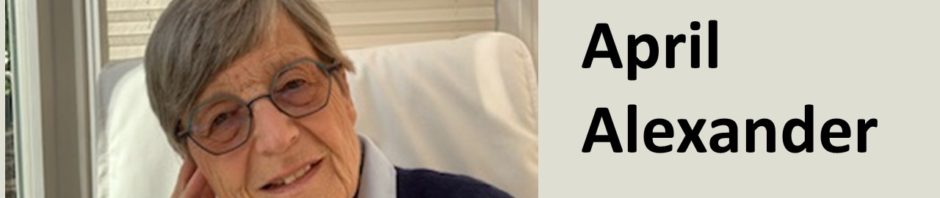
    by April Alexander, member of General Synod 2000-2021; Church Commissioner 2008-2018; member of Crown Nominations Commission 2013-2018

    I was delighted to read the proposals from the Bishop of Oxford summarised  in the Church Times (4 November) and to hear him speak about them further on Radio 4 (details of all media engagements here). I had begun to fear that the Church would remain too timid publicly to extend to those in same sex relationships the love and welcome extended to those in heterosexual relationships.

    Looking at the first four of +Steven’s proposals in Together in Love and Faith, the second is to give “freedom of conscience to clergy and ordinands to order their relationships appropriately”. This would at last allow us to move on from the 1991 Issues in Human Sexuality document which was only prepared as a “discussion document” but which subsequently – and astonishingly – acquired the status of “holy writ”, even though the Preface stated “We cannot expect all to agree with our conclusions”. Yet when, in July 2022, Revd Mae Christie asked the question at General Synod, “When and by what mechanism was Issues in Human Sexuality formally written into the Selection Criterion of the Church of England?”, she received the following reply from the Bishop of Chester in his capacity of Chair of the Ministry Council:

    We do not have a record of the date or the mechanism by which Issues in Human Sexuality was formally written into the former Selection Criteria. Unfortunately, since the information is not readily available it could not be obtained within the time-frame available for responding to Synod questions.

    I was a founder member of Inclusive Church in the wake of the Jeffrey John debacle in Oxford diocese before the days of civil partnerships and same sex marriages. The “freedom of conscience” which +Steven is now proposing was the hallmark of our endeavours and, over two decades later, we have made no progress to date. I had rather feared that such a provision had been lost entirely in the pressure to regularise same sex marriage.

    Looking at +Steven’s proposals 1-4 together, I am taking it that clergy should be among those who are able to turn to the Church to solemnise their own same sex marriages in Church. I am not quite sure that this is crystal clear.

    However, there may also be a legal difficulty with the proposal for solemnising singe sex marriages in Church, whether for clergy couples or lay, which only rarely enters into LLF discussions. The CofE website Your Church Wedding makes clear that “Although same-sex marriage legislation has changed, it remains the case that it is not legally possible for same-sex couples to marry in the Church of England”.

    The reason for this prohibition is that, in 2013, when the Marriage (Same Sex Couples) Act was enacted, the then-Archbishops (Williams and Sentamu) were so bitterly opposed to it that the Government went massively out of its way to appease them by including a “quadruple lock”. This was intended to “safeguard” the CofE against any attempt by any future Government to unscramble the legislation to allow such marriages in CofE Churches. Savi Hensman has discussed this on the Equal website.

    Bishop Steven’s proposals 5-7 are a different matter; they concern the provision of a platform for those clergy who oppose single sex marriage in approximately the same way as has been done for those who opposed the ordination and consecration of women. I am afraid my sympathies lie with the suffragans in the Oxford Diocese who are not in agreement with this, because that framework has at its heart a central dilemma. While the Five Guiding Principles state that “the Church of England is fully and unequivocally committed to all orders of ministry being open equally to all, without reference to gender”, at the same time they make “pastoral and sacramental provision for the minority within the Church of England who are unable to receive the ministry of women bishops or priests”. How is it possible to do both? More than that, this arrangement apparently allows the Church to “maintain the highest possible degree of communion and [also, and at the same time, contributes] to mutual flourishing” (House of Bishops Declaration 2014; GS Misc 1077). Whether Synod would be prepared to accept such a flawed notion a second time remains to be seen.

    Another aspect of this arrangement in relation to women as priests and bishops is that it did not emanate from the Church in the first place but very definitely was imposed upon the Church by Parliament in 1992; Judith Maltby’s 2011 chapter in Mark Chapman, Judith Maltby and William Whyte (eds) Established Church: Past, Present and Future explains this. Having been established in 1992 this arrangement was, in effect, replicated in 2014.

    By 2014, however, the attitude of Parliament was totally different. It was the Government, rather than the Church, which introduced the Lords Spiritual (Women) Bill in 2014. This was specifically to allow new women bishops to leapfrog over their male counterparts in order to speed up the process of appointing women to the House of Lords. Indeed, debates in both Houses reflected their view that discrimination against women was not to be tolerated any longer in the Mother of Parliaments. All indications are that nowadays Parliament is as opposed to discrimination on these grounds as it is to discrimination against women.

    On the Sunday programme on 20 November, Ben Bradshaw, MP assured listeners that Parliament could well take an interest in the matter of gay clergy and laity if the Established Church continues to remain out of step with the people of this land. Mr Bradshaw was a very effective Parliamentary operator on the matter of women bishops and I am sure he would be as effective this time.

    Further, these arrangements in respect of women have allowed pockets of discrimination and, in some cases, bullying and downright rudeness to persist, which grieve and may damage all women (lay and ordained) who experience and even hear about them. This is why a mediation service had to be set up. Those who are “unable to receive the ministry of women as priests or bishops” can still be elected to the Crown Nominations Commission, there to impede the nomination of women as Diocesans. If similar arrangements persist, the same discrimination would be likely to occur in respect of those candidates in civil partnerships and same sex marriages.

    I would beg the Bishop of Oxford to bow to what seems to be the majority view in his own Diocesan House of Bishops and not to propose another fault line which will involve many of the same people and parishes and is likely to have many of the same effects. He might also reflect upon the costs of supporting specific bishops for the relatively few parishes which are already provided with Episcopal Oversight in these straitened times.

    Finally, the Established Church should perhaps be asking itself whether it can yet again propose a framework which would rely on carve-outs from one of the most important and effective pieces of legislation in recent times, The Equality Act (2010). It might also bear in mind that discrimination of any kind is essentially against the tenets of our Christian beliefs as has been made abundantly clear in the recent work on race and disability, for example. The Church perhaps needs to examine the justification for continuing to go out of its way to facilitate discrimination on grounds of either gender or sexuality.

    The first four proposals from +Steven are permissive rather than directive; that should offer latitude enough.