Category: Racism

  • Let’s Disagree to Agree: Rwanda and Homosexuality

    by David Bagnall, Associate Rector of St John’s Episcopal Church, Edinburgh. Formerly chaplain of Emmanuel College, Cambridge, his PhD thesis examined the role played by language and discourse in generating new concepts of homosexuality in the Anglican Church of Rwanda

    One of the perishingly few points of general agreement within the sexuality controversies currently wracking the Anglican Communion is that everyone disagrees. Disagreement, as we all know, is at the heart of the issue – indeed, that’s the whole point. Put crudely, liberals, generally in the Global North, think that homosexuality is a God-given identity to be cherished and nurtured along with everything else that is sacred and holy; conservatives on the other hand, generally in the Global South, think that homosexuality is sinful and is a way of life chosen by fallen humans in defiance of God’s law and purpose. So far so simple: we disagree. Or so we might think…

    My research focuses on sexuality debates within the Anglican Church of Rwanda (ACR), and in particular on the role the Rwandan church has played within global sexuality controversies. Research in this area is continually fascinating, of course, but among the most startling of my findings has been the fact that, contrary to popular opinion (my own included), disputes regarding sexuality across the communion aren’t so much characterised by disagreement but rather by misunderstanding, or even miscommunication. My research focuses on debates between the ACR and the Church of England, and therefore involves interviewing many priests from both provinces about their experiences in discussions and dialogues, and time and again – to my surprise – interviewees report not so much disagreeing with their interprovincial colleagues but actually failing to understand them. Many priests I interviewed described such conversations as being deeply frustrating, with one CofE priest telling me that almost every conversation had been ‘a non-starter’, and a Rwandan Bishop noting that ‘there is no listening’ within the debates. Moreover, when asked about the nature of this frustration, members of both churches described it consistently in terms of a failure, not to agree, but even to understand one another. One CofE priest, for instance, told me of a conversation with a Rwandan friend regarding homosexuality in which his friend ‘couldn’t understand’ what it was that he was trying to describe, and that there was ‘a massive…difference’ in what they were each attempting to communicate. One CofE Bishop, too, told me that he felt that there was ‘a very big gap’ in understanding during conversations he’d had with Rwandans, and former Archbishop of Canterbury Rowan Williams noted that such conversations seemed to him to be ‘a dialogue of the deaf’. One Rwandan priest, finally, commented that for this reason sexuality is ‘difficult to talk about’, and Bishop Nathan Amooti of Kigali, reflecting on such difficulties, concluded sombrely that ‘there’s no proper dialogue’.

    The reasons for these misunderstandings are multiple and complex, and are too lengthy to detail in a single blog post, but at their centre is the fact that there are wildly diverse meanings conveyed within the English word ‘homosexuality’ when used by different actors across the Anglican Communion. For British Anglicans – regardless of their opinions on the subject – my research reveals that the meanings and resonances conveyed in the word reflect its deep and entangled history of usage within the British Isles. It has roots in psychopathology, but contains insights from theology, politics, socio-cultural discourses, and even legal practice. It has resonances of everything from the Wolfenden Report to Virginia Woolf; from Stonewall to David Beckham’s sarong. In other words, the word ‘homosexuality’ has a particular and culturally contingent history within the UK, all of which is contained within and expressed by it when used by British people.

    By contrast, the word ‘homosexuality’ has a startlingly short history within Rwanda. In Anglican circles it first appears within interprovincial documents in the late 1970s, but is barely mentioned until it suddenly explodes into life during the mid-2000s, during which time the ACR established deep bilateral partnership with disaffected conservative American Anglicans. It was by means of this partnership that an astonishing wave of anti-homosexual literature entered the Rwandan Church and. once there. came to redefine and renegotiate native and organic understandings of what we would call homosexual behaviour. For, just as homosexuality has a rich and complex history of development within the UK, so does what we would call homosexuality have a correspondingly deep history of development within Rwanda, though of a different kind. Prior to the mid-2000s, the word used by most Rwandans to describe homosexual contact was mutinganyi which, as my research revealed, conveyed a very different meaning to the British word ‘homosexual’. The word ‘mutinganyi’ is rich in depth and meaning, but at its heart is the idea of the use of intimate same-sex sexual friendship and activity as a means to self-knowledge and mutual development. Crucially, too, the word has no sense of the pejorative about it and isn’t tied to any ideas of identity exclusive to heterosexual norms. To be a mutinganyi, then, was to be a person who had intimate relationships – both sexual and otherwise – with people of the same sex, but in a fashion that wasn’t at all prohibitive of heterosexual relationships. It’s difficult for us to conceive of how this could be the case, of course, but that’s because I’m describing the phenomenon in English and using words which, as we have seen, convey different meanings. The point at stake, then, is that sexuality itself has an utterly different history of development within Rwanda no less rich than our own, and which our own words are simply incapable of describing, at least in discrete terms.

    The problem is, however, that the word mutinganyi is hardly ever used in Rwandan Anglican circles in the present day, and has come to be replaced almost entirely by ‘homosexual’. The reasons for this are chiefly down to the extraordinarily pugnacious and virulent anti-homosexual discourse introduced into Rwanda by American conservatives in the mid-2000s, which itself has evolved and developed within Rwanda to become the ubiquitous language within which sexuality debates are currently couched. It is for this reason that homosexuality is perceived without exception within Rwanda to be both a novel and foreign phenomenon. Paying close attention to language-use and development reveals that, in a strict sense, it is. The meanings and resonances conveyed by the word ‘homosexual’ – forged in conservative circles within American Anglicanism – are indeed both novel and foreign to the organic understandings of sexuality detailed above, and the near-ubiquitous use of the word ‘homosexual’ within Rwanda has therefore come to obscure or even redefine such native understandings.

    The reason why all this matters, then, is that people like me – who care deeply about the dignity and welfare of gay people, and who long for the day when people of all sexualities can participate fully as equally members of the Body of Christ – need to watch our language. For in using words like ‘homosexual’ in interprovincial dialogues, progressives are constantly in danger of unwittingly colluding with conservatives by falling into conservative narratives of a so-called ‘Western agenda’. If we want to see a church that celebrates the rich diversity of sexualities and sexual orientations that God has created, then we must resist the temptation to see our own sexual categories as ubiquitous, and focus instead on celebrating and fostering organic and culturally contingent sexual epistemologies throughout the Anglican Communion. Doing this, of course, will require patience and a constant awareness of the particularity of our own discourse and the discursive traditions of others. It will require serious thought, too, and the wisdom to discern when the limits of our language precludes real mutual understanding. True agreement may be far off, of course, but at least we might start with true disagreement.

     

  • Being Invisible While Anglicans Debate Marrying Same-Sex Couples

    by Savitri Hensman, author of  “Sexuality, Struggle and Saintliness” and LGBTI+ equality activist, writer and involvement coordinator

    In February 2023, the Church of England’s General Synod voted to welcome a proposal by bishops for optional prayers for blessing same-sex couples, though weddings were not on offer. Also a much-criticised document which was used to ban married gays from ministry – Issues in Human Sexuality – was to be scrapped. This was a modest but significant step towards greater inclusion of LGBTQI+ people, though far from enough (1).

    There were strong negative reactions from those most opposed to change, in the UK and parts of the wider Anglican Communion; the Communion had been mentioned at various points in the debate, mainly with regard to the hazards of moving forward. Church of England leaders were accused of putting Western cultural above biblical values and some challenged the Archbishop of Canterbury’s fitness to chair the Communion, though many think existing structures outdated in any case. Following Synod, at an Anglican Consultative Council gathering in Ghana, Justin Welby made a rather defensive speech, criticising secular British culture and MPs’ warnings about parliamentary consequences if equal marriage in church did not go ahead, but indicating that those in favour of greater inclusion also sought to follow Scripture.

    In recent debates, LGBTQI+ people of Global Majority Heritage (GMH) have, I think, been mainly invisible, except occasionally as victims of (now and then protestors against) homophobia and transphobia (2). This seems strange, partly because there are a lot of us, who may be affected in multiple ways by the changes which are proposed or resisted. What is more, some have influenced shifts in churches and society. Each has a unique experience and perspective; the dangers of sweeping generalisations about categories of humans should, by this point in history, be clear. However, there may be areas of common ground among many, if not all.

    I am a British Sri Lankan lesbian, born and baptised in what was then Ceylon. I arrived in this country in the ‘60s as a small child but remained a citizen for the first three decades or so of my life and am still connected. My late partner was of Jamaican descent, my family and friends are from diverse backgrounds. My late parents were active in Asian and wider Southern theological circles. I agree with some “conservatives” that many affirming Church of England members underestimate the importance of the Anglican Communion – but I draw entirely different conclusions.

    Like Anderson Jeremiah, the Communion I know is far from homogenous. And, echoing Jarel Robinson-Brown, the notion of a “liberal” West pitted against a “traditionalist” South is simply untrue, though slavery and colonialism alongside other kinds of injustice have influenced patterns of oppression and resistance.

    With some Synod speakers, I fear for Nigerian Anglicans’ safety. But many already face horrific violence because they are LGBTQI+ or on religious grounds, despite church leaders there inflaming hatred of LGBTQI+ people and bishops here repeatedly stalling moves towards inclusion. Murderous fundamentalists will keep persecuting Christians while this bolsters their own power. Given my own island’s blood-soaked recent history, I understand concerns about increasing the vulnerability of those for whom one cares. Yet, as also pointed out at Synod, some of those seeking affirmation of their love are themselves refugees. And I believe that consistently upholding compassion and human rights for all, and challenging fundamentalism and inequality, offers the best hope of overcoming violent division.

    Justice, mercy, human and Divine love

    In the mid-twentieth century, Lambeth Conference gatherings proclaimed that all people were equally the objects of God’s love and urged support for human rights; affirmed that all Scripture must be interpreted in the light of Christ; and acknowledged “our debt to the host of devoted scholars who, worshipping the God of Truth, have enriched and deepened our understanding of the Bible, not least by facing with intellectual integrity the questions raised by modern knowledge”.

    Such ideas did not simply emerge from an enlightened (or degenerate) West. Struggles against slavery and colonialism, as well as the Holocaust, had helped to demonstrate the dangers of treating some people as less than fully human, while rebels across the world strove for freedom, humanity and greater equality. And a version of Christianity distorted by the interests, and norms, of the rich and powerful in the West had been deeply damaging, though the Good News sometimes shone through nevertheless. Diversity in sexuality and gender identity in some countries was sometimes seen as a sign of heathen backwardness.

    Sometimes biblical passages were used to “prove” God’s backing for inequity or even cruelty, ignoring the Bible’s broader emphasis on justice and mercy and God’s presence in and with the marginalised, as well as Jesus’ bold challenge to religious leaders who disregarded human need and emphasis on the law of love. At the same time, “reason” and “experience” were also sometimes harnessed in oppressive ways, a reminder of the risks of over-confidence that one possesses the full truth. Narrow nationalism and uncritical allegiance to the state has also often been disastrous.

    I remember how, in South Africa and the USA, numerous supporters of racist segregation were convinced this reflected their faithfulness to the Bible. Selective use of Scripture and tradition was also used to underpin economic oppression and women’s subjugation – and, evidence increasingly indicated, not offering LGBTQI+ people the same opportunities to grow spiritually in faithful, self-giving relationships. When I was young, organisations such as the World Council of Churches and Ecumenical Association of Third World Theologians helped create space for anti-racist and more broadly liberatory theology to be shared and developed.

    In different parts of the South, churches took varying paths, especially when social tensions heightened and scapegoating intensified. As in the West, bishops did not represent everyone, though there have been inspirational figures like Desmond Tutu. Sometimes anti-LGBTQI+ laws and norms left over from colonial times were enforced with fresh vigour, at times with backing from institutional churches. Yet creative thinking has also gone on, often exploring how to respond to God’s call, amidst multiple inequalities and divisions, to build a world where all are valued.

    Following God, not culture

    When I came to Britain, men could be jailed for gay relationships. GMH people in the West, and ethnic minorities in Sri Lanka, have often faced prejudice from neighbours and mistreatment from the state.

    Cultures and states do not deserve absolute allegiance, though God can sometimes work through these. The liberatory thread running through the Bible, despite human fallibility, offers more; and openness to the Spirit in seeking a more loving, merciful world. LGBTQI+ GMH Christians, among others, have useful insights to offer.


    References

    (1)Lesbian, gay, bisexual, transgender, queer and intersex – but please note that this term is used broadly for a range of people who, across cultures and history as well as on an individual basis, might describe themselves in varying ways, some of which might not be easily translated into English.

    (2) This may include people of African, Asian and Latin American descent or descended from the original peoples of North America or Australasia, who make up most of the world’s population. Some people prefer other terms, such as ‘people of colour’. On various aspects of diversity, I am fairly flexible about the terms or sets of initials used to describe me, if not too rude!


  • Embodying Lambeth: Homophobia, Hope and Honesty

    Embodying Lambeth: Homophobia, Hope and Honesty

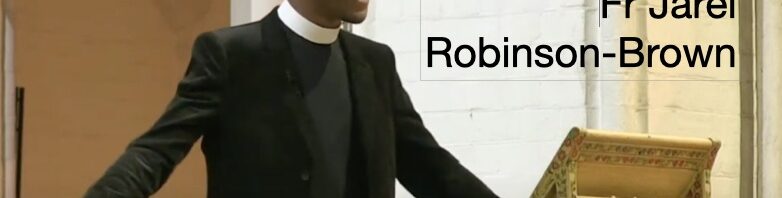
    by Fr Jarel Robinson-Brown, Co-Chair of OneBody OneFaith and Visiting Scholar at Sarum College, Salisbury

    ‘To encounter oneself is to encounter the other: and this is love. If I know that my soul trembles, I know that yours does, too: and if I can respect this, both of us can live. Neither of us, truly, can live without the other…’

    – James Baldwin, The Devil Finds Work, 1975


    It would be fair to say that I have been wrestling recently, quite deeply, with what place hope should have in my life. Not just as a Christian, but as a priest – I’ve wondered whether hope is all it is made out to be, and whether hope (real hope) is even possible as someone who exists in a body whose skin invites violence and micro-aggression and whose sexuality endures inequality, oppression and injustice. For years, as someone Black, Gay and Christian I have wrestled with what part of me really ‘came first’ in that list of identity that I carry not by choice, but because the world is a place where labels, compartments, boxes exist. And they exist, on the whole, to make those who do not carry them – feel safe.

    One thing people often say in relation to my recent book is that a shorter title would have been better. But ‘Black, Gay, British, Christian, Queer’ defines those of us who live at the intersection of race, religion, sexuality and culture. As I wrote: ‘as Black Queer Christians  … we feel pressurized to choose at times between our Blackness and our Queerness, our Britishness and our African-ness, our religion and our desire, our life partner and our families, our bodies and our souls…To some we are no longer Black, to others we are no longer Christian. We live then faced with an impossible ultimatum between ‘life’ and life – to live as we are expected to live, to live in the freedom that is ours but will cost us nothing short of absolutely everything to inhabit’ (p.24).

    So to return to hope, I still remain uncertain as to what place hope should have in my life – and I went to the Lambeth Conference fairly hopeless but left with more hope than I imagined possible. Getting on the train to Canterbury, I was already apprehensive – the 15 year-old child sat in tears around the family dining table defending his right to exist was back…, “this is just who I am” in the face of “you can’t be Gay and Christian, the Bible says it’s wrong”. Standing in the truth of who I am does and has cost me much, not least my relationship with my father and other family members – but when the only options before you are staying in the closet and death (and both are the same thing I think) the choice was clear.

    By the time I arrived in Canterbury a statement had been released by the Global South Fellowship of Anglican Churches which stated that they would table their own call to re-affirm Lambeth resolution I.10 as the “Anglican Communion’s ‘official teaching’ on marriage and sexuality” and to impose sanctions on Provinces which ordain bishops in same-sex relationships and conduct same-sex weddings. Rather than receive communion alongside such bishops, they announced that they would stay seated, as one of “a number of ‘visual differentials’”.

    It was of course, like stepping into the lion’s den. Seeing those who had decided that receiving the sacrament of the Eucharist alongside people like me was impossible. My black body stood at an LGBT+ stall was clearly quite confusing to some of my brothers and sisters from other parts of the world. To embody an “issue” in the skin of those who are most vocal against it was an interesting experience.

    At the forefront of my mind was the reality that I am one among many whose ancestors did not leave Africa willingly, but who were taken from their homes to far off lands. Whilst I am a citizen of the UK and Jamaica, I am also an African Gay man, and a Christian. Sometimes I wonder what my life would look like if we were never taken – what language would I speak, what clothes would I wear, what God would I know. This sense of unknowing is powerfully articulated by Cole Arthur Riley in her work ‘This Here Flesh’:

    ‘I do not know from where my ancestors were abducted. I cannot tell you what the air smells like there. I don’t know what sound the waves and soil speak. These things were stolen from me as they were from them. I think it is one of the deepest evils to become a thief of place, to make someone a stranger to their home, and then mark their relationship to the land by bondage instead of love.’ (p.22)

    Although at times the space at the Lambeth Conference felt occasionally hostile rather than violent, I was surprised by the deep, warm and meaningful encounters I had with Bishops and those invited spouses who were willing to engage – even inviting me to their countries to engage in dialogue around LGBTQ+ lives. It would take more courage than I perhaps have to go to countries where homosexuality is still illegal, but then I already do so whenever I go to Jamaica.

    It seems to me that not enough attention has been paid to cultural aspects of this dialogue. There is, for example, a huge issue with seeing Africa as one homogenous anti-gay continent. Southern Africa is not Nigeria, Ghana is not Swaziland and Brazil, also part of the ‘Global South’, is extremely LGBT+ affirming. It is claimed that homophobia in Africa is pervasive, indigenous, deep rooted and normative, when in fact it functions on many levels: Political, Cultural, Theological.

    In his work ‘Out of Time: The Queer Politics of Postcoloniality’ Dr Rahul Rao notes:

    ‘As countless media reports purporting to analyse attitudes towards sexuality inform us, ‘homophobia is rife in Africa’. Contrasted with the queer freedoms of the West, such discursive constructions of Africa produce what Jasbir Puar has described as ‘homonationalism’ – an assemblage in which LGBT rights have come to be mobilised as new markers for an old divide between the civilised and the savage.’ (p.33)

    What this construction of Africa does is locate homophobia in Africa in such a way that removes agency from Africans to define their attitudes themselves rather than having them instrumentalised and manipulated by outside factors. Rahul Rao also names ‘homoromanticism’, a view which sees African people as blameless pawns caught up in a white, western culture war into which Africa has been dragged. Like ‘homoromanticism’, ‘homonationalism’ removes African agency to tell the story of indigenous queer identities and anti-queer attitudes from within the African cultural context.

    Rahul Rao also reminds us that postcolonial critique needs to go beyond simply reminding us of the enduring legacies of colonialism. Formerly colonised states have become colonial in their own right, and “the project of decoloniality might itself become a vehicle for the politicisation of ‘homophobia’”, as happened at the 1998 Lambeth Conference, when conservative evangelical American Anglicans capitalised on the demographic strength and financial weakness of the African Churches when weaponizing homophobia.

    For me, the very notion of a distinctly ‘African’ homophobia is essentially an orientalist narrative setting up Africa as the antithesis of Europe. The positions taken by many African clergy at the Lambeth Conference are driven by anxieties from the global south related to the preservation of culture, of customs, the notion of the family against the perceived and real threat of Global North hegemony. Nor is the UK the haven of equality and justice which the binary narrative claims – as my experience in this black queer body within and without the Church in Great Britain shows.

    What struck my black body most starkly whilst being present at the Lambeth Conference was that all, literally all, of our LGBTQ+ material and literature was in English. We understand ourselves as the centre of a universe which is so much more diverse than even we, who are wanting the Church to be more diverse, realise. Few know much about the cultures of Kenya or Sudan as well as other parts of the Global South, and so much of our queer theology and scholarship is shaped by our Eurocentric categories which neglect non-western epistemologies, conceptual and intellectual frameworks. When we commend LGBTQ+ justice and equality we do so not only across a theological divide but a cultural and linguistic divide. For a Bishop from along the Nile whose diocese is not even 10 years old, whose people suffer from floods and civil war, a conversation therapy booklet is baffling when his people have no access to good healthcare or the vaccine.

    So am I hopeful? I don’t know. What I do know is that there is no hope that things will change so long we fail to encounter difference. The Lambeth Conference hasn’t met for 14 years: many of the Bishops who are there now were not Bishops when it last met: the world, in just the past two years, has totally changed. We need to hold our English bishops to serious account for their cowardice, whilst paying careful attention to the dialogue around other parts of the Communion. There is, at the heart of this, just so much fear – perhaps what drives this fear is the reality that a Church which becomes more inclusive is fundamentally one which is more honest…more honest about the world God has made, and the people that make up that world – and maybe the illusion that God’s world is straightforwardly heterosexual is finally crumbling. But without encounter of the ‘other’, each of our worlds become smaller, less real, less true – whatever the future holds if it is a future shaped by God, and of course it is – it will be made up of all of God’s people. And a Church which is honest about the world is a Church which can attractively proclaim the Gospel of Jesus Christ whose love knows no bounds.

    ‘…There is no promised land without a multitude. You think you can get there alone, and maybe, by some rare chance you do. But what will become of the promise when it is collapsed by loneliness? Who is going to drink all that milk and honey with you? Look down in the cool, running stream. You cannot see yourself.’

    – Cole Arthur Riley, This Here Flesh, 2022


  • ‘Resource Churches’: When Planting Becomes Colonialism

    by the Revd Robert Thompson, Vicar St Mary’s, Kilburn & St James’, West Hampstead; host of Open Table, London; member of General Synod

    Robert Thompson

    For those of us who come from the island of Ireland, the language of plants and planting, on the face of it a lovely horticultural metaphor, has a morally problematic dark side. The plantation of Ulster, and of other parts of Ireland, was a colonial endeavour. It involved the resettlement of my own English and Scottish ancestors and was characterised by, at the least, the appropriation of the land of the Irish, and at worst a violent hostility towards them that too often resulted in death. The present, continuing, sectarian divisions of the north of Ireland are a direct result of this form of planting.

    As the Vicar of a parish which has a UKME/GMH majority congregation, I have also become acutely aware of how this same rhetoric of planting was operative in the colonisation of Caribbean islands. Here, much more problematically, most of the indigenous peoples were either murdered or died of imported European diseases. The combination of both these resulted in what can only be described as genocide. Here too the land was parcelled out to the incoming settlers as large ‘plantations’ but, worse than in Ireland, the human labour for these estates came from Africa in chains on slave ships. People made in God’s image were reduced by the people of Christian nations, including the church and missionary agencies, to capital and commodity, to be owned, bought, sold and killed at whim. The history of colonialism also has on-going consequences in the global distribution of wealth and racism.

    In the contemporary Church, we have come to use the horticultural imagery of planting, and to practise it, without much critical reflection either on the language itself or on its practice. As the panacea for our falling numbers we are now are wedded to a ‘mixed ecology’ of church, of which planting forms a major part, as the basis of our future mission. So-called ‘Resource Churches’ are a major strand of this mixed ecology. But many of us have come to the lived realisation that here, too, the seemingly benign language that oozes notions of practical support is not the reality on the ground.

    It was to unmask this contradiction that I recently tweeted:

    “Resource Churches” what a misnomer! “And so Jesus told them a parable: Vicar alone on housing estate parish writes to neighbouring Resource Church, with 13 full time staff, 4 being clergy, 5 times over a year to ask for help with accounts & position of treasurer. No reply….Bishop calls housing estate vicar this week to say Resource Church Vicar would like to ‘church plant’ into housing estate parish & church building. Housing estate Vicar says to bishop “You can tell Resource Church Vicar to go f**k themselves.” Let them with ears to hear, hear!”

    I then further retweeted the original post by saying:

    And how many Resource Churches have a woman, UKME/GMH or LGBTQIA+ person or someone living with a disability or a chronic health condition as Vicar? Of initial 19 in @dioceseoflondon only 1 has a UKME Vicar, 1 now (but not originally) has a woman & as for the other E&D markers…

    My purpose in these posts was to problematise the naïve notion that a ‘mixed ecology’ church is not already a ‘mixed ecclesiology church’ in which we have created a form of neo-liberal, competitive capitalism as the precarious foundation (built on sand) of our ‘common’ life together. I wanted to indicate that, just as in our colonial history, the lived effects of so-called church planting and resource churches are based on a binary opposition of some forms of church to others. Just as in the plantations of Ireland and the Caribbean, this ‘othering’ has deathly consequences for those who are forcibly, without any real consultation and with the blunt instrument of a Bishop’s Mission Order, resettled or displaced.

    The responses from a myriad of clergy and laity to my social media posts ‘parabalising’ the effects of ecclesial planting and resourcing show that these are experienced by many of us in our day to day ministry as a form of colonialism. This colonialism is leading to the breakdown of what has been established ecclesiology of the Church of England as well as trust between us.

    Don’t get me wrong! I am not anti-evangelism, or anti-church planting, so long as they use models of partnership ‘with’ and are contextually intelligent. I am not anti-New Worshipping Communities or anti-Fresh Expressions, or anything else that helps in the living out of the gospel of Jesus Christ and Christ’s proclamation and embodiment of the justice and peace of God’s Reign. But what I, and many, are increasingly deeply concerned about is the ways in which this now happens in parallel and deeply sectarian tracks, in competition not only with parishes, but with other emerging expressions of church. This has created situations in which some clergy and people are completely under-resourced, whilst others have a cup that overflows. As one person on a thread said, these are not ‘Resource Churches’ but ‘Resourced Churches’ pumped and primed with money from the Strategic Development Fund whilst parishes are expected to give, give, give to the diocese with little in return.

    I make this critique not so much as the ‘liberal Catholic’ that many might label me, but as a person formed in conservative and charismatic evangelicalism. I hold, within myself and in my own faith development, the tension of the unity of the church. Biblically, therefore, for me, what is most blatantly contrary to the teaching of Christ and that of Paul are the ways in which church planting and resourcing are pretty well always practised within sectarian silos, leading to economic injustices within the church, and overwork, mental health challenges and burn-out for many.

    The effect of the Save the Parish movement and the election of many of who support it to General Synod has rather focussed this debate. The disillusionment and anger of the many clergy who contacted me indicates that what happened in Winchester could potentially happen in very many dioceses very soon.  To save us from such a breakdown on a national scale, it is time for the present colonialist model of planting and resourcing to stop. It should be replaced by biblical economic fairness. As another contributor to a thread said:

    a modest distribution of SDF funds amongst a single deanery rather than a single ‘resource’ church could revolutionise each church’s potential for mission, and let’s not lose sight of the most important thing: ensure they are solvent. A comparatively minor cash injection would enable struggling churches to renovate, complete minor re-ordering, sort out any problems with the ‘show’ and make money. Which is what we all serve, after all.

    When the rich get rich and the poor get poorer, we are called to practice Jubilee.


  • Sharing in Privilege: Black and Collared

    by Revd Dr Augustine Tanner-Ihm, Team Curate at St James & Emmanuel, Didsbury, Manchester and winner of the 2020 Theology Slam

    During theological college, no one told me how differently I would be treated after I was ordained. As a Black man, I’m used to people seeing me as a threat to them. In stores personnel follow me around, walking next to cars people quickly lock their doors or if I’m near a white women she’ll clutch her handbag closer, thinking I’m going to rob her. I have become accustomed to being served the very last at bars and restaurants (I sure miss the app service!). Also, I have become accustomed to people thinking I’m not very clever and assuming I must be from a broken family and community background. Because I look this way, this has been my lived experience and probably the lived experience of many more people that share my amount of melanin.

    But ordination.

    At theological college, wearing clerical clothing was always associated with your church tradition. Even during the theological formation process, clothing seemed mostly pointless. We talked about whether it’s contextual for the setting and about its role for women in showing they are leaders in the parish; but that was all.  At no point duing our practical and theological formation did anyone explain how we would be treated as Black or Brown ministers. Maybe because there weren’t any black staff until my last few months of ordination training. And maybe because for my entire time at theological college there was no mention of how Black and Asian ministers experience different things. I don’t blame the leaders and tutors for not introducing us to these multicultural dynamics because their white worldview and their mostly white ministry were just not affected. Even though I trained at three theological colleges from a diverse range of Church Traditions, this never came up. But as a student, it affects me.

    On 4 July 2021, I was ordained as a deacon in the Church of England. I could finally wear the collar to show that I’m a member of the clergy. Within the first week of walking around the parish and the community of Manchester, I noticed something. When I waited in the bus queue, people let me on first. Instead of merely practising social distancing, people smiled at me and then looked down to the floor. Older white people gave me respect and instead of me calling Black aunts and uncles aunts and uncles, most of them treated me like an elder because of this ontological change. I never knew this ontological change would give me the parts of the experiences that my white siblings experience their entire life. My parish is mostly white professional people and the staff, besides one amazing Iranian woman, is white. Therefore, there just wasn’t anyone to tell me anything different about what would happen.

    My grandfather used to tell me all the time about how he was called a ‘boy’ by white folks his entire life. I remember telling him it’s different now. People don’t say that anymore. He told me it wasn’t different; even if people don’t say boy, their intent is still boy and not man. All my Baptist grandfather wanted is to be treated like a man: a man who worked hard and took care of 11 children, who owned his own business and house. But he never received the respect he deserved which manifested into distrust, disdain and hate for white people. Because of the life experiences I had, and my theological framework, I didn’t have the same valid feelings my grandfather had for white people. Ordination has changed me, or I should say it has changed the way people see me. I feel a little more comfortable going to the shop or going into a room with all middle-class white men because the collar has given me authority, gained me respect, because it signifies something. I’m not just another negro (as some would say) but I’m ‘Father’. I’m not a boy but a man. Sadly, it took a thin white collar to go from boy to man.

    I often wonder how many others experience this sort of change within their ministry. Who can help me understand; who can help with this theological and practical reflection? In my diocese, I have been blessed to have three UKME senior leaders. All are amazing priests and disciples of Jesus.  One leader directed me to reflect on the Biblical teachings of Peter. Therefore, I read and read and read 1st Peter and began to see that, as I continue in ministry, I cannot allow the collar to become my overall identity, but should allow wholeness and holiness to be what I strive for. Some may argue there is no separation but only semantics. But Archbishop Stephen always reminds us of our first call: to be disciples of the one who has died, who rose and who is coming back again. And as Saint Peter tells us, we are to be holy for he is holy. And that’s our call.

  • Spiritual Guides – The Key to Transformation?

    by the Very Revd Rogers Govender MBE, Dean of Manchester and Chair of the Committee for Minority Ethnic Anglican Concerns 

    Every visitor attraction and Cathedral in this country has a number of guides to help people navigate the place. These are usually volunteers who know how to tell the story of the place because they have usually spent much time in the space over several years. They have grown to love the history, the artefacts, and the people who have animated the space over the years.

    We know much about the Girl Guide movement for girls aged 10 to 14. They are young people who want to go on adventures, create their own campaigns, learn leadership skills and meet new friends. This work of personal and social transformation begins at an early age. Very often the Girl Guide movement as well as Scouts train their members to become trail guides by going on hikes, mountain climbing, etc.

    The National Trust is another organisation that depends heavily on tour guides. Without their help and support the NS would struggle to open national treasures to millions of visitors around the country.

    As Christians we believe that God is our eternal guide. We follow Jesus the Guide who takes us on the train and trains us to become spiritual guides to others in their search for meaning and for God’s Kingdom. Psalm 73:24 reminds us ‘You guide me with your counsel and afterwards you will receive me with honour.’

    We are encouraged to have a spiritual guide to help us with our relationship with God and to help us in our discipleship and ministry. For some of us this is an alternative to therapy, enabling us to combine personal and psychological insights with spiritual teaching and truths. Spiritual Guides are essential for those of us in Christian ministry.

    A guide is able to speak from years of experience, with a practised sense of direction, self-discipline and an ability to lead others (Prophetic Dialogue, p 51). A seasoned guide will also be able to read the signs of impending storms or obstacles and help people stay the course avoiding potential danger. When distractions emerge, the guide will encourage people to keep moving so that they arrive at their destination safely.

    We are taught in the gospels that endurance in the spiritual journey is crucial for authentic discipleship, ‘The person who endures to the end will be saved’ (Mark 13:13). The ability to endure to the end is possible through our faith in Christ and the encouragement of our guides. Some may understand a mentor to be one’s guide. However, one may look at this, we all need someone to guide us through this earthly pilgrimage which usually begins in our early life with our parents, teachers and friends.

    We need spiritual guides to experience the good news of the gospel. We note the role of Philip as a guide to the Ethiopian eunuch, enabling him to share the good news of the gospel leading to his baptism.

    I have been reflecting on the importance of guides because we live in challenging times in church and society. There are so many issues of injustice, exclusion and exploitation that we face each day. We are called to a personal faith that cannot remain private – our faith calls us to engage with the needs of the wider church and society. Sometimes we may grow weary because we do not see any progress. As the current Chairperson of CMEAC (Committee for Minority Ethnic Anglican Concerns) I have seen such slow progress on issues of racism in the Church of England. I am encouraged by the work of Lament to Action.

    In a secular society we can easily get tired of the apparent indifference to spiritual matters of faith and relationship with God. I was on a tram one evening in November this year and saw a man on the street holding a placard proclaiming that Jesus is Lord. A young lad sitting opposing me on the tram got rather angry and started banging on the window of the tram at the man on the street and began spouting expletives that were angry outbursts about God and the Church. It did leave me feeling a bit shattered and saddened.

    We sometimes face the temptation to give up the fight for justice and fairness. This is often the case with the issues of racism, human sexuality, gender equality, migration policy, etc. We wonder when might these issues be addressed in positive and just ways.

    However, I want to encourage us to look to Christ who is our Guide (John 16:13). We also need to look to those who guide and inspire us in our personal faith, discipleship and wider mission for Christ. We must endure and stay on message as we follow Jesus on The Way of the Cross to the experience of Resurrection. Let’s continue to ‘do justice, love kindness and walk humbly with our God (Micah 6:8). Only in this way will be see God working in and through us as agents of God’s transforming mission in the world!


  • Is God Inhuman?

    by the Very Revd Dr David Ison, Dean of St Paul’s and Vice Chair of the Ozanne Foundation


    I’ve been reading Bill Bryson’s book The Body. It’s a fascinating read about the wonders of the human body and how much of it – of us – is incredibly complex and still little understood. But in Chapter 11 he refers to things medical science learnt about the body through experiments carried out during the second world war by Nazis in concentration camps and by occupying Japanese forces in a huge experimental facility in China. He doesn’t dwell on them, but they were horrifying in their cruelty. Some experiments were supposedly to help soldiers wounded in battle, but others were to satisfy doctors’ curiosity by doing things unspeakably unethical just because they could. And although many Nazis were brought to justice for their cruelty, the director of the research centre in China was debriefed by the Americans to get his medical knowledge and then allowed to return to normal life, while the existence of the Japanese facility was hidden for forty years.

    The Uighurs and Rohingya. Political and religious terrorism. Black Lives Matter. Child poverty and homelessness. Violence and discrimination against women, LGBTI and disabled people. Cruelty continues, and those with power who do it will find ways to justify the unjustifiable. We even do it in the Church – not only with repeated safeguarding failures, but by being complicit with society at large in structural discrimination against black people and poor people and women and LGBTI people. The Church goes further now than society does in maintaining exemptions from discrimination against women and gay people, and we justify it in the name of what is acceptable to God – which makes the Church and its God appear inhuman to many.

    What is ‘humane’? What is ‘inhuman’? After all, it’s human beings who act ‘inhumanly’ some of the time. Being cruel and discriminatory is something which every single human being is capable of. That’s you and me both. Which of us is without sin and can say that we have never acted in a way intended to be hurtful? Who has never done something which another person experienced as cruel and unkind?

    A healthy human body is a dynamic balance of many different systems and needs, where too much or not enough salt or other nutrients can be fatal. Like our body, our humanity is a balancing act, full of difficult compromises to enable life to happen at all, more or less good or evil. Being human means we are capable of being, not either good or bad, but both good and bad, both humane and inhuman. And yet we define acting ‘with humanity’ as being solely good: as the Oxford Dictionary puts it, being human or humane is having ‘attributes or behaviour proper or befitting to a man.’

    Why do we do think that being good and kind is ‘proper’ and ‘befitting’ human behaviour, when experience is that human behaviour includes so much that we want to reject as ‘inhuman’? Discrimination, violence, misogyny, racism and slavery come from dehumanising those who are ‘different’, excluding them from being our fully human neighbour, treating them as ‘other’ or as evil or to be eradicated like germs from the social body, acting as we do so out of the evil that has not been eradicated in us. (See the useful reflections by John Root around racism and binary thinking).

    The view that ‘acting with humanity’ or being ‘humane’ describes only the morally good aspects of human behaviour is not derived from the reality of the world around us. It is in the person of Jesus Christ that Christians believe humanity in its fulness is fully realised: the human being without sin, the Son of God who shows us what is ‘proper’ and ‘befitting’ to a human being, without hatred or cruelty or exclusion, bringing us together into the love of God in our redeemed humanity.

    It is no coincidence that the goodness of humanity is defined by the one who takes on himself our sin for our salvation. Repenting of our sins, cruelties and lack of love, and inviting Christ to dwell in our hearts in love to transform us, frees us to acknowledge both past and present evil in us; it enables us to become more humane, by letting go of the inhumanity of believing that we are good and others are bad.

    The case of Jonathan Fletcher is yet a further example of how avowedly orthodox faith can inculcate an atmosphere of fear and repression in which our humanity in Christ is denied and abused, and God is modelled in ways which are more inhuman than humane.

    It’s crucial to Christian faith that God is the God we see in Jesus: that God is humane, human, abounding in steadfast love. God is not the inhuman deity who many have experienced through the Church, and of which we must repent. Any Church or Christian disciple making either God or other people become less rather than more human and humane needs to repent and change.

    My former colleague Canon Mark Oakley often asks: ‘What do people become in my presence?’ More human, or less? And we might add, ‘What do people become in the presence of the God I worship?’

    Through your church and through encounter with you, do people and their God become more or less human?

  • International Women’s Day – Choose to Challenge

    by the Rt Revd Rachel Treweek, Bishop of Gloucester

    In 2019, on a visit to the Holy Land I visited the church in Magdala and found myself faced with an enormous and extraordinary modern painting by Daniel Cariola depicting larger-than-life sandaled feet which are those of Jesus Christ and those around him. There is also the hand of a woman stretched out so that it is just touching the hem of Jesus’ robes, and at the point of connection there is a vibrant, almost electric, circle of light. As I recall that picture now, it is not only deeply poignant as we live a time when close proximity and touch are things many people long for, but it also seems pertinent this week as we mark International Women’s Day (IWD) with the theme ‘Choose to Challenge’.

    We have had a bucketful of challenges over this past year and little of it has been of our choosing. Yet I am also aware that even when there is not a viral pandemic, for many people across our world there is continual and overwhelming challenge, not least for many girls and women. Not much of their challenge is chosen, good or life-giving – unlike the sort of challenge which is the focus of IWD.

    The hand in the Cariola painting is that of the woman who had been suffering for 12 years from a continuous flow of blood.  She knew much about isolation, trauma, and loss, not due to a viral pandemic but due to her gynaecological condition. I suspect her mental health was affected as well as her physical health.

    As the woman touches Jesus, he feels power go out of him and he voices a challenge, ‘who touched me?’. The question would have sounded absurd to Christ’s disciples given they were being jostled by a crowd, but it could also be heard as critical and disapproving. Yet I wonder if it was more about ‘choosing to challenge’ in order to make this woman visible, such that the ‘who’ in his question was inviting the woman to be revealed as someone with a unique identity and story. Here is a woman who has been hidden, rendered irrelevant and even stigmatised, and now she is about to be deeply noticed as a significant and loved individual.

    The gospel writers, as is so often the case where women are concerned, refer to her simply as a woman (unlike the men named by Mark and Luke in their chapters recounting this incident). We will never know if Jesus actually used her name in the moments of their encounter, but he does call her ‘daughter’, reflecting value and intimacy in relationship.

    It is this challenge to notice and recognise that the Church is called to join in with wherever people are hidden, stigmatised, labelled, or condemned as ‘other’, not only as we live a viral pandemic but as we emerge from it and shape the future we want to see.

    Yet there is another challenge in that circle of light, and it is that of the woman herself. Amid her desperation, isolation, and pain, she shows great courage in acknowledging her need and taking a decision to reach out.

    In my recent book ‘Encounters’ (which has Cariola’s painting on the cover), I reflect on this gospel story in the context of women in prison. It is not easy for those women to reach out for help, yet rehabilitation and restoration are not possible until that moment comes.  Indeed, it requires a woman’s story to be heard and her trauma to be recognised.

    This week as the Domestic Abuse Bill reaches Report Stage in the House of Lords many of our proposed amendments and challenges to the government are endeavouring to recognise the people who are powerless to challenge and remain hidden, most of whom are women, but not exclusively so.

    I am acutely aware that whenever one speaks out specifically for women and girls there is nearly always a backlash from people who want to critically point out that boys and men should not be left out. I agree. Yet, I also want to say that sometimes we need to shine a light more strongly in particular areas to change a pervasive culture which has been perpetuated down the centuries. And working for that kingdom-of-God-shaped shalom means sometimes unashamedly choosing to shine the spotlight on women in order to bring challenge so that their potential and equality can be recognised and fanned into flame.

    It is all part of the bigger picture in which we need to choose to challenge injustice, inequality, and discrimination, not least when it comes to disability, sexuality, background and colour.  At the same time,  we must never forget of course that the category ‘women and girls’ is of a different shape –  as all of those other listed categories of ‘difference’ include women, girls, men, and boys.

    As we mark IWD this year I hope that we might all be challenged about how we challenge to make visible those who are hidden in the crowd of our communities and further afield, and how we do so in a way which enables those unique individuals to recognise their own worth and needs such that they can dare to challenge the narrative they have of themselves.

    And today it is about women.


  • When You are Not Invited to the Table

    by Augustine Tanner-Ihm is an African-American activist, writer, speaker who recently trained for the Anglican ministry at Cranmer Hall, St. John’s College, Durham, and now a Doctoral Student in Leadership, Culture, and Practical Theology at Bakke Graduate University.  

    In many American Christian homes, families throughout the 50 states and territories traditionally leave an extra chair and plate at the dinner table. Strangely these extra knife, fork and spoon were rarely, if ever, used as this extra place at the table was designed for Jesus, himself. This is culturally designed to show honour while also being human-led by the privilege of having daily bread.

    This extra place at the table is to show welcome and hospitality to Jesus but also to whoever may show up. At the table, everyone is disarmed and equalized. This is probably why Jesus and the Christian biblical authors use this metaphor many times in the Greek Scriptures.

    What happens when you are invited to the table but there is no place for you there? You arrive with your best clothes and a bottle of wine and there is no one greeting you at the door. No one offering you a fresh cuppa. Or even saying your name. Many people would argue that you should be grateful that you even received an invitation at all. You feel rejected, despised, or worst forsaken.

    As A Black Queer Christian, this has been my experience at many tables. It is also the experience of many marginalised people who do not fit into the majority narrative. “Sorry, we are Closed” signs from the Church have been unintended and (at times intendedly) communicated to me and people like me. Therefore, I have tried to use the right knife and fork, so to speak. I have tried to rid myself of any hint of blackness. Change the way I think, speak, walk, and dress to be accepted. I tried to date women with utter failure. I went through reparative therapy in a charismatic Anglican church to be right with the church and respectfully, accepted fully by God. I prayed and prayed, and nothing happened. I wanted to be loved and accepted by God and the Church, I was willing to give up everything. After all, isn’t that what the gospel is calling us to do? To be accepted at the table I must rid myself of my blackness and my queerness, right? But to what? To Whiteness and straightness? Aren’t these just as broken as anything other human identities construct?

    This month we celebrate the lives of black folk that has made a significant influence in the US and around the world we celebrate LGBTQIA+ History Month. Two communities I am apart of and only recently I have been happy to be a part of. These two communities have historically been asked to eat the crumbs under the table in the cold winter’s night, while others eat at the banquet table. We celebrate communities that could not celebrate themselves. And even today many people find the idea of celebrating these communities divisive. When centuries of generational trauma continue it becomes difficult to align yourself with something or someone that is instilled that is immoral, disgusting and just wrong.

    This week I watched Russell T. Davies’ It is a Sin, which was a fictional drama about the Aids epidemic in the 1980s in London. This was eye-opening to many people especially younger queer people in the community. I watched as a character named Roscoe was rejected by the family he loved because of his sexuality and their faith tradition, who even wanted to send him away “back home” to Africa. I watched as Christians and the church used a virus that disproportionately affects gay men to preach hate and sometimes violence. It was difficult to watch how the church treated the same gender loving relationships, particularly as someone who desires to be ordained. I recently read an article from 1982 entitled: “I would shoot my mum if she had AIDS, says Vicar”. And another about “AIDS’s is the Wrath of God” from another Vicar. The last article I read was even worse: “GAS GAYS SAYS TORY: Answer to Aids”.

    I wasn’t born until 1990, therefore I have no lived experience from the 1980s of how the queer community was treated. However, I had two family members die of Aids and was scared to tell people because of the stigma of the virus. Therefore, I respect and honour so many older queer people who are still around and especially those who are still involved in the Church. This must have been extremely difficult to have as part of their lived experience, and indeed somewhat still part of their present, as it relates to their relationships and gender identity.

    Growing up in the American Midwest we played a game called, “Smear the Queer”.

    The game started when the object is thrown into the air. Players may either snatch the object out of the air or wait until it lands. If the object lands, the person closest to it MUST pick it up. Once a player is in possession of the object, they try not to get tackled. Once tackled, the object is thrown into the air (or at a particular person) and the game starts over again. Play usually ends when everyone is tired or when someone gets hurt. This game was played in my youth group and was a clear understanding that being queer was outside our welcome. The queer was a person that it was okay to hurt through voice or fist.

    While listening to stories of the Windrush people being rejected from church services and called savages by the very people that had the conviction of the imago dei . Many Black folks I know have nothing but disdain for the Church of England. Even some Black clergy believe it to be “Babylon” (the place where evil flourishes outside of God’s will) or worst believe its leadership are mere imperial masters dressed in cassocks with Union Flags underneath. This felt very true when my dear brother and partner in the Gospel of Jesus, Father Jarel Robinson -Brown was bullied by many people around the UK. There was a call for unity but as we know from the Hebrew scriptures there is not unity with injustice. The Anglican expression of Christianity, in which I love and devoted all of my 20’s to full-time unpaid work, let down many Black Anglicans that have entrusted them with their gifts, talents and lives. For, my White Anglicans and Episcopalians in our great Anglican Communion, you must remember Unity and reconciliation follow justice, not the other way around! And people of this Anglican Jesus movement, we must allow and accept the prophets of the church. Prophets are rarely ever loved and are often rejected. But we know through the Scriptures that prophets sent by God to speak to God’s people were there for righteousness not for their own glory. It is always a path of sacrifice over glory for any prophet: “Hear what the Spirit is saying to the Church”.

    The invitation to the table is a transformative one. Jesus invited you as you are but does not want you to stay that way. He desires you to become more holy through love and worship of him. That is what sanctification is all about. But that does not mean we ought to reject others. Rejection is receiving the crumbs under the table. Rejection is giving your son a rock instead of bread when he is hungry (Matt 7:9). Rejection is being invited to the table only to realise you are not invited but what the person wants you to be is invited. That is not what being a part of this Jesus Movement that Bishop Michael Curry of The Episcopal Church is speaking about. Being a part of the Jesus Movement is not staying silent because staying silence in oppression means you remain controlled, and not controlled by the spirit but the flesh. Dean Kelly Brown Douglas speaks of the church that is not yet there. This church that is aspirational.

    We are trying to be a church, but we are not there yet. This aspirational venture of trying to be church flows to its invitation of the other. The other is the one who is being crucified.  And we are a part of that daily crucifixion of the Queer and Black folk among us. Each day they come to serve but the church continues to crucify them asking “why you are not satisfied with the crumbs, you have been given?”

    The Church must be a people that walk with the crucified people of the earth- not act as the arbiters of injustices! The Church cannot be the one that crucifies the helpless but rather needs to be the one to wipe away the human tears of the world’s injustice, foreshadowing for humanity the eschaton. And as Christians, we should only be controlled by the Spirit of God, not man. This actively demonstrates that the invitation that God is asking for the Church to extend to all people is not based on their personhood but on them being sacred children of God.

    We must welcome people to the table and do as Jesus tells us in the gospel according to Luke – when welcoming people into the banquet, welcome everyone. Not just the people like you, but the marginalised people in society. Remember Jesus welcomed Judas to the table with open arms. He did not confront him with differences, but rather showed compassion and loved him. Just as we should.

    Welcome to the crucified amongst us!

  • What place for minorities? Church, Status and Power

    by Savitri Hensman,  community worker, author of “Sexuality, Struggle and Saintliness” and LGBTI+ equality activist

    Like many others, I was dismayed when I read about an ill-judged tweet by a young cleric – but even more so by the official response by those in charge of the diocese where I live and worship. It felt like a heavy-handed reminder of the second-class status of those of us who are black and minority ethnic in the Church of England and belong to other minorities, as well as potentially discouraging attempts to address vital issues for Christians today.

    The Diocese of London, while condemning racist abuse, gave a boost to those demanding harsh punishment, against a background of racial and homophobic bias locally and nationally. However this approach met with strong reactions from other clergy and laypeople, after which the bishop backpedalled and further statements were issued. There is much to be learnt, for Church leaders and members, about taking justice seriously.

    From individual misstep to institutional blunder

    Tom Moore became a household name in the UK when, before his 100th birthday, he walked 100 laps of his garden to fundraise for the NHS during the coronavirus pandemic. A Second World War veteran, he originally hoped for £1000 but ended up raising £32 million and was knighted. He himself directed praise towards health staff: “They are all so brave because every morning, or every night, they are putting themselves in harm’s way. We have got to support and keep them going with everything they need”. Sadly he died of COVID on 2 February. There were numerous tributes and a call for applause, supported by the Prime Minister.

    Jarel Robinson-Brown, a black gay theologian, has served as a chaplain at King’s College London (where I work) and been appointed to a curacy at All Hallows by the Tower, in central London. On 3 February, he tweeted, “The cult of Captain Tom is a cult of White British Nationalism. I will offer prayers for the repose of his kind and generous soul, but I will not be joining the ‘National Clap’”.

    After a fierce mainstream and social media backlash, he offered “an unreserved apology for the insensitive timing and content of my tweet” but the Diocese tweeted a link to its own statement. This condemned his comments as “unacceptable, insensitive, and ill-judged. The fact that he immediately removed his tweet and subsequently apologised does not undo the hurt he has caused, not least to Captain Tom’s family. Nor do Jarel’s actions justify the racist abuse he is now receiving.”

    It continued ominously, “A review is now underway, led by the Archdeacon of London” and warned, “As a Church, we expect clergy to ensure that all online activity is in line with the Church of England’s social media guidelines and built on truth, kindness and sensitivity to others. It is incumbent upon all of us to make social media and the web more widely positive places for conversations to happen.” Unsurprisingly, those calling for his sacking or worse renewed their efforts.

    I think Jarel’s comment was indeed insensitive, and mistaken. Some people probably were drawn to the bemedalled veteran because they hankered for a bygone age when Britain was mightier and less diverse. But some fought in the war because they opposed fascism. And admiration for the late Tom Moore was probably more connected with valuing the era which gave rise to the NHS and putting public good above private gain, as well as hunger for good news and encouragement amidst the pandemic. Yearning for absent grandparents and channelling of grief maybe also played a part in the sense of loss some felt when he died.

    Second-class Christians and neighbours?

    Yet ever present reminders of actual white British nationalism, and enslavement or conquest of our ancestors, are plentiful in the diocese and far beyond. For instance, Archbishop Justin Welby has admitted that a trip to Westminster Abbey may seem to memorialise injustice. Trinidad governor Thomas Picton, buried in St Paul’s Cathedral, hanged several slaves and became notorious even by the standards of his day after the torture of a 14-year-old-girl.

    This is not to say all such monuments should be removed or to deny the biblical truth that humans of all identities (ourselves included) often absorb prejudice and misuse power. But the forms which major injustice have historically taken have helped to shape present realities.

    In modern times, churches in the diocese and elsewhere have sometimes been welcoming, quite often patronising and occasionally hostile to minority ethnic and lesbian, gay, bisexual and transgender (LGBT+) people. As an Asian lesbian and longstanding activist, my personal experience has mainly been of acceptance and willingness to journey towards greater equality. But, from my childhood until now, some have been less fortunate. There have been cautious advances; recently a former Bishop of Bristol was formally rebuked for overt racism.

    The closeness of the Church of England to the UK state is a further challenge, so that it can seem part of an establishment which endorses nationalism and treats some people as if they were of less worth than others. On top of rising racist hate crime, the “hostile environment” which led to the Windrush and other scandals has devastated many lives. Public policy has contributed to disproportionate COVID deaths among minority ethnic, low-income and/or disabled people. And the killing of George Floyd last summer was a painful reminder of several local tragedies.

    The social media guidelines fail to recognise that Jesus often had tough words for those treating others unjustly. Sometimes hard truths pave the way for forgiveness and healing. Also, it is easier to communicate in “positive” ways if one has little about which to complain (in contrast to many people of colour, LGBT+ and disabled people and survivors of abuse). Having one’s views or cultural norms questioned can be uncomfortable but does not compare with attacks on one’s bodily safety or basic rights, especially for those facing frequent or constant threat. Even so, the scales are weighted towards those perceived as holding the keys of power.

    For instance, a vacuous tweet by St Helen’s Bishopsgate dismissing Black Lives Matter appears to have gone unchallenged by senior clergy. In December, that church’s open defiance of the House of Bishops (for not punishing people for merely supporting LGBT+ equality) was received mildly by diocesan authorities. General keenness to placate “conservatives” strongly opposed to equality made the heavy-handed official response to Jarel’s tweet even more jarring.

    Learning lessons

    Yet encouragingly, amidst widespread criticism, reported by national and Christian media, diocesan leaders backtracked to some extent. The Bishop stated that “immediate pastoral support in the face of the most appalling racist and homophobic abuse” was her top priority. She also recognised that the Diocese’s response had contributed to minority ethnic clergy and ordinands feeling less safe.

    The (independent) Anglican Minority Ethnic Network have said that the voices of those who speak “prophetically to the Church and to society” should be “protected and not silenced.” Significantly, the Archbishops’ Anti-Racism Taskforce condemned Jarel’s “social media lynching”, calling for the Diocese of London to review its own response, which it accepted.

    Hopefully Church leaders have now learnt that, even on pragmatic grounds, harshness to or abandonment of minority members to placate those opposed to equality can backfire. Occasionally they have boldly sought justice, despite opposition: perhaps that spark can be rekindled and the way of the cross (Matthew 10.34-39) more consistently followed, into newness of life?

    For those of us from often shabbily-treated minorities and our friends, can we get better at communicating justly and wisely, despite the hurt and anger we may feel, so as to achieve the change for which we strive? Though unlikely to happen in my lifetime, I hope that one day, in the Church of England, there will be no second-class citizens but rather members of one body sharing joys and sorrows and witnessing to God’s inclusive love.