Tag: Bible

  • Thirty Years On

    by Rev Martine Oborne, recently appointed Chair of WATCH (Women and the Church), a group that works for gender equality in the Church of England

    Thirty years ago, in 1992, I was appointed to the main board of an investment bank in the City called Rothschilds. I was 34 and the youngest woman to have been made a Director in the firm.

    At the same time, a battle was being fought in the Church of England to dismantle the legislation that blocked women from becoming priests. I was almost unaware of this at the time because I had largely given up going to church and would barely have called myself a Christian. Nonetheless, as I look back on 1992 today, I think how I might have been in the thick of that battle if I had stuck firm to the calling I had first received as a child – that God wanted me to be a vicar in his church.

    I didn’t come from a churchgoing family, but my parents sent me and my sister to Sunday School to get us out of the house so that they could have ‘a bit of time to themselves’ (whatever that meant!). And I became a very spiritual child, praying, reading my Bible, enjoying being in Church, watching my vicar Father Stephen and feeling that one day I might grow up and do the things he did. Lighting candles, reading from scripture, talking about God and chatting to old ladies.

    One day at school when I was about ten, my teacher started asking the class what we wanted to be when we grew up. One kid said an astronaut, another said Prime Minister, another said a film star and so on. But, when it got to me, I blurted out that I wanted to be a vicar. This was greeted with much laughter from my friends.  And then my teacher said, ‘Well, you can’t do that, Martine – they don’t have women vicars.’ And, at that, the whole class collapsed into fits of mirth while I just sat there feeling an idiot.

    I felt not only stupid but also confused.  It was the late 1960s and brave women were battling to breakdown discrimination in all areas of the public sphere.  And they were succeeding.  So why was it that I could not be a vicar, just because I had been born female?

    I began to wonder what my calling might be.  In my mid teens I had a time of worrying that I might be called to be a second Virgin Mary and I remember praying that God would send a dream to my mum, rather than to my boyfriend, to explain what was going on.

    But I guess, in all seriousness, this was the start of my giving up on my calling, setting aside the foolish things of my childhood and seeking other paths in life.  I got a place at Oxford, a job in the City and good things followed – a nice home, a family and a rewarding career where I was valued and treated as an equal alongside my mostly male colleagues.

    I started going back to church in my mid thirties to get the children into the local church primary school and I thought I could then drift away again after this mission had been accomplished.  But God took the opportunity to renew my faith and my calling and I discovered that, thanks to the persistence and sacrifice of brave women and men like those at MOW (The Movement for the Ordination of Women), women could become priests and vicars.

    That was, therefore, the beginning of a journey that finds me now happily serving as the vicar of a small parish in West London, doing all the things that Father Stephen had done many years ago.

    End of happy story, yes?  But also no.

    Because, although I am a vicar in the Church of England, I am not a vicar on the same terms as I would be if I were a man.  Although almost every Anglican in the land has wanted ministry in the Church to be equally open to men and women from the 1970s onwards, there have been certain small powerful groups within the Church that have resisted this vigorously and viciously.  This meant that legal provisions were made in the 1990s to allow parishes, if they wanted, to say no to women priests.  And then later, in 2014, when the barriers were removed that had prevented women priests from becoming bishops, new legislation enabled ‘flying bishops’ to be appointed so that parishes, if they wanted, could say no to women bishops.

    So I serve in a church where parishes can still advertise for a new vicar and ask for men only to apply, where bishops who are women are required to delegate their authority of oversight to male bishops for some of their parishes, where some of my colleagues espouse a theology that says God created men to lead and women to be led, and where some of my colleagues believe I am not actually a priest (that my ordination was invalid.)  And the official position of the Church is that we want these people, with the theologies that underpin their positions, to flourish.

    But hang on a second, I hear you say.  Isn’t this kind of discrimination illegal in the UK today under The Equality Act 2010?  And the answer is that yes it would be – except the Church of England has exemptions under that legislation which allow it to discriminate.

    OK, you might say.  But people like bishops who hold public office can’t be exempted under the Act.  And that’s true, which means that women bishops should operate on precisely the same terms as men bishops.  But in 2014 the Church got an amendment to the legislation saying that, for the purposes of the Act, bishops do not hold ‘public office.’  Which is somewhat extraordinary, since twenty six of them sit in the House of Lords.

    So what on earth is going on?  How can we be in 2022 and the national Church is still discriminating against women, who represent about two thirds of their congregations and half the population?

    The arguments boil down to largely two things: one, those who say we can’t have women priests because the Roman Catholic Church doesn’t allow them; two, those who say God created men, and only men, to be in charge and the Bible attests to this.

    I can’t get into the response to all this in this short post.  Suffice it to say that the arguments and theology have been hotly contested over the years and millions of words have been written.  But the Church’s legislative council, General Synod, came to the conclusion that there is no theological basis for women to be prohibited from being priests or bishops.  Which should have been an end to the matter, as the purpose of such councils is to resolve theological disputes and make decisions to bring unity and then allow the Church to move forward.  When the apostles Paul and Peter in the early Church debated whether Gentile Christians needed to be circumcised or not, they came to a conclusion and special provisions were not made for dissenters.  Nonetheless, two thousand years later, special provisions were made for those who continue to say no to women priests and bishops.  And, because of these provisions, the old discredited arguments and theologies not only continue, but are often seen on a par with the arguments and theology underpinning the validity of women’s ministry.

    My personal belief is that we are a separate Church from the Roman Catholic Church and can make our own decisions on women’s ministry, as we have on many other areas of doctrine such as allowing priests to be married.  And I believe that God created humankind in his image, in his image he created us, male and female – as we read in the first chapter of Genesis.  So that we do not reflect that image of God when men and women are not equal in the Church.

    The women and men behind the Movement for the Ordination of Women did great work back in the 1990s and earlier, and we have so much to thank them for.  But the work for equality for women in the Church is not done.  This is why I have accepted the role of Chair at WATCH (Women and the Church), which campaigned for women bishops and now seeks equality for all in our national Church.  I hope and pray that, in my lifetime, I will not only see the Church give up its exemptions from UK equalities legislation but also come to truly value women, both ordained and lay, and lament how it has treated us in the past.

    Please join WATCH here to help.


  • Toxic Theology, the Bible and LLF (Living in Love and Faith)*

    by Johanna Stiebert, Professor of Hebrew Bible at the University of Leeds; co-director of The Shiloh Project, which explores topics of rape culture, religion and the Bible; co-investigator of the Abuse in Religious Contexts project

    My research focuses on topics of gender and gender-based violence, and on how these intersect with lived religion and the Bible. Much of the abuse variously called spiritual abuse, abusive theology, religious abuse, or abuse in religious contexts, has gender-based dimensions. Adrian Thatcher aptly speaks of “authoritarian masculinism” behind church abuse crises. Child sexual abuse by clergy has been shown to be of colossal dimensions, but while the 2020 publication of LLF contains a highlighted box, or infographic, on the Church of England (CofE) and IICSA (the Independent Inquiry into Child Sexual Abuse), it recommends that theological reflection on IICSA should be carried out “separately” from LLF, “after the full published findings of IICSA have been carefully assessed” (p. 87). This does not really cut it, given how woefully inadequate CofE response to disclosures of abuse has been and continues to be.

    As for gender-based abuse, the likelihood is that the number of women abused by clergy is considerably higher still than that of children. Spiritual abuse is very frequently linked to gender-based abuse; and cases of religiously-based gender discrimination amount to spiritual abuse, whether or not that label is used.

    What LLF says about gender-based abuse is bound up with its approach to the Bible, identified as the ultimate source of the Church’s inspiration and authority, because “The life of the Church is soaked in the Bible”. Yet it notes that “every word of the Bible has a human history” shaped by “the contexts in which it was first produced and received”. The section “Power and pain” reviews abuse in scripture, identifying Samson and David as both heroes and abusers of their power, while “The sons of Eli abuse their position as priests and sleep with women serving in the tent of meeting (1 Samuel 2.22), in a chilling echo of abuse scandals in the church today”. Narratives of the rape of women and of the threatened rape of men are mentioned: “These stories matter deeply: they speak the truth about a violent world”. This, in turn, “invite[s] us to tell the truth … about the world in which we live and about our experiences within it, about the things we do and the things that are done to us”.

    This sounds like a positive intention – but does it go far enough? I don’t think so. When the Bible is brought into discussions on human sexuality or marriage, LLF ignores the problems of toxic theologies that come with reading some biblical texts at face value.

    Actually, the Bible has curiously little to say on marriage, and what is there is murky. There is no word for “marriage” in the Hebrew Bible; Hebrew does not distinguish between “woman” and “wife,” or “man” and “husband.” There are few clues in the Bible regarding marriage rites, and nothing on such matters as the age at which someone can or should be married. Despite this, a great deal has been said and asserted about “biblical marriage” – that it is monogamous, for life, aimed at procreation, between one man and one woman, and so forth.

    Numbers 5:11-31 is one of a few sustained biblical texts about a married couple and it is a prescriptive text of Torah, or Pentateuch. It sets out what to do when “a spirit of jealousy” (5:14) overcomes a man concerning his wife who may, or may not, have “gone astray” (5:12), which is expanded on as involving another man lying with her for “the lying of seed” (the expression for penetrative sexual intercourse and seminal emission) and this being kept secret, with no witnesses present (5:13). The husband is to take his wife to the priest, bringing offerings. The priest then performs an elaborate ritual to which, seemingly, the woman can only submit. All she says throughout the lengthy description is, “Amen. Amen” (5:22).

    The woman is said to be brought before God in the sanctuary, her hair dishevelled (5:18), and she is bound by an oath before drinking a potion; waters of bitterness with curses dissolved in them, which will either punish her with physical agonies, possibly a miscarriage, or infertility if she has been – in the terms of this passage – “defiled,” or it will declare her “clean” and able to conceive. Towards the close of the passage the woman is described as “under” her husband’s authority. The account closes with the statement that the husband in any case is clear of iniquity, whereas the wife must bear her iniquity. In other words, his “spirit of jealousy” along with the ritual – elaborate, exposing and highly likely to cause psychological distress – is excused, whether the woman has done anything or not. The woman, on the other hand, “must bear her iniquity” whether she has done anything to legitimate her husband’s jealousy or not.

    This is not a text widely cited in the literature expounding how the Bible can inform on matters of marriage – and yet it is one of the longer passages about a married couple. It seems to indicate a high degree of anxiety around women’s sexual continence. There is no more than passing reference to the adulterous man; no preoccupation with who he might be, or with finding him, and no insistence on either his guilt or punishment. All this, along with the absence of a ritual where roles are reversed, where a woman suspects her husband of infidelity, is very telling.

    The potential of this passage for encouraging and legitimating men’s jealousy and the policing of women, as well as its potential for what we nowadays call coercive control, is glaring. What is missing for me, however, is acknowledgement of and outcry at just how toxic this text is – especially in the midst of skyrocketing rates of domestic and intimate partner violence. And it does not help that the impetus for the man’s violence is a “spirit of jealousy” (ruach-qen’ah, with qen’ah sometimes translated “zeal”). “Spirit” and “zeal” or “jealousy” are widely associated with God. God’s ruach hovers over the deep in the creation story (Gen. 1:2) and God’s evil ruach afflicts Saul (1 Sam. 16:16). God’s zeal, meanwhile, motivates him to protect his people, especially in battle (e.g. Isa. 42:13). Not only is the husband guiltless whether his emotion has basis or not, but he is being associated with the deity, putting his authority and control beyond reproach.

    This text from Numbers is not mentioned in LLF, but it constitutes an unambiguous example of a toxic text. If it were to be utilised as a proof-text (which I am certainly not advocating!) then it could justify wives’ submission to their husbands and husbands’ jealousy, coercive control, and violent punishment of their wives. It could justify wives’ submission far more powerfully than Ephesians 5, mentioned in LLF and highlighted in The Peoples’ Bible with a subject box saying, “Professional social-work literature on women suffering domestic abuse showed that one of the anecdotally established indications that a woman was in imminent danger of suffering physical violence was that the man with whom she lived was quoting Paul’s command that women be subject to their husbands.”

    How must Numbers 5 sound to a survivor of domestic abuse and coercive control, given that the abused woman in this text is publicly exposed, and accused, while rendered passive, whereas the man is exonerated and protected by the religious authorities and God himself?

    Yet LLF does not empower such survivors by calling out and explicitly rejecting such toxic texts as harmful. We cannot shy away from the worst the Bible contains and must resist knee-jerk deference to the Bible. Casting out fear and speaking into the silence must be preceded by conscious effort to include and listen to those who do not feel safe and who find scripture and tradition condemns, hurts or silences them. Paying attention to power demands more sensitivity to the damage done by leaders and hierarchies but also more attention to who is named, or active, or vocal in biblical texts. To recall Phyllis Trible’s call for action from over four decades ago, we need insight, repentance and change, because if a dreadful story is alive then “all is not well.”


    *This post focuses on one aspect of a presentation to the annual conference of Modern Church.


    References/further reading

    Christy Cobb and Eric Vanden Eykel (eds.) (2020) Sex, Violence, and Early Christian Texts (Lanham, MD: Lexington Books).

    Helen Paynter (2020) Telling Terror in Judges 19: Rape and Reparation for the Levite’s Wife (London, New York: Routledge).

    Phyllis Trible (1984) Texts of Terror: Literary-Feminist Readings of Biblical Narratives (Philadelphia: Fortress).

    Curtiss Paul DeYoung, Wilda C. Gafney, Leticia A. Guardiola-Sáenz, George “Tink” Tinker and Frank M. Yamada (eds) (2009) The Peoples’ Bible – NRSV (Minneapolis: Fortress).



  • Risking Reputations: The Process of Reconciliation and Belonging through the Lens of Ruth

    by Revd Joshua Askwith, Incumbent of Norbury Church, member of General Synod and Reconcilers Together, a partnership of peacemakers across the UK, Ireland, and North America

    Every so often my wife and I will come to the end of a long day and flop on the sofa in search of a movie to watch. We have our favourites, of course. We bicker over whether to pick something from the Universe of Marvel or Harry Potter. But, more often than not, we end up watching a romantic movie; ‘Notting Hill’, ‘Hitch’ or, if it’s Christmas, ‘Love Actually’. And who isn’t captured by a great love story? The story of individuals crossing boundaries, showing courage and, eventually, falling in love.

    I have often heard the Bible described as the world’s greatest love story. John 3:16 tells us that God loved the world so much that He gave His one and only Son, that whoever believes in Him shall not perish but have everlasting life. God’s deepest yearning for His children is that we know that love and lean into it abundantly. Often, though, we don’t demonstrate the courage to cross boundaries; instead, we create communities of division. Entrenched by the views we think are correct, we do not ask courageous questions but instead belittle and degrade. We seem to fail to enact (or live out) that great love story that God invites us to be a part of.

    While it is not the most obvious of love stories, the book of Ruth is one of the greatest. Ruth and Naomi don’t always agree, but they model to us that need to cross boundaries, show courage, and to risk it all in order to learn to love and accept the family God has given to them.

    The story of Ruth begins with the tale of a Judaean family’s migration to Moab. Naomi, faced with the loss of her husband and two sons, has to make the courageous decision to return home. And so begins a process of reconciliation and love.

    This decision to return or repent in Hebrew is teshuva, from the verb lashuv. Lashuv appears eleven times in the remainder of Chapter 1 alone. It is a reminder that in repentance we can find love, reconciliation and hope. Any great love story needs more than a “first meet”. Each of our stories faces many moments of sadness and joy. Love stories are a process of learning to forgive and fall in love again and again. Teshuva towards God is a process with many acts of turning along the way: moments of repentance, reconciliation and love. This “return” or reconciliation is a process of journey, encounter and place (Lederach 1999, 26).

    While it may be Naomi who begins this journey towards reconciliation, it is Ruth who embodies the process through a series of surprising and risky encounters. From the outset, she’s a character of provocation and encounter, who takes the story into her own hands. Like Jacob wrestling with an angel in the desert, she grapples a blessing from God, and wrestles with society, risking her life in order that a family may return home. From fighting and following Naomi to risking her life in the harvest fields, Ruth seems willing to step out in faith and to trust that God will provide.

    These encounters are not the fluffy moments of the movies, but risky encounters of the most vulnerable. In each act, Ruth risks part of herself; physically and emotionally, she puts herself on the line and trusts in God. Any act of reconciliation involves such encounters of vulnerability and risk. Individuals put their lives, their belief, their love in the firing line.

    It is individuals, rather than the institution, who are in danger of being harmed. Through LLF, the Church of England has offered a dialogical approach, but this conversation is often one-sided. It is not the Church which is risking its reputation in starting the LLF process: it is those it has asked to risk themselves in taking part. Some of these conversations have been helpful. At a local level they have helped some congregations flourish and thrive. Others have not. I have heard of church members leaving congregations because they no longer feel safe. To enable an honest dialogue, the Church needs to take a risk as well.

    Towards the end of Ruth’s love story, she needs to take a life-threatening risk. Once the harvest season is over, Naomi sends Ruth to Boaz on the threshing floor. This is a moment of deep encounter but it is one which requires risk on both sides. Ruth could not have gone to Boaz if she had not already experienced some kind of grace or glimpsed some kind of hope. Yet the Church is asking individuals to take what can seem like life-threatening risks without offering any grace or pointing towards any hope.

    By taking risk, Ruth demonstrates that divine providence and human agency are inseparable; that the process of reconciliation cannot be completed without both God and us. Justin Welby, Archbishop of Canterbury, writes

    that this is still the work of God today and the Church is at its glorious best when it seeks to demonstrate the pure and holy love of God in breaking barriers and when with courage it stands with those whose experience is of being barred from leading a full life, what Jesus calls an abundant life (2022, 104).

    Many have been barred from leading a full life. Many have walked away from the Church because it asks them to risk too much, to be harmed too much. If we have learnt anything from the recent call to safeguarding it should be that individuals should not have to risk themselves in hope of grace. Reconciliation cannot happen if an organisation is not willing to demonstrate the courage to hold up its hands and say it has got something wrong. The church cannot expect people to continue to persevere in the process if it does not take bolder steps.

    For reconciliation to take place, those in leadership need to be willing to admit their failings and risk their reputations. Boaz’s offer of protection came at a great risk to himself and his community but he chose to do it anyway. Ruth’s response only happened because the person who held the power was willing to risk his reputation and offer radical and practical grace.

    In the coming months, the College of Bishops meets to discuss the “way forward”. These discussions need to be open to the risky potential of grace. For only by offering practical protection, safety, and love can the church expect others to risk their reputation. The reconciliation of Naomi to her community was not easy. It took Ruth risking something in terms of reconciling another. There will be those of us who can risk our reputations to see people return to the church. But before any of that can take place, the Church needs to decide if it is willing to take the risk, stretch out its hand, and affirm that unity is what it is seeking; and to show that with a practical response of love.

    Further Reading

    Lederach, J. P. (1999). Journey toward Reconciliation. Herald Press.

    Tuama, Ó. P., & Jordan, G. (2021). Borders and Belonging: The book of Ruth: A story for our times. Canterbury Press.

    Volf, M. (2019). Exclusion & Embrace: A theological exploration of identity, otherness, and reconciliation. Abingdon Press.

    Welby, J. (2022). The Power of Reconciliation. Bloomsbury Continuum.

  • Embodying Lambeth: Homophobia, Hope and Honesty

    Embodying Lambeth: Homophobia, Hope and Honesty

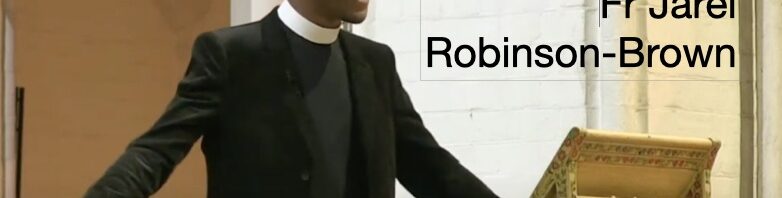
    by Fr Jarel Robinson-Brown, Co-Chair of OneBody OneFaith and Visiting Scholar at Sarum College, Salisbury

    ‘To encounter oneself is to encounter the other: and this is love. If I know that my soul trembles, I know that yours does, too: and if I can respect this, both of us can live. Neither of us, truly, can live without the other…’

    – James Baldwin, The Devil Finds Work, 1975


    It would be fair to say that I have been wrestling recently, quite deeply, with what place hope should have in my life. Not just as a Christian, but as a priest – I’ve wondered whether hope is all it is made out to be, and whether hope (real hope) is even possible as someone who exists in a body whose skin invites violence and micro-aggression and whose sexuality endures inequality, oppression and injustice. For years, as someone Black, Gay and Christian I have wrestled with what part of me really ‘came first’ in that list of identity that I carry not by choice, but because the world is a place where labels, compartments, boxes exist. And they exist, on the whole, to make those who do not carry them – feel safe.

    One thing people often say in relation to my recent book is that a shorter title would have been better. But ‘Black, Gay, British, Christian, Queer’ defines those of us who live at the intersection of race, religion, sexuality and culture. As I wrote: ‘as Black Queer Christians  … we feel pressurized to choose at times between our Blackness and our Queerness, our Britishness and our African-ness, our religion and our desire, our life partner and our families, our bodies and our souls…To some we are no longer Black, to others we are no longer Christian. We live then faced with an impossible ultimatum between ‘life’ and life – to live as we are expected to live, to live in the freedom that is ours but will cost us nothing short of absolutely everything to inhabit’ (p.24).

    So to return to hope, I still remain uncertain as to what place hope should have in my life – and I went to the Lambeth Conference fairly hopeless but left with more hope than I imagined possible. Getting on the train to Canterbury, I was already apprehensive – the 15 year-old child sat in tears around the family dining table defending his right to exist was back…, “this is just who I am” in the face of “you can’t be Gay and Christian, the Bible says it’s wrong”. Standing in the truth of who I am does and has cost me much, not least my relationship with my father and other family members – but when the only options before you are staying in the closet and death (and both are the same thing I think) the choice was clear.

    By the time I arrived in Canterbury a statement had been released by the Global South Fellowship of Anglican Churches which stated that they would table their own call to re-affirm Lambeth resolution I.10 as the “Anglican Communion’s ‘official teaching’ on marriage and sexuality” and to impose sanctions on Provinces which ordain bishops in same-sex relationships and conduct same-sex weddings. Rather than receive communion alongside such bishops, they announced that they would stay seated, as one of “a number of ‘visual differentials’”.

    It was of course, like stepping into the lion’s den. Seeing those who had decided that receiving the sacrament of the Eucharist alongside people like me was impossible. My black body stood at an LGBT+ stall was clearly quite confusing to some of my brothers and sisters from other parts of the world. To embody an “issue” in the skin of those who are most vocal against it was an interesting experience.

    At the forefront of my mind was the reality that I am one among many whose ancestors did not leave Africa willingly, but who were taken from their homes to far off lands. Whilst I am a citizen of the UK and Jamaica, I am also an African Gay man, and a Christian. Sometimes I wonder what my life would look like if we were never taken – what language would I speak, what clothes would I wear, what God would I know. This sense of unknowing is powerfully articulated by Cole Arthur Riley in her work ‘This Here Flesh’:

    ‘I do not know from where my ancestors were abducted. I cannot tell you what the air smells like there. I don’t know what sound the waves and soil speak. These things were stolen from me as they were from them. I think it is one of the deepest evils to become a thief of place, to make someone a stranger to their home, and then mark their relationship to the land by bondage instead of love.’ (p.22)

    Although at times the space at the Lambeth Conference felt occasionally hostile rather than violent, I was surprised by the deep, warm and meaningful encounters I had with Bishops and those invited spouses who were willing to engage – even inviting me to their countries to engage in dialogue around LGBTQ+ lives. It would take more courage than I perhaps have to go to countries where homosexuality is still illegal, but then I already do so whenever I go to Jamaica.

    It seems to me that not enough attention has been paid to cultural aspects of this dialogue. There is, for example, a huge issue with seeing Africa as one homogenous anti-gay continent. Southern Africa is not Nigeria, Ghana is not Swaziland and Brazil, also part of the ‘Global South’, is extremely LGBT+ affirming. It is claimed that homophobia in Africa is pervasive, indigenous, deep rooted and normative, when in fact it functions on many levels: Political, Cultural, Theological.

    In his work ‘Out of Time: The Queer Politics of Postcoloniality’ Dr Rahul Rao notes:

    ‘As countless media reports purporting to analyse attitudes towards sexuality inform us, ‘homophobia is rife in Africa’. Contrasted with the queer freedoms of the West, such discursive constructions of Africa produce what Jasbir Puar has described as ‘homonationalism’ – an assemblage in which LGBT rights have come to be mobilised as new markers for an old divide between the civilised and the savage.’ (p.33)

    What this construction of Africa does is locate homophobia in Africa in such a way that removes agency from Africans to define their attitudes themselves rather than having them instrumentalised and manipulated by outside factors. Rahul Rao also names ‘homoromanticism’, a view which sees African people as blameless pawns caught up in a white, western culture war into which Africa has been dragged. Like ‘homoromanticism’, ‘homonationalism’ removes African agency to tell the story of indigenous queer identities and anti-queer attitudes from within the African cultural context.

    Rahul Rao also reminds us that postcolonial critique needs to go beyond simply reminding us of the enduring legacies of colonialism. Formerly colonised states have become colonial in their own right, and “the project of decoloniality might itself become a vehicle for the politicisation of ‘homophobia’”, as happened at the 1998 Lambeth Conference, when conservative evangelical American Anglicans capitalised on the demographic strength and financial weakness of the African Churches when weaponizing homophobia.

    For me, the very notion of a distinctly ‘African’ homophobia is essentially an orientalist narrative setting up Africa as the antithesis of Europe. The positions taken by many African clergy at the Lambeth Conference are driven by anxieties from the global south related to the preservation of culture, of customs, the notion of the family against the perceived and real threat of Global North hegemony. Nor is the UK the haven of equality and justice which the binary narrative claims – as my experience in this black queer body within and without the Church in Great Britain shows.

    What struck my black body most starkly whilst being present at the Lambeth Conference was that all, literally all, of our LGBTQ+ material and literature was in English. We understand ourselves as the centre of a universe which is so much more diverse than even we, who are wanting the Church to be more diverse, realise. Few know much about the cultures of Kenya or Sudan as well as other parts of the Global South, and so much of our queer theology and scholarship is shaped by our Eurocentric categories which neglect non-western epistemologies, conceptual and intellectual frameworks. When we commend LGBTQ+ justice and equality we do so not only across a theological divide but a cultural and linguistic divide. For a Bishop from along the Nile whose diocese is not even 10 years old, whose people suffer from floods and civil war, a conversation therapy booklet is baffling when his people have no access to good healthcare or the vaccine.

    So am I hopeful? I don’t know. What I do know is that there is no hope that things will change so long we fail to encounter difference. The Lambeth Conference hasn’t met for 14 years: many of the Bishops who are there now were not Bishops when it last met: the world, in just the past two years, has totally changed. We need to hold our English bishops to serious account for their cowardice, whilst paying careful attention to the dialogue around other parts of the Communion. There is, at the heart of this, just so much fear – perhaps what drives this fear is the reality that a Church which becomes more inclusive is fundamentally one which is more honest…more honest about the world God has made, and the people that make up that world – and maybe the illusion that God’s world is straightforwardly heterosexual is finally crumbling. But without encounter of the ‘other’, each of our worlds become smaller, less real, less true – whatever the future holds if it is a future shaped by God, and of course it is – it will be made up of all of God’s people. And a Church which is honest about the world is a Church which can attractively proclaim the Gospel of Jesus Christ whose love knows no bounds.

    ‘…There is no promised land without a multitude. You think you can get there alone, and maybe, by some rare chance you do. But what will become of the promise when it is collapsed by loneliness? Who is going to drink all that milk and honey with you? Look down in the cool, running stream. You cannot see yourself.’

    – Cole Arthur Riley, This Here Flesh, 2022


  • Living in Love and Faith? Insights from the Church of Scotland

    by Professor Paul Middleton, Professor of New Testament and Early Christianity at the University of Chester, and a Church of Scotland Minister

    Last month, the General Assembly of the Church of Scotland passed legislation to permit its Ministers and Deacons to conduct and solemnise same-sex marriages. The legislation is permissive, and the rights of those Ministers who choose not to conduct same-sex weddings are protected in Church as well as Civil Law. While the Quakers, Scottish Episcopal Church, United Reformed Church and Methodists have already authorised same-sex marriage, and the Church in Wales last year agreed to bless such marriages, the Church of Scotland is now the largest denomination in the UK to do so. How might this move by the National (distinct from ‘Established’) Church in Scotland affect current discussions in the Church of England as it nears the end of the Living in Love and Faith process?

    In common with virtually every church around the world, the Church of Scotland has wrestled with questions of sexuality, and same-sex relationships in particular. Unsurprisingly, the Kirk originally took a strongly negative view, even initially opposing the setting up of the Wolfenden Committee. However, by the late 1980s, opinion became more divided, and some Ministers began offering services of blessings for same-sex couples. It is widely believed that conducting a blessing was the reason the Rev Margaret Forrester, one of the first women to be ordained, was never elected Moderator of the General Assembly.

    Assembly reports through the 1990s and 2000s held conservative and liberal positions on sexuality in tension as the Church declined to either reaffirm a traditionalist position or endorse more revisionist positions. This was typified in 2006 when the Church refused to ban Ministers from conducting same-sex blessings, but also refused to guarantee those who participated in such blessings could not be subject to disciplinary procedures.

    This uneasy truce was shattered in 2009 when a group of traditionalists challenged the decision of Aberdeen Presbytery to sustain the call of the Rev Scott Rennie, who was in a same-sex relationship, to Queen’s Cross Church. While Rennie was by no means the only Church of Scotland Parish Minister in a same-sex relationship, the action against the Presbytery brought the issue into the open, and began one of the most turbulent periods in the Church’s recent history. General Assembly sided with Aberdeen Presbytery, but agreed to set up a special commission to report on the legal and theological issues raised, while imposing a moratorium on ministers, boards, and courts of the church from making any further comment for two years.

    In 2011, the Special Commission offered the Church two trajectories; one affirming a ‘traditionalist’ approach to sexuality and marriage, which would end any future ordination of Ministers in same-sex relationships, the other a ‘revisionist’ path towards explicitly affirming the place of gay Ministers in the Church. Instead of advocating either path, the Commission allowed arguments for the two contrary positions to sit side by side in the report. While debates over sexuality often make claims about what is ‘biblical’ or ‘unbiblical’, in the report both sides of the argument were dominated by the interpretation of Scripture.

    The Church of Scotland holds that Scripture has a non-negotiable place as ‘the supreme rule of faith and life’, but it also fully embraces the insights of Biblical Criticism. Even ‘conservative’ reports from the 1980s and 1990s explicitly recognised that those equally committed to Scripture can reach different conclusions on this and other important issues. The main interpretative division between the two parts of the 2011 report was essentially over the difference biblical criticism makes to contemporary application. In 2011 the revisionist trajectory narrowly prevailed (56%/44%), but in all subsequent divisions confirming this trajectory from 2013 onwards, the vote has been consistently nearer to a 2:1 majority.

    In 2015, Assembly finally passed legislation to allow congregations to call Ministers in same-sex Civil Partnerships and Marriage. It recognised that a significant minority in the Church did not support this move. Their consciences are protected in what has become known as ‘constrained difference’, in which a variety of views and practices are held, respected, and protected within the Church of Scotland.

    What about the Church of England? Decades of inconclusive, aborted reports have not only entrenched already polarised positions, but have resulted in an increasingly intolerable tension between the theoretical ‘official’ position of the Church and the reality on the ground. Issues in Human Sexuality, the ‘official’ Bishops’ teaching statement, dates from 1991 and is an outworking of a conservative 1987 General Synod resolution. It states ‘clergy [as distinct from the laity!] cannot claim the liberty to enter into sexually active homophile [sic!!] relationships.’ However, the fact is that many are. Probably the most bizarre expression of this tension is that while Priests have been permitted to enter into Civil Partnerships since 2013, the Church of England (uniquely) persuaded itself that this was little more than an expression of ‘close friendship’. Unlike the Church of Scotland and the Church in Wales, the Church of England has never really acknowledged the presence of gay Priests, either to explicitly affirm their place in the Church or to enact disciplinary procedures against them. Moreover, in February’s General Synod, the Bishop of London effectively side-lined Issues by suggesting it was never designed to have an official place in the ordination process. A Private Members’ Motion from Rev Mae Christie has recently been tabled, asking ‘That this Synod request that the House of Bishops remove any requirements relating to Issues in Human Sexuality from the Vocations (Shared Discernment) Process.’

    The Church of England already lives with a tense and unacknowledged ‘constrained difference’. Living and Love and Faith appears to be preparing the ground for at least beginning the journey to officially recognising that there is theological and biblical integrity in a range of positions. For what it is worth, it seems to me that agreeing to live with constrained difference on sexuality is far simpler than the Church’s current compromise on women Bishops, since it is effectively recognising what is already the case.