Author: Helen King

  • Ways and Means of Differentiation…

    by the Revd Neil Patterson, Director of Vocations & Ordinands in the Diocese of Hereford and Chair of the General Synod Gender & Sexuality Group

    The debate on sexuality in the Church of England is in a curious place as I write.  The College of Bishops has resided, and my social media coverage identifies the Charles Tyrwhitt blue check shirt as a preferred smart-casual choice. Informal reports suggest the predominant preference is for some sort of move forward, but there are many options for how, and more work is being done in readiness for a meeting in December. In the meantime, a few bishops led by Oxford have declared their hands for change, and a good deal of reaction has followed.  And some of us have continued with conversations across the divisions, to try to listen to and understand those with whom we disagree. But above all we are still waiting, and praying for an outcome which is both hopeful and does not lead to a train crash in February. This may be particularly likely if the bishops succumb to the Boris Johnson temptation of both having and eating their cake in the belief that they can choose a positive option for change and not face the division and resistance in Synod that will result.

    The process of listening to conservatives need not happen only in person. The Church of England Evangelical Council have been impressively open with their position and arguments, and you can find it all on their website. In particular, I found myself recently reading their Visibly Different, a briefing paper setting out the case for separate structures (‘visible differentiation’) for those on either side in the sexuality debate. It is not an agreed statement, but is closely allied to others that are. Aside from the expected reiteration of the general conservative position on sexuality, with which you would expect me to disagree, there is a great deal in it that is problematic. The core argument for differentiation (at 5.3.2-6) is based on a seemingly thin understanding of the Church as merely an association for mutual support among Christians, rather than a gift from God in redemption into which we are all incorporated by baptism, whether we choose it or not. Perhaps because it was first written for internal consumption there also feels to be much that amounts to ‘keeping our end up’ in future debate. And the proposals for provincial arrangements appear to be based on a weak and confused understanding of the history of the provinces within the polity of the Church of England.

    Having said all that, however, I want to recognise that the call for visible differentiation comes from brothers and sisters in Christ who are deeply concerned for their future place in the Church, especially as it now seems likely that a majority of the bishops favour a more supportive position on same-sex relationships, and perhaps even marriage. That concern is amplified, as I hear it, by the experience of the somewhat limited structure offered by the See of Ebbsfleet (formerly Maidstone) and the way in which senior appointments appear to be closed to complementarian evangelicals. There may also be a sense that although the Five Guiding Principles are in place and the traditional Catholic movement shows no signs of fading away (a recent New Directions proudly carried interviews with ordinands and curates born since the women priests vote of 1992), their honoured place is undoubtedly in something of a small corner.

    Proposals for differentiation do, however, tend to meet instinctive hostility from many, including bishops, because they seem to offer a pick-and-mix ecclesiology, and to undermine the Church of England’s catholic (in the sense of universal) understanding of its mission – a Christian Presence in Every Place by means of the parish system under dioceses. So, because I am also an enthusiast for ecclesiastical law, I found myself wondering if I could suggest to all concerned another format for differentiation. Are there ways we work as a church across historic boundaries for particular purposes? Yes. There are Bishop’s Mission Orders.

    BMOs, introduced in the Mission and Pastoral Measure 2011, allow for ministries to be created on a cross-parish, and even cross-diocese basis, with a particular remit for mission. There is an (elaborate) process for consultation, but parishes and local clergy cannot necessarily prevent their being formed, and there is provision in existing law for them to have financial arrangements, enable licensing of ministry and synodical representation. It does not seem legally impossible to me for further provision about the reason for the ministry, such as theological conviction, to be added. I should stress that I am not proposing simply using BMOs as presently constituted – but looking to them as the germ of a model that may help us if we face irreconcilable division. It may also be compatible with the suggestion I have heard from one conservative bishop that border-crossing between existing bishops would be preferable to creating new sees.

    An example may help, so let us think of a city in central England with a diversity of church views which I know enough to describe but from which I am distant enough to be forgiven (please!) for simplifying here: Oxford. In that city the diocesan bishop, Steven Croft, has declared his support, in principle, for same-sex marriage. One parish priest in the city, Vaughan Roberts of St Ebbe’s, has responded in disagreement (see both essays here). It seems very possible that, especially if some actual national change does happen, Mr Roberts will be supported by his PCC in finding it impossible to remain under the authority of his bishop. But because +Steven is gracious and generous, he will want to find a way for Vaughan to flourish all the same. So it would be possible to imagine an Order declaring that St Ebbe’s, whose geographical parish is tiny and not particularly relevant to their ministry, is to have a ministry to all in the city of Oxford who cannot receive the oversight of the Bishop of Oxford, and will instead receive ministry from a nearby bishop acceptable to them, perhaps the Bishop of Guildford, who is known to have ‘sound’ views.

    However, let us be even-handed. It may be that the national decision is one of strict opt-in by individual parishes for (say) blessing same-sex couples, with the bishops all collectively standing aloof, so +Steven remains acceptable to St Ebbe’s. It might be that in Oxford only one parish, perhaps the University Church of St Mary the Virgin, wishes to bless same-sex couples. As I can recall from picturesquely beating the bounds as an undergraduate, their parish is also tiny, and not related to the congregation. So that could result in an Order of the opposite nature, declaring them to be the one parish in the city to which same-sex couples are allowed to resort, and placing them under the oversight of a specially identified liberal bishop, perhaps Alan Wilson of Buckingham.

    I hope it is obvious that I am to some extent thinking aloud, and that in reality much more detail would need to be worked out in every place concerned. In particular, the decisions on where Orders might need to be made and who could make them would need to be very carefully assigned, and it is doubtful that anyone would be happy leaving the sort of absolute power in the hands of diocesan bishops that is conferred by a BMO.  Perhaps a carefully constituted national Commission would be needed. But this might, perhaps, be a way to define the rights and positions of churches and people of different convictions that would have legal security without an ecclesiology that looks like schism in all but name.

  • EvangelicAlly

    by the Revd Jody Stowell, Vicar of St Michael and All Angels, Harrow Weald and member of General Synod

    I became a Christian in the proper evangelical ‘prayed the prayer’ type way when I was 14. And although, looking back, I know that God was not absent for the first 13 years of my life (I always believed in a God, always prayed), that moment was really important in my life with God. In recalling it, I have often said that the story I was told on that night, about salvation and sacrifice and choosing to follow Jesus, was one that I already knew, that resonated with the story already within my soul, and so I said ‘Yes!’

    I didn’t know then that I was not just a Christian, but an Evangelical Christian. Only in my twenties did I start to become aware of the tribal nature of the Church of England, and to meet some Liberal Christians. Contrary to what I’d been led to expect, I discovered that they were, in fact, Christian! I also began my theology degree at Spurgeon’s College as an independent student, with tutors from many denominations. One of my modules was on Spirituality, and it was here that I discovered the wonderful length and breadth of Christian Tradition. Within this tradition, it was clear that I was an Evangelical and that this was part of a whole multi-faceted history.

    Obviously within my Evangelical roots was the idea that ‘homosexuality was wrong.’ I wanted to be a good Christian so, whilst slightly uncomfortable with this idea, I admit that I simply went with it. It didn’t seem to make much of a difference to my own life, so I didn’t have to think about it. As I grew up and as my world expanded, that changed. I needed to connect my theology with my knowledge of who God is and what God is like, and the reality that this affected real people.

    However, at that time exploring the theology of men and women was my priority, as it affected me personally, in my own call to ordination. I found it painful to be ousted from my clan, to be told I wasn’t an Evangelical, to find myself without a home and to feel like I didn’t belong. This still hurts, although with much less sting than it used to, but the experience helps me to understand the emotional processes that are going on, for those who are in the Evangelical tribe, when they even begin to think about standing out for Same-Sex Marriage.  Yes, it is an excuse, but if we do not accept that this is a strong attachment, then we will never be able to have the conversations that encourage and enable people to publicly change their mind.

    It was my exploration of the biblical arguments regarding men and women which took me to places where the conversation was about humanity and our relationships more broadly. There were those in the Evangelical world who closed themselves to the conversation on the ordination of women because they said it was the ‘thin end of the wedge’, calling into question the place of headship in marriage, which is for them, absolute in Scripture. If this could be questioned, then the next thing on the table would be … homosexuality.

    That emotional response to having to think about a possible change in mindset over LGBT+ inclusion sometimes lay at the root of saying ‘no’ to a change of mind on women’s ordination. The argument for women as bishops was often regressed to the question about women’s ordination in its entirety. And, in a way, I understood this anxiety. As I listened to ordained women argue for their place, I often wondered how we could ever be closed to the question of LGBT+ inclusion. It would always be possible for a biblical perspective to be presented that was persuasive. The possibility would never be closed. And this is, of course, the posture of the Christian faith – we are people of revelation and it is really uncomfortable!  In every generation, we must do the wrestling of working out what is good and true and of God and what is ephemera.  But to choose not to wrestle is, I’m afraid, not an option.

    It wasn’t just the reality of revelation and the possibility of persuasive biblical argument that I discovered in exploring a theology of men and women; it was a different reading of an actual biblical story about human relationships, Genesis 2.  My understanding of this story was fundamentally changed by, for example, Phyllis Trible’s God and the Rhetoric of Sexuality (1978).

    Where previously this had been delivered as a story of difference, I began to see the meaning as lying in the expression of shared humanity: ‘bone of my bone, flesh of my flesh’. The focus here is on the sameness. Of course, there is also difference. The Human who lies down to sleep is not the same as the human who wakes up: the Dustling (ha’adam) lies down and becomes the man (iysh) and the other human, the woman (ishshah).

    But this particular difference only frames the focus of the story, which is that men and women have the same humanity. It is understandable that the story uses men and women to illustrate the ultimate difference, but this is about making the point about shared humanity more powerful. It does not necessarily create a defining doctrine regarding who can be in relationship with each other in marriage. We are all ‘bone of my bone, flesh of my flesh.’ When I stare into the eyes of another human, I must be able to say this; to see in them, myself, and to recognise the image of God in the other. Every other human being is different to me, not just those who are not my biological sex; every human being is, in some sense, ‘other’ to me. This story tells me that I must see myself in the woman in the hijab, the boy with the braids, the enby wheelchair user.

    This story has reframed for me all the other stories in Scripture in which the relationship between men and women is at the forefront. It has given me a basis on which to stand in anyone’s company and be their equal, and them, mine.

    It has meant that, in terms of my own humanity, I am assured of my value and my place. And it has given me the lens through which I see my LGBT+ siblings and niblings: ‘bone of my bone, flesh of my flesh.’


  • Thirty Years On

    by Rev Martine Oborne, recently appointed Chair of WATCH (Women and the Church), a group that works for gender equality in the Church of England

    Thirty years ago, in 1992, I was appointed to the main board of an investment bank in the City called Rothschilds. I was 34 and the youngest woman to have been made a Director in the firm.

    At the same time, a battle was being fought in the Church of England to dismantle the legislation that blocked women from becoming priests. I was almost unaware of this at the time because I had largely given up going to church and would barely have called myself a Christian. Nonetheless, as I look back on 1992 today, I think how I might have been in the thick of that battle if I had stuck firm to the calling I had first received as a child – that God wanted me to be a vicar in his church.

    I didn’t come from a churchgoing family, but my parents sent me and my sister to Sunday School to get us out of the house so that they could have ‘a bit of time to themselves’ (whatever that meant!). And I became a very spiritual child, praying, reading my Bible, enjoying being in Church, watching my vicar Father Stephen and feeling that one day I might grow up and do the things he did. Lighting candles, reading from scripture, talking about God and chatting to old ladies.

    One day at school when I was about ten, my teacher started asking the class what we wanted to be when we grew up. One kid said an astronaut, another said Prime Minister, another said a film star and so on. But, when it got to me, I blurted out that I wanted to be a vicar. This was greeted with much laughter from my friends.  And then my teacher said, ‘Well, you can’t do that, Martine – they don’t have women vicars.’ And, at that, the whole class collapsed into fits of mirth while I just sat there feeling an idiot.

    I felt not only stupid but also confused.  It was the late 1960s and brave women were battling to breakdown discrimination in all areas of the public sphere.  And they were succeeding.  So why was it that I could not be a vicar, just because I had been born female?

    I began to wonder what my calling might be.  In my mid teens I had a time of worrying that I might be called to be a second Virgin Mary and I remember praying that God would send a dream to my mum, rather than to my boyfriend, to explain what was going on.

    But I guess, in all seriousness, this was the start of my giving up on my calling, setting aside the foolish things of my childhood and seeking other paths in life.  I got a place at Oxford, a job in the City and good things followed – a nice home, a family and a rewarding career where I was valued and treated as an equal alongside my mostly male colleagues.

    I started going back to church in my mid thirties to get the children into the local church primary school and I thought I could then drift away again after this mission had been accomplished.  But God took the opportunity to renew my faith and my calling and I discovered that, thanks to the persistence and sacrifice of brave women and men like those at MOW (The Movement for the Ordination of Women), women could become priests and vicars.

    That was, therefore, the beginning of a journey that finds me now happily serving as the vicar of a small parish in West London, doing all the things that Father Stephen had done many years ago.

    End of happy story, yes?  But also no.

    Because, although I am a vicar in the Church of England, I am not a vicar on the same terms as I would be if I were a man.  Although almost every Anglican in the land has wanted ministry in the Church to be equally open to men and women from the 1970s onwards, there have been certain small powerful groups within the Church that have resisted this vigorously and viciously.  This meant that legal provisions were made in the 1990s to allow parishes, if they wanted, to say no to women priests.  And then later, in 2014, when the barriers were removed that had prevented women priests from becoming bishops, new legislation enabled ‘flying bishops’ to be appointed so that parishes, if they wanted, could say no to women bishops.

    So I serve in a church where parishes can still advertise for a new vicar and ask for men only to apply, where bishops who are women are required to delegate their authority of oversight to male bishops for some of their parishes, where some of my colleagues espouse a theology that says God created men to lead and women to be led, and where some of my colleagues believe I am not actually a priest (that my ordination was invalid.)  And the official position of the Church is that we want these people, with the theologies that underpin their positions, to flourish.

    But hang on a second, I hear you say.  Isn’t this kind of discrimination illegal in the UK today under The Equality Act 2010?  And the answer is that yes it would be – except the Church of England has exemptions under that legislation which allow it to discriminate.

    OK, you might say.  But people like bishops who hold public office can’t be exempted under the Act.  And that’s true, which means that women bishops should operate on precisely the same terms as men bishops.  But in 2014 the Church got an amendment to the legislation saying that, for the purposes of the Act, bishops do not hold ‘public office.’  Which is somewhat extraordinary, since twenty six of them sit in the House of Lords.

    So what on earth is going on?  How can we be in 2022 and the national Church is still discriminating against women, who represent about two thirds of their congregations and half the population?

    The arguments boil down to largely two things: one, those who say we can’t have women priests because the Roman Catholic Church doesn’t allow them; two, those who say God created men, and only men, to be in charge and the Bible attests to this.

    I can’t get into the response to all this in this short post.  Suffice it to say that the arguments and theology have been hotly contested over the years and millions of words have been written.  But the Church’s legislative council, General Synod, came to the conclusion that there is no theological basis for women to be prohibited from being priests or bishops.  Which should have been an end to the matter, as the purpose of such councils is to resolve theological disputes and make decisions to bring unity and then allow the Church to move forward.  When the apostles Paul and Peter in the early Church debated whether Gentile Christians needed to be circumcised or not, they came to a conclusion and special provisions were not made for dissenters.  Nonetheless, two thousand years later, special provisions were made for those who continue to say no to women priests and bishops.  And, because of these provisions, the old discredited arguments and theologies not only continue, but are often seen on a par with the arguments and theology underpinning the validity of women’s ministry.

    My personal belief is that we are a separate Church from the Roman Catholic Church and can make our own decisions on women’s ministry, as we have on many other areas of doctrine such as allowing priests to be married.  And I believe that God created humankind in his image, in his image he created us, male and female – as we read in the first chapter of Genesis.  So that we do not reflect that image of God when men and women are not equal in the Church.

    The women and men behind the Movement for the Ordination of Women did great work back in the 1990s and earlier, and we have so much to thank them for.  But the work for equality for women in the Church is not done.  This is why I have accepted the role of Chair at WATCH (Women and the Church), which campaigned for women bishops and now seeks equality for all in our national Church.  I hope and pray that, in my lifetime, I will not only see the Church give up its exemptions from UK equalities legislation but also come to truly value women, both ordained and lay, and lament how it has treated us in the past.

    Please join WATCH here to help.


  • Toxic Theology, the Bible and LLF (Living in Love and Faith)*

    by Johanna Stiebert, Professor of Hebrew Bible at the University of Leeds; co-director of The Shiloh Project, which explores topics of rape culture, religion and the Bible; co-investigator of the Abuse in Religious Contexts project

    My research focuses on topics of gender and gender-based violence, and on how these intersect with lived religion and the Bible. Much of the abuse variously called spiritual abuse, abusive theology, religious abuse, or abuse in religious contexts, has gender-based dimensions. Adrian Thatcher aptly speaks of “authoritarian masculinism” behind church abuse crises. Child sexual abuse by clergy has been shown to be of colossal dimensions, but while the 2020 publication of LLF contains a highlighted box, or infographic, on the Church of England (CofE) and IICSA (the Independent Inquiry into Child Sexual Abuse), it recommends that theological reflection on IICSA should be carried out “separately” from LLF, “after the full published findings of IICSA have been carefully assessed” (p. 87). This does not really cut it, given how woefully inadequate CofE response to disclosures of abuse has been and continues to be.

    As for gender-based abuse, the likelihood is that the number of women abused by clergy is considerably higher still than that of children. Spiritual abuse is very frequently linked to gender-based abuse; and cases of religiously-based gender discrimination amount to spiritual abuse, whether or not that label is used.

    What LLF says about gender-based abuse is bound up with its approach to the Bible, identified as the ultimate source of the Church’s inspiration and authority, because “The life of the Church is soaked in the Bible”. Yet it notes that “every word of the Bible has a human history” shaped by “the contexts in which it was first produced and received”. The section “Power and pain” reviews abuse in scripture, identifying Samson and David as both heroes and abusers of their power, while “The sons of Eli abuse their position as priests and sleep with women serving in the tent of meeting (1 Samuel 2.22), in a chilling echo of abuse scandals in the church today”. Narratives of the rape of women and of the threatened rape of men are mentioned: “These stories matter deeply: they speak the truth about a violent world”. This, in turn, “invite[s] us to tell the truth … about the world in which we live and about our experiences within it, about the things we do and the things that are done to us”.

    This sounds like a positive intention – but does it go far enough? I don’t think so. When the Bible is brought into discussions on human sexuality or marriage, LLF ignores the problems of toxic theologies that come with reading some biblical texts at face value.

    Actually, the Bible has curiously little to say on marriage, and what is there is murky. There is no word for “marriage” in the Hebrew Bible; Hebrew does not distinguish between “woman” and “wife,” or “man” and “husband.” There are few clues in the Bible regarding marriage rites, and nothing on such matters as the age at which someone can or should be married. Despite this, a great deal has been said and asserted about “biblical marriage” – that it is monogamous, for life, aimed at procreation, between one man and one woman, and so forth.

    Numbers 5:11-31 is one of a few sustained biblical texts about a married couple and it is a prescriptive text of Torah, or Pentateuch. It sets out what to do when “a spirit of jealousy” (5:14) overcomes a man concerning his wife who may, or may not, have “gone astray” (5:12), which is expanded on as involving another man lying with her for “the lying of seed” (the expression for penetrative sexual intercourse and seminal emission) and this being kept secret, with no witnesses present (5:13). The husband is to take his wife to the priest, bringing offerings. The priest then performs an elaborate ritual to which, seemingly, the woman can only submit. All she says throughout the lengthy description is, “Amen. Amen” (5:22).

    The woman is said to be brought before God in the sanctuary, her hair dishevelled (5:18), and she is bound by an oath before drinking a potion; waters of bitterness with curses dissolved in them, which will either punish her with physical agonies, possibly a miscarriage, or infertility if she has been – in the terms of this passage – “defiled,” or it will declare her “clean” and able to conceive. Towards the close of the passage the woman is described as “under” her husband’s authority. The account closes with the statement that the husband in any case is clear of iniquity, whereas the wife must bear her iniquity. In other words, his “spirit of jealousy” along with the ritual – elaborate, exposing and highly likely to cause psychological distress – is excused, whether the woman has done anything or not. The woman, on the other hand, “must bear her iniquity” whether she has done anything to legitimate her husband’s jealousy or not.

    This is not a text widely cited in the literature expounding how the Bible can inform on matters of marriage – and yet it is one of the longer passages about a married couple. It seems to indicate a high degree of anxiety around women’s sexual continence. There is no more than passing reference to the adulterous man; no preoccupation with who he might be, or with finding him, and no insistence on either his guilt or punishment. All this, along with the absence of a ritual where roles are reversed, where a woman suspects her husband of infidelity, is very telling.

    The potential of this passage for encouraging and legitimating men’s jealousy and the policing of women, as well as its potential for what we nowadays call coercive control, is glaring. What is missing for me, however, is acknowledgement of and outcry at just how toxic this text is – especially in the midst of skyrocketing rates of domestic and intimate partner violence. And it does not help that the impetus for the man’s violence is a “spirit of jealousy” (ruach-qen’ah, with qen’ah sometimes translated “zeal”). “Spirit” and “zeal” or “jealousy” are widely associated with God. God’s ruach hovers over the deep in the creation story (Gen. 1:2) and God’s evil ruach afflicts Saul (1 Sam. 16:16). God’s zeal, meanwhile, motivates him to protect his people, especially in battle (e.g. Isa. 42:13). Not only is the husband guiltless whether his emotion has basis or not, but he is being associated with the deity, putting his authority and control beyond reproach.

    This text from Numbers is not mentioned in LLF, but it constitutes an unambiguous example of a toxic text. If it were to be utilised as a proof-text (which I am certainly not advocating!) then it could justify wives’ submission to their husbands and husbands’ jealousy, coercive control, and violent punishment of their wives. It could justify wives’ submission far more powerfully than Ephesians 5, mentioned in LLF and highlighted in The Peoples’ Bible with a subject box saying, “Professional social-work literature on women suffering domestic abuse showed that one of the anecdotally established indications that a woman was in imminent danger of suffering physical violence was that the man with whom she lived was quoting Paul’s command that women be subject to their husbands.”

    How must Numbers 5 sound to a survivor of domestic abuse and coercive control, given that the abused woman in this text is publicly exposed, and accused, while rendered passive, whereas the man is exonerated and protected by the religious authorities and God himself?

    Yet LLF does not empower such survivors by calling out and explicitly rejecting such toxic texts as harmful. We cannot shy away from the worst the Bible contains and must resist knee-jerk deference to the Bible. Casting out fear and speaking into the silence must be preceded by conscious effort to include and listen to those who do not feel safe and who find scripture and tradition condemns, hurts or silences them. Paying attention to power demands more sensitivity to the damage done by leaders and hierarchies but also more attention to who is named, or active, or vocal in biblical texts. To recall Phyllis Trible’s call for action from over four decades ago, we need insight, repentance and change, because if a dreadful story is alive then “all is not well.”


    *This post focuses on one aspect of a presentation to the annual conference of Modern Church.


    References/further reading

    Christy Cobb and Eric Vanden Eykel (eds.) (2020) Sex, Violence, and Early Christian Texts (Lanham, MD: Lexington Books).

    Helen Paynter (2020) Telling Terror in Judges 19: Rape and Reparation for the Levite’s Wife (London, New York: Routledge).

    Phyllis Trible (1984) Texts of Terror: Literary-Feminist Readings of Biblical Narratives (Philadelphia: Fortress).

    Curtiss Paul DeYoung, Wilda C. Gafney, Leticia A. Guardiola-Sáenz, George “Tink” Tinker and Frank M. Yamada (eds) (2009) The Peoples’ Bible – NRSV (Minneapolis: Fortress).


  • Faith and Generosity in the Church: The Via Media, or Transphobia?

    by Revd Nathanael Hayler, Deacon, serving as Assistant Curate in rural Northumberland 

    Why do you remain faithful to a volatile institution?

    How do you show generosity to a hostile Church?

    These remain some of the pressing questions I am often asked when I share my story of journeying towards ordination in the Church of England as a transgender person. They are questions I grapple with in these early years of ordained ministry and will continue to ask as my sense of vocation grows and flourishes.

    As part of my ordination training, I was able to embark on a course of postgraduate study. I developed a project exploring how the Church of England has engaged with the experiences of trans people, both in the context of the local church and more broadly as an institution. Entitled ‘Thresholds of Faith and Identity: A critical analysis of the Church of England on transgender identities’, the piece aimed to prayerfully and creatively theologically reflect on where the Church is now, how it has reached that place and, importantly, what comes next – ‘towards a distinctively Anglican transgender theology.’

    The study and dialogue addresses topics of liturgy and worship, leadership and representation, and pastoral practice. Using theological language and reflective dialogue might feel dense and complex, but I intentionally grounded all my work in practice, always looking to ministry on the ground and to the experience of transgender Christians. Sometimes work on trans identities can be seen as “woke” or niche but the reality is that most of us, whether we know it or not, will encounter or walk alongside a trans person. This conversation is pressing, it is poignant, it is necessary. My research took place in the context of discussions encouraged by the Living in Love and Faith (LLF) conversations. There is a danger that this valuable LLF work will lose momentum and fizzle out; this conversation must continue in creative, engaging, and accessible ways.

    Understanding the need to remain faithful to Anglican convention felt important if this work was to go anywhere. Pushing towards action whilst working within the categories of scripture, reason and tradition offers an effective yet comfortable way the Church of England might begin to develop a coherent theology rooted in the lived experience of transgender individuals. However, there are immediate barriers that currently prevent such progress being made. Firstly, the ambiguity and contradictions that characterise the Church of England’s current position. For example, it is hard to take seriously sentiments that trans and non-binary people are welcome to explore a vocation to ordained ministry when another document prohibits the ministry of transgender people, believing we are not wholesome examples or stable enough to serve as deacons, priests, and bishops (Some Issues in Human Sexuality, 2013).

    Secondly, the Via Media that characterises the Anglican way is often sorely, even dangerously, misunderstood. Despite via media being seen as a virtuous existence for the Church, it is often misused; today it has fostered a culture of ambivalence and mere tolerance. The Church of England is still “sitting on the fence” in offering two very different views that can be ‘properly held’ by Anglicans on the topic of transgender identities. This gross misuse of the ‘middle way’ condones and even encourages transphobic attitudes and discriminatory behaviours toward trans people. The lack of clear guidelines, of both doctrinal belief and pastoral conduct, allows individuals holding authority to freely discriminate or be complicit in keeping silent in the face of such behaviour.  With gender identity legally (in the UK) understood as a protected characteristic and in seeking to treat trans people with dignity and respect, this current manifestation of transphobia disguised as holding the generous via media must be eradicated immediately.

    Instead of loathing the rich diversity that trans and non-binary people bring to our churches, we have an opportunity to celebrate it. And in this celebration we are invited to reimagine what it means to hold the middle way and re-embrace the Anglican tradition of via media in our time; building on the foundations of what has been handed on and always rooting our practice in the life of Christ. Therefore, instead of threatening our sense of self and our convictions, these differences encountered within the breadth of Anglicanism should move us toward a living embodiment of the ‘Way’. That is, Christ: the Way, the Truth and the Life (John 14:6). Christ’s ministry reveals a most beautiful interplay between charity and justice. Rather than seeing the via media as only a charitable gesture, seeking to please both those at the extremities and those at the margins, the via media could be a middle way that seeks to walk the path of both charity and justice – just as Christ himself inspires us to do. If we truly embrace our part in being a living tradition, by faith, we make space for the transformative work of the Holy Spirit, trusting that God will make a way in us and through us.

    As a transgender person, I don’t believe the Church currently recognises the sacredness of trans narratives as part of the living Christian story. I hope, one day, that hearing the experiences of transgender individuals will be understood as a transformative gift. As an ordained person, which very often feels like a scary and vulnerable public ministry, I want to encourage the Church not to neglect this important topic, because of we do that then we neglect our duty of care for the many lives touched by this. There is much work for the Church of England to do if it genuinely desires to welcome and encourage ‘the unconditional affirmation of trans people, within the body of Christ’ and rejoice in that diversity.

    So, I return to those first questions.

    Why do you remain faithful to a volatile institution?

    How do you show generosity to a hostile Church?

    Why? Because I believe in the transforming work of God in the Church of England, and I want to be part of that work. How? By the grace of God alone. Let’s not forget to pray. Pray for the work of the Spirit in the Church, so that one day God’s love will be shared freely and lavishly amongst all people.

    I’m currently exploring options for publishing my research, in the hope that it will be built upon and used to further conversation and provoke change.

  • Marry Me a Little?

    by Helen King, Professor Emerita in Classical Studies at The Open University, member of General Synod and vice-chair of its Gender & Sexuality Group

    A confession: I find the ‘Church as the bride of Christ’ image deeply unhelpful. Yes, it’s in the Bible and yes, it’s part of the tradition, but… really? I’ve been a bride, and had a very happy day, but this imagery doesn’t help me think about God at all. The idea that Jesus, who as far as we know (Da Vinci Code aside) never married while living among us, is somehow marrying, or going to marry, the Church? What is that about? It doesn’t help that I am very much aware of the long history of arranged marriages, of payment of dowries or bride-price, of a woman being used as a pawn in a game of thrones or as a means of cementing an alliance between families lower down the social order. Brides, historically, haven’t been in a freely-chosen relationship. And the bride of Christ imagery can be highly circular, somehow moving back from the cosmic marriage of Christ and the Church to the individual marriages of human beings, where the gendering of the image can then be used to support the idea that that marriages can only be between people of opposite sexes. I also know that the bride of Christ image can be embraced enthusiastically by men; there’s a long history of men seeing themselves as the ‘brides’, and I wrote about that here.

    For me, a far more helpful image of marriage as a deep form of commitment between two people comes from what may sound an improbable source: Stephen Sondheim’s musical Company (1970). For many decades now, theatre has been my main hobby. My tastes are eclectic: Greek tragedy, Shakespeare, new plays… and musicals. Sondheim’s lyrics are perfection, his rhymes clever and his insights into the human condition profound: he wrote that “Nobody goes through life unscathed, and I think if you write about those things, you’re going to touch people.”

    Company is about marriage. I saw the recent gender-swapped production, which made the lead character into a woman (Bobbie) rather than a man (Bobby) and changed one couple into a gay couple (opening number here). The changes worked very well, not least in raising the question of whether being a single woman is still more difficult than being a single man; the ticking of the biological clock featured several times. Last week I watched the 2006 revival, available in full on YouTube here.

    The basic plot? It’s Bobby’s 35th birthday. He’s at the age when all his friends are married or planning to marry, but he isn’t. Why not? He comes to realise that his friends spend time with him to project the failings of their own relationships on to him. He’s the catalyst in their relationships, and they ‘perform’ their marriages when he is with them. Even in that opening number it’s clear that his friends don’t really know him for himself, as they all use different names for him. His relationships with his girlfriends are no deeper.

    Sondheim has explained that it was difficult for him, as a gay man, to write about marriage; in his book Finishing the Hat (2010) he wrote about “The unknown Kingdom of Marriage”. He did in fact marry Jeff Romley, but not until 2017, when Sondheim was in his late 80s. For Company, he found out what marriage was like by asking the songwriter Mary Rodgers. His relationship with her was unusual. In her memoirs, she described how Sondheim’s psychotherapist thought he should have a ‘normal’ relationship, and so Sondheim invited her to move into his New York house as a sort of experimental marriage, but one in which the ‘M’ word was never used. She wrote that they shared a bed and “just lay there… the whole thing was wildly uncomfortable… and yet it kept happening”. The relationship had “All the guilt of sinning with none of the pleasure”. Before this time with Sondheim, Rodgers wrote of relationships that “I was 29. I could hear the party-game music winding down, and all I wanted was a good-enough chair.” And, by the time Sondheim wrote Company, about Bobby reaching 35, Rodgers – with experience of two heterosexual marriages – was a good guide to that unknown kingdom.

    In ‘Marry me a little’, which closes the first half of Company, Bobby announces that “I’m ready! I’m ready now!” But the lyrics make it very clear that he isn’t. For example,

    Marry me a little,

    Do it with a will.

    Make a few demands

    I’m able to fulfill.

    Want me more than others,

    Not exclusively.

    That’s the way it ought to be…

    We’ll look not too deep,

    We’ll go not too far.

    We won’t have to give up a thing,

    We’ll stay who we are.

    In the song ‘Getting married today’, delivered at breakneck speed, Bobby’s friend Amy goes into a blind panic on the morning of her wedding:

    Remember Paul? You know, the man I’m going to marry

    But I’m not, because I wouldn’t ruin anyone

    As wonderful as he is.

    A wedding. What’s a wedding? It’s a prehistoric ritual

    Where everybody promises fidelity forever,

    Which is maybe the most horrifying word I ever heard of,

    Which is followed by a honeymoon, where suddenly he’ll realize

    He’s saddled with a nut, and want to kill me, which he should.

    It’s clear here that the problem is Amy’s self-image: she thinks she can never deserve Paul. Each of these songs is a valuable reflection on marriage, commitment and the sense of worth; on the need to be happy with oneself before committing to another person.

    While the first half closes with ‘Marry me a little’, the final number of the musical sees Bobby commit much further in the song ‘Being alive’. Here, “what starts as a complaint becomes a prayer” as Bobby ‘gets’ what marriage is really about.

    Somebody hold me too close

    Somebody hurt me too deep

    Somebody sit in my chair

    And ruin my sleep

    And make me aware

    Of being alive

    Being alive

    Somebody crowd me with love

    Somebody force me to care

    Somebody make me come through

    I’ll always be there

    As frightened as you

    To help us survive

    Being alive

    His friends comment throughout the song, telling him for instance that “You’ve got so many reasons for not being with someone, but you haven’t one good reason for being alone” and encouraging him:“Come on, you’re on to something, you’re on to something”.

    The profundity of union with another person; the transformation we experience when we prioritise someone else over ourselves. Knowing ourselves as we are known. Why does the Church of England still act as if this can’t be something experienced by people who are of the same sex?

    The equal basis of marriage, with neither partner somehow ‘in charge’ by virtue of their sex, has so many advantages over a model in which a bride is traded for her purity and always at her husband’s command. As PCR2 has just reminded us, some theologies of marriage make it difficult to report abuse within the relationship, leading to “a culture of minimising the seriousness of domestic abuse”, because “the attitude towards domestic abuse [is] linked to the belief around the sanctity of marriage”. Of course, abuse can happen in same-sex marriages too, and there may be other reasons for not wanting to report it, but it’s worth stopping to reflect on whether an equal model of marriage is healthier here.

    The equal model also says something less obvious to our current debates. If we start to think about the relationship between those of us in the Church of England who believe marriage can only be between people of different sexes, and those of us who believe that it can exist for people who are the same sex, and as we wait for the bishops to decide what to bring to the February 2023 General Synod, are we thinking that We won’t have to give up a thing/ We’ll stay who we are?

    Or can we say to each other I’ll always be there/As frightened as you? Perfect love casts out fear: are we capable of dwelling in that love? Can we find a way to be fully alive … together?

  • Just Housing: A Christian Vision

    Just Housing: A Christian Vision

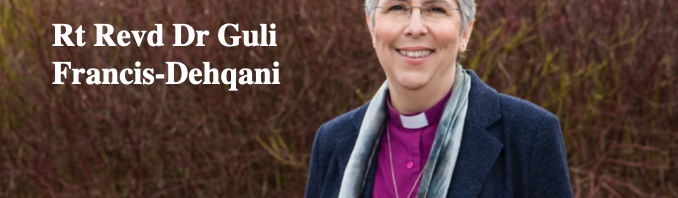
    by the Rt Revd Dr Guli Francis-Dehqani, diocesan Bishop of Chelmsford and lead Bishop for Housing in the Church of England

    As a sign of how important the housing crisis is to the leaders of the Church, last year the Archbishop of Canterbury appointed me as the first Bishop for Housing in the Church of England.

    Although I have no expertise in housing, I know something of what it is to be homeless. I arrived in Britain in 1980 as a 13-year-old refugee, following the impact of the Islamic Revolution in my home country of Iran. Having left with no more than a suitcase each, my family and I were welcomed here and were offered housing in a theological college and then a vacant vicarage. That stability gave us a base and the stability from which we were able to start building new lives.

    40 years later I am responsible for making sure the recommendations of ‘Coming Home’, the report of the Archbishops’ Commission on Housing, Church and Community, are taken forward.

    This is a daunting challenge, but what motivates me is that I’m passionate about the church being involved in working for greater social justice. Since 8 million people in England are living in overcrowded, unaffordable or unsuitable housing (which in turn leads to many other social problems), it seems to me there is a clear call for Christians across all denominations to work towards housing provision.

    The Coming Home report spells out a distinct Christian vision for housing and community. The scriptures tell a story of a journey from a God-provided home, of humanity then becoming ‘homeless’, moving out into a dangerous world, and then of a long process of redemption which leads back home again – but to one that looks different from the first.

    The report unpacked this trajectory and from it developed five core values to characterise all good housing. First the story of Creation and humanity’s role in stewarding the earth means that our housing must be sustainable; the built environment needs to be in harmony with the natural environment, and our housing should be high on quality but low on carbon.

    The pervasive reality of sin means that God’s good creation is susceptible to environmental and social disintegration. Homes aren’t always places of protection, nor communities free from injustice and exploitation. Physical housing can be poorly built, standards compromised, and repairs neglected, which is why good housing will always put a high value on safety.

    Thirdly, the incarnation reaffirms the goodness of the physical creation and the value of human communities having places and spaces where they belong. Good housing should therefore offer stability, where local people can afford to live and put down roots, so they and their families can thrive.

    God’s redeemed people – the Church – represent a new kind of humanity, no longer governed by unjust distinctions based on race, class, gender, sexuality, ability or income. This translates into a commitment to housing that is welcoming and sociable, with hospitable spaces that can help people from different cultures, faiths and backgrounds find a place of connection, and build long term relationships.

    Finally, the vision of the new creation means that although we will never achieve perfection in housing in this age, we can still work towards the one to come, where all is healed and transformed, and God is at home among us. Housing that reflects this means the architecture, design and technology all work together to create satisfying places of beauty that people delight to live in.

    This reflection provides five simple values as the benchmark for the Church’s engagement in the housing sector: good housing is sustainable, safe, stable, sociable and satisfying. The language is accessible for people of all faiths or none, yet there is theological depth undergirding each of the five values.

    An example of a church-initiated response to the shortage of affordable homes has been in Keswick. Back in 2009, Keswick Churches Together hosted a series of open meetings on issues facing the town. Housing kept coming up in these conversations, as many people who were born in the town, had gone to school there, or worked in Keswick, were living in substandard accommodation at unaffordable rents, or were being forced to commute into the town from miles away.

    A working group was assembled to think about the best response to the need for more and better housing, and Keswick Community Housing Trust (KCHT) was set up as a result. The vicar of St John’s Church in Keswick offered to sell them a piece of land next to the church graveyard, and 11 affordable homes were built there. The success of this led to three more developments by KCHT, one of them on land that had belonged to the Methodist Church. Around half the homes are for shared ownership and the other half are let out at rents that are truly affordable in perpetuity – measured in relation to local earnings, not market rents.

    This experience from Keswick was shared with the Commissioners and features in the Coming Home report. We would love to see many more grass roots initiatives like that, so we want to invite you to be part of this journey. We’re setting up a Church Housing Foundation to empower the Church to engage with housing at all levels, and are looking to collaborate with any partners, groups or individuals who share this vision and want to see God’s kingdom expressed through bricks and mortar – delightful homes and thriving communities up and down the country.


  • Increasing Inclusion and Respecting Conscience: Learning from Elsewhere

    by Savitri Hensman, author of  “Sexuality, Struggle and Saintliness” and LGBTI+ equality activist, writer and involvement coordinator

    As the Church of England (C of E) prepares for the next steps on sexuality and gender identity, there has been a flurry of activity among those for and those against lesbian, gay, bisexual and trans (LGBT)+ affirmation. There have been formal meetings between bishops and groups as well as ongoing campaigning, including the release of the fifth in a series of videos by the staunchly ‘conservative’ Church of England Evangelical Council (CEEC), online. While still warning against the hazards of greater equality, CEEC appears to be more open than before to considering a way forward which allows space for those with different views. Generally I believe this should be welcomed, though finding a way forward amidst very different perspectives will still be challenging.

    Developments in Anglican and other churches

    The most recent phase of the C of E’s 55-year process of formal study and dialogue on sexuality and gender identity was ‘Living in Love and Faith’ (LLF). Learning materials were circulated, discussions held, feedback collected and analysed. At the end of October, the College of Bishops will begin considering proposals to put to General Synod in early 2023. Though surveys indicate that opinion has changed radically among laypeople and numerous theologians now call for greater inclusion, the pace of change at the top has been glacially slow. Yet there seems to be a genuine readiness for significant change.

    CEEC does not represent all evangelicals in the C of E, many of whom are affirming or undecided. Nevertheless, it carries considerable weight. A couple of years ago, it seemed implacably opposed to any shift which would allow greater freedom of conscience to affirming Christians, many of whom believe this is a matter of biblical faithfulness. The latest of a series of films on the current situation, ‘Learning from elsewhere’, is different in tone.

    ‘In this film we listen to voices from around the Anglican Communion who have experienced first hand the damaging impact of change without “settlement” (ie change that does not provide security for an orthodox biblical conviction),’ the website states. ‘CEEC is convinced that we must learn from the mistakes made elsewhere and reach for a settlement that works for everyone rather than a “middle ground” theological compromise does not help the Church of England going forwards.’

    The video focuses particularly on the Episcopal Church (TEC), where rifts have indeed been emotionally and financially costly to people on both sides of conflict. Admittedly at times I found myself smiling wryly, at an account of what took place which might confuse viewers unaware of the history, and the sudden discovery by those no longer sure of their dominance that a winner-takes-all scenario has flaws. Nonetheless I recognise the difficulty faced by those with opinions very different from mine who feel as if the ground beneath their feet has shifted; and am glad if a way forward can be found which is not too painful to them or damaging to the church’s wider mission and ministry.

    To start with, those watching might get the impression that the consecration by TEC of a partnered gay bishop, Gene Robinson, in 2003 was the start of the rifts which occurred. Yet divisions in this church long pre-date this, with a ‘Continuing Anglican Movement’ active over a quarter-century earlier, and had spilled out across the Anglican Communion by the late 1990s. This has not been solely about sexuality and gender identity: women’s leadership and other matters have also been matters of dispute. However in the early 2000s, the pace of disaffection did pick up. Retired history professor Ron Caldwell has provided a brief history of schisms in TEC, from a different perspective from that of CEEC, but also concludes that battling matters out in the courts is far from ideal for Christians.

    What is more, although people seeking greater inclusion have sometimes behaved in clumsy and overbearing ways, there is still space for people with ‘conservative’ views – and, to their credit, a number have remained in TEC. Clergy unwilling to celebrate marriages of same-sex couples are free not to do so, although they cannot override freedom of conscience for others who wish to offer weddings regardless of loving partners’ gender, in countries where the law permits this. Parishes can still choose ministers, and dioceses elect bishops, with non-affirming views. This might not be obvious to viewers of this latest CEEC video.

    Nevertheless, some of those unhappy with what they saw as a damaging theological shift felt strongly enough to break away, after which there were legal disputes over control of property, with varying outcomes in different states. Though the amounts sometimes quoted as having been spent by TEC may be exaggerated, it has been expensive and distressing to those on both sides. In some other dioceses, there were major tensions. It was moving to hear of reconciliation in Pittsburgh and recognition elsewhere of the value of mutual understanding.

    The Scottish Episcopal Church, after much dialogue and reflection, also moved forward on permitting equal marriage, though people uncomfortable with this were still welcomed and respected. In the words of a news release in 2017, ‘there are different understandings of marriage and that no member of clergy is compelled to conduct any marriage against their conscience.’

    In parts of the Anglican Church of Aotearoa, New Zealand and Polynesia and in the Church in Wales, also mentioned, blessings were allowed for same-sex couples without going as far as marriage – but some of those opposed still felt abandoned. This reinforces the fact that, if C of E bishops push for a ‘halfway house’ of permitting only blessings, it will not placate the strongly non-affirming, while perpetuating hurt to LGBT+ people and sorrow to those who feel the Spirit is calling the church to greater inclusivity.

    Archbishop Emeritus Mouneer Anis from the Global South Fellowship – which was, and is, far from representing the whole South – argued that change anywhere would damage Middle Eastern provinces. Yet globally the landscape is continually shifting and bold voices are calling for love and justice; some may say this is the Spirit’s work.

    For England, Damilola Makinde of CEEC urged a settlement without theological compromise, as the best way forward for all. A later film will explore possibilities.

    Next steps

    Like many LGBT+ and other Christians working for a more inclusive church, though admittedly not all, I seek a way forward which does not override freedom of conscience for those with whom I profoundly disagree, except in (narrowly defined) abusive situations, such as attempted exorcisms. I believe persuasive theology and the ‘good fruits’ (Matthew 7.15-20) seen in affirming spaces are often more effective in achieving change than use of legal or institutional power. The law here anyway guarantees, in churches which permit equal marriage, choice to each minister.

    If Synod agrees changes and some in the C of E wish to distance themselves, settlements may be constrained by charity law and the need to maintain spaces where mainstream C of E members can worship. However, as far as possible, I believe that generosity should be shown and fellowship maintained. The film offers some hope.


    Thanks to Cynthia Katsarelis for some of the information on the Episcopal Church.


  • A Serious Call to a Devout and Holy Life: A Reprise

    by Revd Dr William Lamb, Vicar of the University Church of St Mary the Virgin, Oxford, an Associate Member of the Faculty of Theology and Religion, University of Oxford, and a Fellow of Harris Manchester College

    In 2005, Marilyn McCord Adams, the then Regius Professor of Divinity in the University of Oxford, preached a University Sermon at St Mary’s entitled A Serious Call to a Devout and Holy Life.

    Taking as her text Leviticus 19.2, ‘You shall be holy, because I the Lord your God am holy’, Adams lamented the Church of England’s ‘record of foot-dragging equivocation’ in its treatment of LGBTQ+ persons: ‘in my judgment, the stubborn refusal of our Church to engage in imaginative thinking about human sexuality has not only cemented some illogical ideas and bad theology. It has produced patterns of institutional abuse towards gay and lesbian Christian generally and coupled homosexual clergy in particular’.

    Adams was writing in the context of the introduction of civil partnerships for same-sex couples and the decision of the House of Bishops that ‘clergy of the Church of England should not provide services of blessing for those who register a civil partnership’.

    She drew some intriguing parallels with a significant innovation in the Western church at the time of the English Reformation when clergy were allowed to marry. She pointed out that when clerical marriage was introduced in the sixteenth century, this innovation proceeded slowly. Henry VIII was particularly resistant to the idea of clerical marriage. He ordered bishops to conduct secret investigations to identify married clergy to deprive them of their benefices. In 1539, clerical marriage was criminalized. Only gradually did it become more accepted in the Church of England. Adams observed: ‘Given its dicey theological and legal history, you might expect present-day champions of heterosexual marriage to show more sympathy for those whose partnerships now face like challenges.’

    With the introduction of equal marriage in 2013, the House of Bishops issued guidance (which was rather insensitively published on Valentine’s Day 2014), stating that ‘it would not be appropriate conduct for someone in Holy Orders to enter into a same sex marriage, given the need for clergy to model the Church’s teaching in their lives’. A number of clergy, who have married, have faced various forms of disciplinary action – many have been deprived of a licence or permission to officiate. Recent press coverage of the plight of the Revd Mpho Tutu, who was refused permission to officiate at her godfather’s funeral, provides a ready example of the kind of intimidation and harassment suffered by LGBTQ+ clergy.

    In the course of recent decades, the Bishops have continued to adopt a strategy of ‘foot-dragging equivocation’. Noting that the subject of sexuality, with its deeply entrenched views, would best be addressed by a series of Shared Conversations, these discussions led to the publication of a report in January 2017 which recommended no change in the Church’s policy. General Synod refused to take note of this report. In response, the Archbishop of Canterbury spoke of a need for a ‘radical new Christian inclusion’ and suggested a new teaching document about marriage and sexuality. This led to an extended process of further discussion under the title of Living in Love and Faith.

    A substantial report was published, but it made no recommendations at all. While the previous report recommended no change, this report set out to make no recommendations. Of course, the real question is whether there has been any real movement in generating a consensus about where the Spirit of God might be leading the church at this time, but a significant consequence of this detailed and extensive work is that the House of Bishops can no longer claim that there is a need for ‘further study’. That has happened, and now the problem for them is that they have nowhere left to hide.

    My own view is that three things need to happen in the course of the next twelve months: first, the House of Bishops need to accept that their 1991 report, Issues in Human Sexuality, no longer expresses the mind of the church. Although this ‘study document’, produced by the House of Bishops, was quickly advertised as ‘the Church’s teaching’, it was never approved by the General Synod. More recently, Synod has invited the House of Bishops to reflect on the fact that this report alludes positively to forms of conversion therapy, even though Synod has explicitly rejected conversion therapy. The document was drafted before the development of civil partnerships and equal marriage – about which it therefore has absolutely nothing to say. One can no longer take seriously the demand of the House of Bishops that those presented for ordination in the Church of England should abide by Issues. More importantly, casuistical interpretations of this text, sometimes with the encouragement of DDOs and the collusion of Bishops, have not served to create healthy and open discussions around sexuality and ministry. In my view, based on 20 years of working in theological education, this has not served the task of formation well. It has generated a culture of fear and anxiety for LGBTQ+ clergy and lay ministers. We can do better than this.

    Secondly, it is now evident that the Bishops’ current policy of disciplining clergy who have married their same-sex partners is received with a combination of puzzlement and increasing alarm by the general public, including Members of Parliament. At the recent Lambeth Conference, the Archbishop of Canterbury recognised that there were profoundly different perspectives within the Anglican Communion about equal marriage, each the fruit of patient and faithful wrestling with scripture:

    For the large majority of the Anglican Communion the traditional understanding of marriage is something that is understood, accepted and without question, not only by Bishops but their entire Church, and the societies in which they live. For them, to question this teaching is unthinkable, and in many countries would make the church a victim of derision, contempt and even attack. For many churches to change traditional teaching challenges their very existence

    For a minority, we can say almost the same. They have not arrived lightly at their ideas that traditional teaching needs to change. They are not careless about scripture. They do not reject Christ. But they have come to a different view on sexuality after long prayer, deep study and reflection on understandings of human nature. For them, to question this different teaching is unthinkable, and in many countries is making the church a victim of derision, contempt and even attack. For these churches not to change traditional teaching challenges their very existence.

    The Archbishop underlined that all had an honoured place in the life of the Communion. Nevertheless, the measured tone of these words is hard to reconcile with the way in which clergy who have married their same-sex partners have been treated. There is a more general principle at stake here. We need to address the fact that the number of marriages in church has declined significantly over the last fifty years. At a time when more children are born outside marriage than within it in the United Kingdom, how might we reverse that decline? It seems extraordinary that the Bishops believe that they can promote the gift of marriage by investing time and energy in an undignified campaign against a small number of clergy simply for getting married to their same sex partner. The Bishops’ policy is unedifying, unjust and completely counter-productive.

    Finally, although some of its members tell me that the numbers in General Synod will not add up in order to change the marriage canons of the Church of England at this stage, it may be possible to chart a way forward by offering prayers of dedication after a civil marriage. A change in the marriage canons would require legislation and the consent not only of General Synod but also Parliament. The existing form of prayers of dedication after a civil marriage are commended for use by the House of Bishops.

    The Bishops might issue a revised form of prayers. They might even choose to test the mind of Synod in February (although the risk of another public and rancorous argument will hardly be edifying). Personally, I believe in equal marriage, not because I am a liberal, but because I take seriously the traditional teaching of the Church. I believe that faithfulness and commitment matter. They make a difference. In learning to love in the context of a faithful and committed relationship, we learn to love as God loves us: ‘for better, for worse, for richer, for poorer, in sickness and in health….’

    In the course of the twentieth century, questions of sexual ethics in the life of the Church were dominated by the issue of divorce and remarriage. The Church has made some accommodation for the remarriage of divorcees in recent decades, initially producing An Order of Prayer and Dedication after a Civil Marriage. At the same time, the Bishops insisted that there was no change to the Church’s official teaching that marriage was a lifelong union between a man and a woman. Although this provision has been characterised by a gentle, if untidy, pastoral pragmatism, I suspect that the Bishops might fruitfully adopt a similar strategy within the next twelve months to acknowledge the recent changes to civil marriage.

    This would be a relatively modest development and I am conscious that the overwhelming majority of people in my congregation would expect much more. Practically speaking, so long as the process was freed from the shackles of ecclesiastical lawyers (who occasionally need to be reminded that they are the servants of the church and not its masters), this could probably be achieved with a commendation from the House of Bishops. Such a development has already been adopted in the Church in Wales (in this case with the approval of its Governing Body) without generating much controversy.

    Just as ‘conscience’ clauses exist for ministers and parishes who might object to the remarriage of divorcees, similar clauses could be introduced for ministers and parishes who might object to equal marriage. As the Bishops discern the way forward, I have little doubt that ‘conscience’ will play a vital role in the process of discernment. One of my predecessors as Vicar of the University Church, John Henry Newman (1801-1890), wrote extensively about the importance of conscience. He regarded conscience as the voice of God speaking in the depths of our soul. Famously, in his later years, in a letter to the Duke of Norfolk, he wrote about those ‘extreme cases in which Conscience may come into collision with the word of a Pope’. Newman wrote, ‘if I am obliged to bring religion into after dinner social toasts, I shall drink – to the Pope, if you please – still, to Conscience first, and to the Pope afterwards’. Whatever his views about same-sex relationships might have been (and I have no doubt that they would have differed from mine), Newman understood that the conscience imposes an obligation – that personal integrity dictates a fundamental human duty to hear the interior voice of our conscience and to follow its demands. He learned this insight from one of the great moral theologians of the Anglican tradition, Bishop Butler (1692-1752). As the Church finds a way of negotiating the pastoral provision for the blessing of same sex relationships, it will be important for us to keep in view the role of conscience (on both sides of the argument) and to ensure that no-one is made to act against their conscience.

    The Bishops have an unenviable task as they meet over the next few months – and I shall certainly keep them in my prayers. But I will pray that they might begin to show a little courage. At some stage, the Church of England needs to stop talking and start making some decisions. When Professor Adams ended her sermon at St Mary’s almost twenty years ago, she made no bones about her Christian commitment or her love of the Church. My hope is that we can continue to recognise the commitment and faithfulness of one another, even though at times we may disagree:

    I voice these challenges as an insider, who loves the Church because Jesus loves her, because she is the home of the sacraments, and because she is one of the few remaining institutions devoted to rearing people in the knowledge and love of God as revealed in Jesus Christ. I intend my critique to be constructive, pressed in the conviction that repentance and reform are good for the body politic as well as the individual soul. I do it also with thanksgiving for those gay and lesbian Christians whose courage, love and commitment is already shaping – without much help and with considerable institutional hindrance – patterns of holy living. Like truth in all its forms, the witness of their integrity will eventually prevail (Marilyn McCord Adams, A Serious Call to a Devout and Holy Life).


  • A Peek under the Episcopal Carpet – Past Cases Review 2 and its Blind Spots

    by the Revd. Dr. Brenda Wallace, a former member of General Synod, an active member of Broken Rites, and part of the organising group of the Campaign for Equal Marriage

    Last week, without much fanfare, the Church of England published the Past Cases Review 2. This summarises the thorough investigation into past cases of abuse which have been “swept under the carpet” by church authorities across the country. Time and time again, the need to protect the ‘integrity’ of the organisation has been prioritised over the need to protect the individual victims of abuse.

    The report notes that: ‘The review of the 75,253 files within the scope of PCR2 was conducted by independent reviewers across the dioceses and other church bodies between July 2019 and April 2022. […]  The independent reviewers identified 383 new safeguarding cases relating to children and vulnerable adults’ (p. 11).

    The continued scandal of the sexual abuse of children and vulnerable adults in the Church of England has – rightly – received much attention in recent years, as the Church has been forced by IICSA to wash its dirty linen in public and admit to its persistent failures to protect its most vulnerable members. Despite much handwringing by Bishops and Archbishops, and in General Synod, there is still a long way to go, both to address and redress the past failings, and to create a safer church.

    I don’t want to minimise this appalling record of cover-up of the abuse of children and young people within the church. But I want to draw out two areas of abuse which continue to receive little or no acknowledgement in discussions about safeguarding.

    The first is around the whole issue of human sexuality. Sexual orientation is a protected characteristic under equality legislation. Yet the Church has continued to allow discrimination against LGBTIQA+ members. In over 400 pages, the Living in Love and Faith book only mentions safeguarding twice, briefly, and in both cases, in relation to children. There is no comment on the constant abuse, marginalisation, and exclusion that many gay people receive in their churches and in social media. Pressure by some individuals and organisations for churches to be exempt from proposed government legislation to ban conversion therapy highlights the safeguarding issues and the danger that young people are in within certain church traditions, where attempts to ‘cure’ them of their supposedly aberrant sexuality continue to be practised.

    When the LLF discussions were taking place last year, the Campaign for Equal Marriage ran a series of workshops where those sympathetic to our aims could have a conversation within a safe space about the LLF Report. We heard numerous stories of individuals who had not felt that discussions within their Diocese or local church were a safe space for them to be, and that the Pastoral Principles which were supposed to provide protection were frequently ignored. While taking part in the national Safeguarding training required regularly for all licensed clergy, I raised the question of safeguarding for LGBTIQA+ people within church contexts. Those delivering the course looked puzzled that I even raised the question, and quickly replied that it was not part of the training. Of course, all young people and vulnerable adults need to be protected within the church, but an awareness of the particular vulnerability of young LGBTIQA+ people in our churches appears not to feature.

    The PCR2 report briefly mentions bullying (p. 107), quoting from a case of a priest who was persistently bullied by a member of the congregation and was forced out of post, which the church authorities dealt with inadequately. But there is no mention of numerous recent cases where gay, partnered priests were forced by Bishops to relinquish their licences and their posts because of their desire to marry their partners, the alternative being to live in enforced celibacy. The lack of pastoral care for clergy in many such cases, and the attempts of church authorities to suppress complaints, is well documented. This is yet another area where safeguarding is inadequate, and the institution is protected in preference to the individual.

    The second area which I would like to highlight is the issue of domestic abuse within clergy marriages. This does indeed get a mention in the PCR2 report – three whole pages (pp. 102 ff.)! It wryly notes that ‘The number of domestic abuse cases seems low for the size of the organisation and where allegations are made there is an inconsistent approach to investigating and identifying risks. There were cases where no final outcome was recorded, which could suggest that risks were left unmanaged, and no safeguarding was put in place’ (p. 103).

    In this context, I am writing as a member of Broken Rites, a charity providing mutual support when clergy marriages fall apart, founded in 1983 at the initiative of Frank Field MP. We are an ecumenical organisation with members from other UK Church denominations; it’s obvious that this is not just an Anglican issue. Our broken and bruised members, victims of failed clergy marriages, tell time and time again of the way in which the circumstances of their breakdown have been swept under the carpet by church authorities. These spouses, the majority of whom are women, have often suffered decades of physical or emotional abuse, coercive control, or narcissistic behaviour. Others have seen their marriage ripped apart by adulterous relationships by their priest partner. While marriage breakdown is always painful, it is particularly so for clergy spouses who have to leave their home in the vicarage, their own role within the church and its supportive network, and fight for financial support for themselves and any children. Some have to find paid employment for the first time, after many years of faithfully supporting their clergy partner’s parish work. Whatever their situation, they face being forced out of most of their familiar settings to make a fresh start, while recovering from the trauma of an abusive or broken relationship.

    The Church does now make some practical support and financial provision for separated clergy spouses, but the support is patchy and poorly signposted, and inconsistent across the country. In many cases, the offending priest gets to stay in post and in the clergy house, whilst the spouse is the one to move out. Even more patchy is the pastoral and emotional support for the departing spouse. Once again, the Church protects its own and has prioritised the safeguarding of the Church’s reputation rather than the individual. This is not the space to tell my own story, simply to note that I talk from personal experience.

    The stories we hear through Broken Rites are only a few – the stories of women and men who have had the courage to break away, despite the emotional and financial cost. We have no idea how many more continue to suffer because of the pressure to hold on to their marriage vows no matter what, and because of the lack of awareness of the problems by church authorities. Allegations of abuse by their partners have been repeatedly ignored or downplayed.

    PCR2 has taken a peek under the carpet and found a massive pile of debris. But, if you will excuse the mixed metaphor, there’s still an awful lot of muck left in the Augean stable under the episcopal floor-covering.